Paris, chez Arthus-Bertrand, 1808.
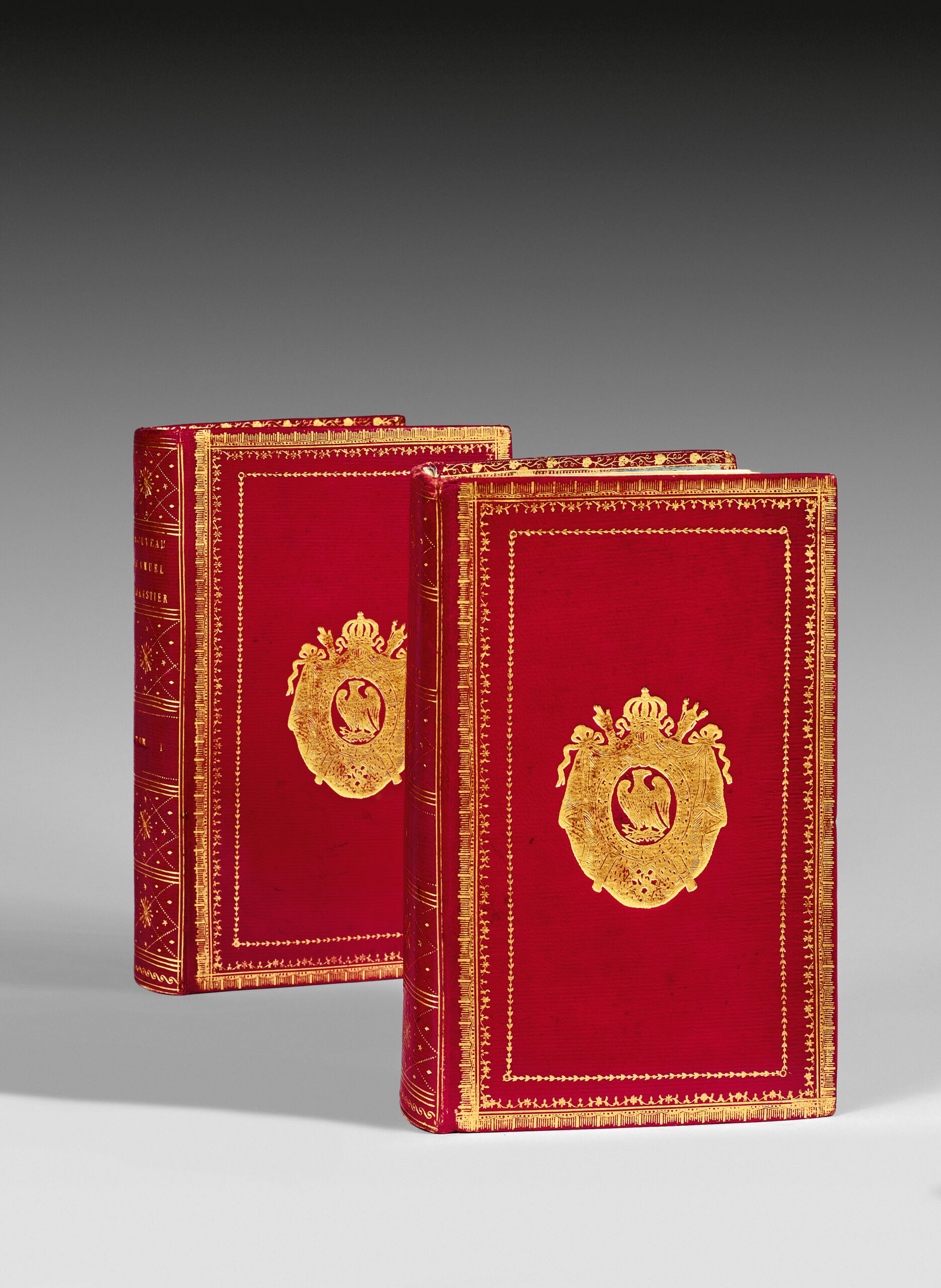
2 tomes in 2 8vo volumes: I/ lii pp., 460 pp., 2 folding tables; II/ (2) ll., 579 pp., 29 plates including 4 folding, 3 folding tables. Long-grain red morocco, gold-rolled frame around the boards, large gold-stamped arms in the center, flat spine finely decorated, decorated edges, blue silk endpapers and linings, inner gold roll. Period binding signed by Tessier with his gold-stamped coat of arms on the endpaper.
203 x 124 mm.
First and only French edition of this scientific and technical manual of the Imperial administration, translated and adapted by Jacques-Joseph Baudrillart (1774-1832) from a reference book written by Friedrich August Ludwig von Burgsdorf (1747-1802), a German forest specialist, famous throughout Europe.
The work was intended to unify and codify the work of forest rangers, which under the Ancien Régime was more about hereditary or purchasable positions than functions requiring real expertise.
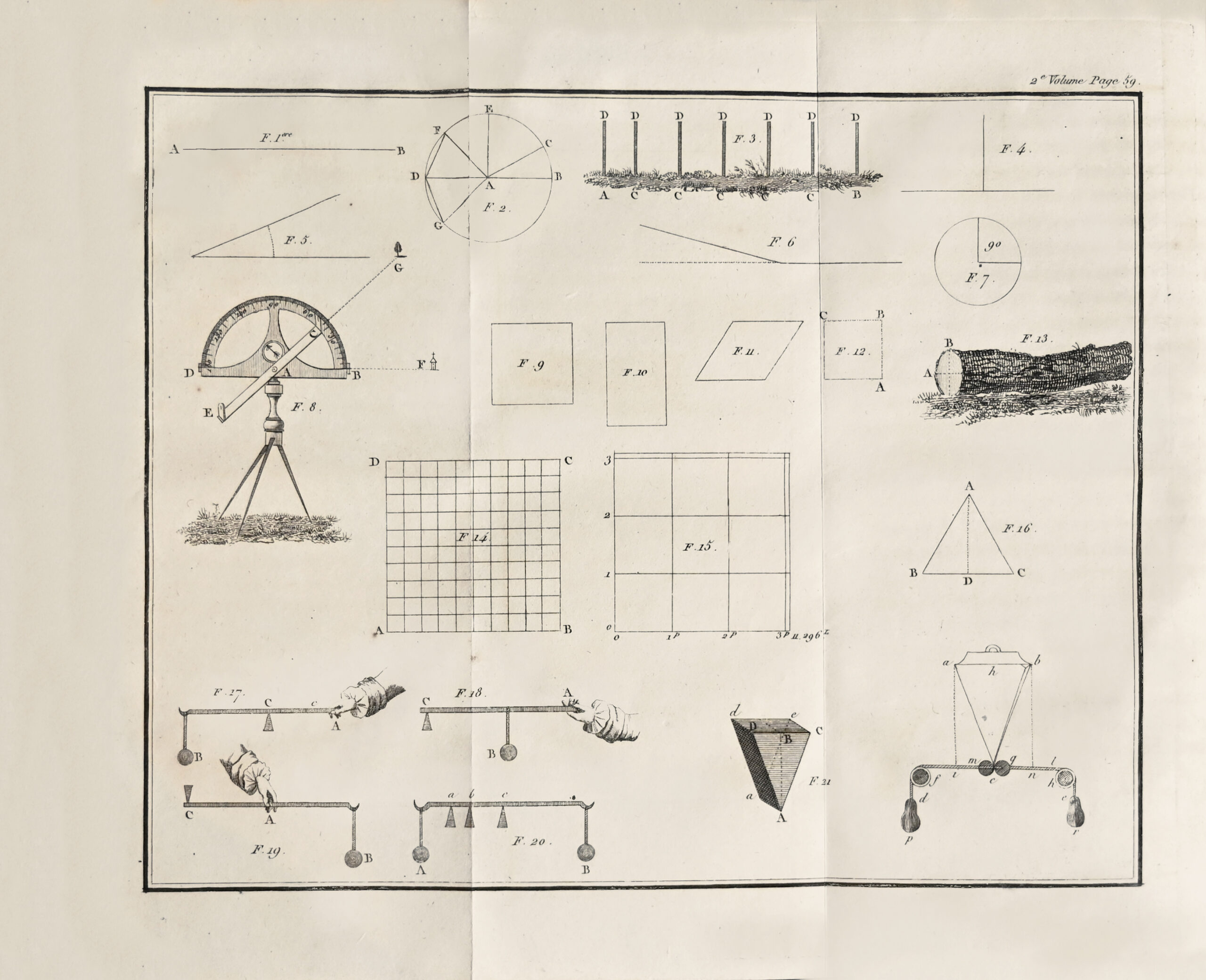
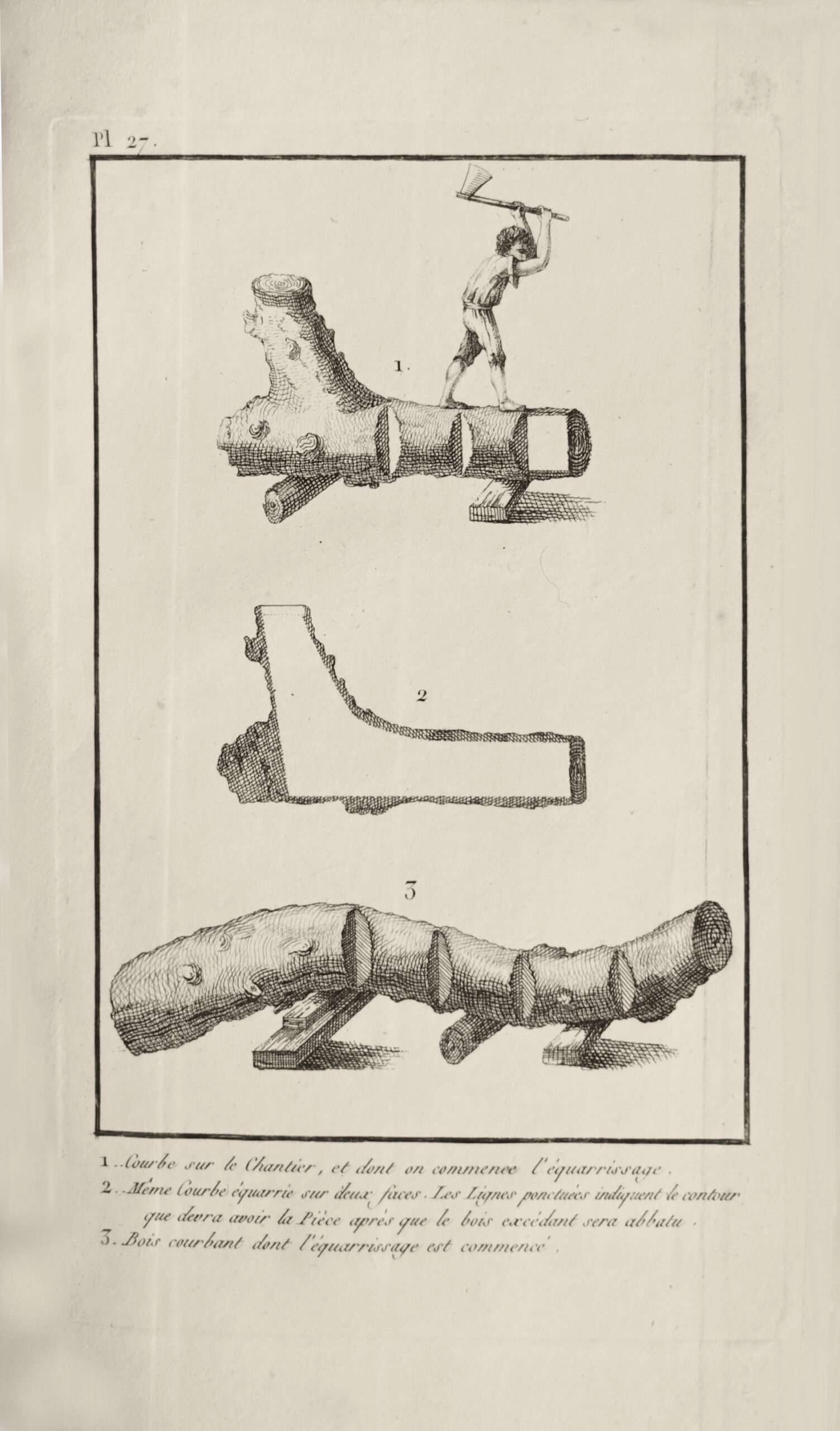
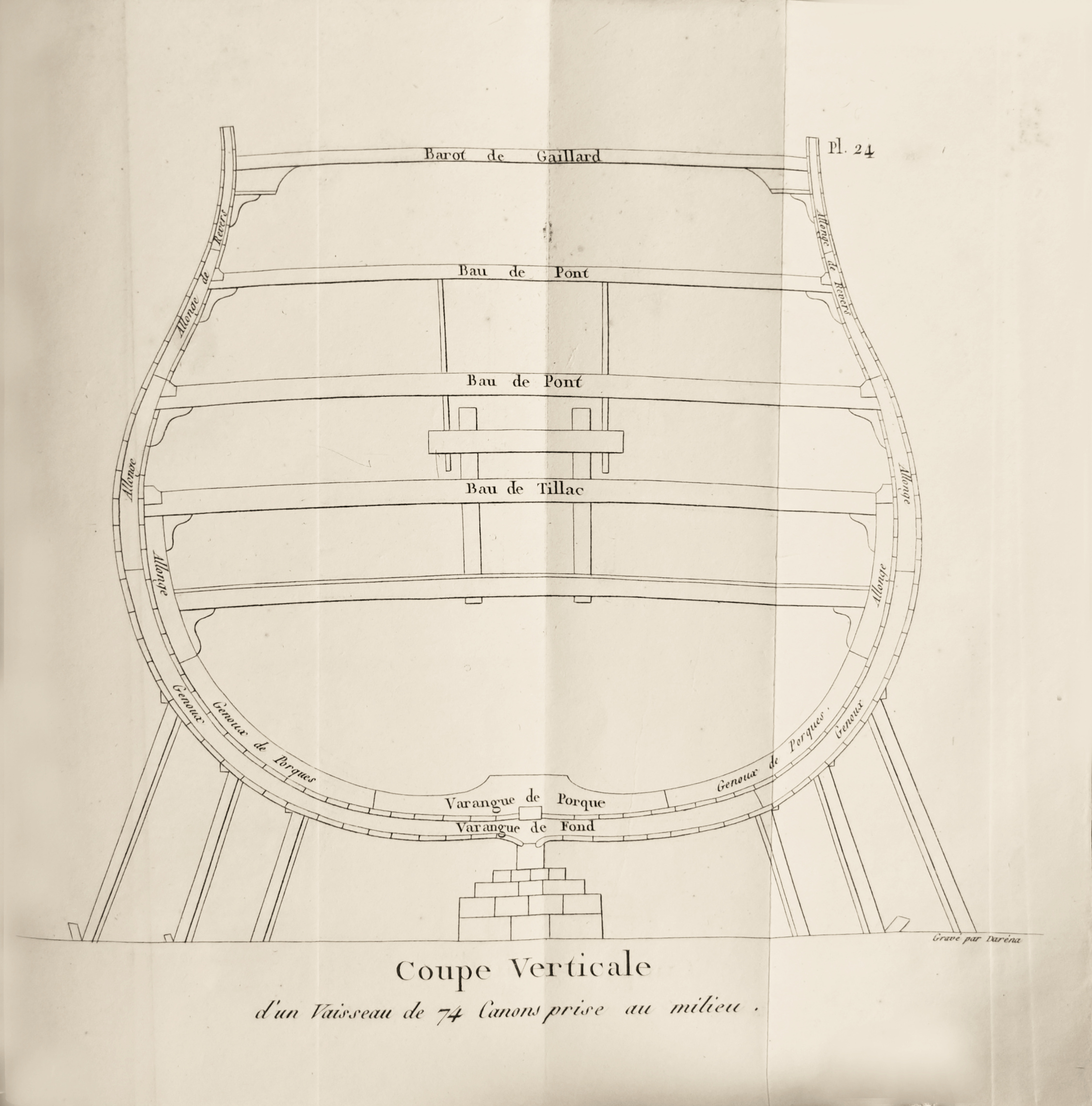
The first volume contains a précis on the forest code, a general section on natural history, and the description of several hundred plant species found in forests and woods. In the second volume are chapters containing introductions to geometry, mechanics, and construction, both civil and naval. Wood is considered both from the perspective of preserving natural heritage and from its uses in service to civil society and the Empire’s armies.
Jacques-Joseph Baudrillart, agronomist and forester, retained his position under the Restoration and published Le Code forestier (1827) and then Le Code de la pêche (1829). He was one of the most active promoters of German methods. Engaged as a non-commissioned officer in the Ardennes battalion in 1792, initially employed in field hospitals, he discovered Germany in 1801 before joining the forestry administration. Convinced of the technical superiority of German forestry, he undertook in the following years the translation of works by Georg-Ludwig Hartig (1805 and 1807) and Friedrich-August-Ludwig von Burgsdorf (1808). Appointed in 1819 as head of division in the Water and Forests administration, he was responsible for spreading the thinning method and remained one of the main architects of the creation of the Royal School of Water and Forests in 1824.
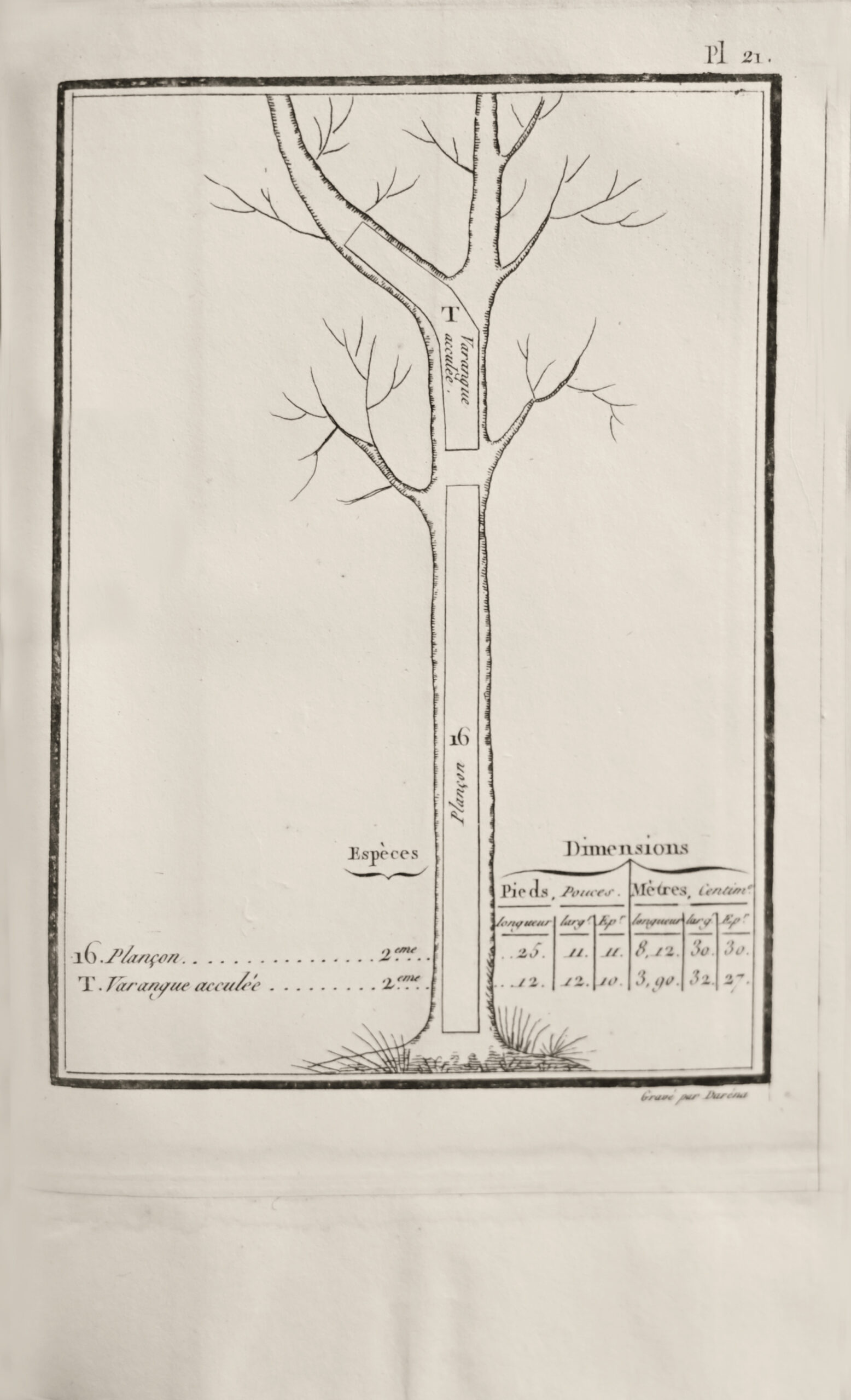
The work is illustrated with 29 engraved plates and 5 folding tables.
Superb copy preserved in a very fresh binding signed by Tessier with the arms of Napoleon (O.H.R. pl. 2652, stamp no. 7).
Successor to Lemonnier, Tessier was the binder of the Duke of Orléans before the Revolution, then of the Imperial Treasury.
Napoleon loved books and continuously educated himself with them. A great reader, without being a bibliophile, he enriched his residences (Malmaison, Fontainebleau, Compiègne… and Saint Helena) with libraries, even having them transported onto battlefields, and enjoyed giving books as gifts.
See less information