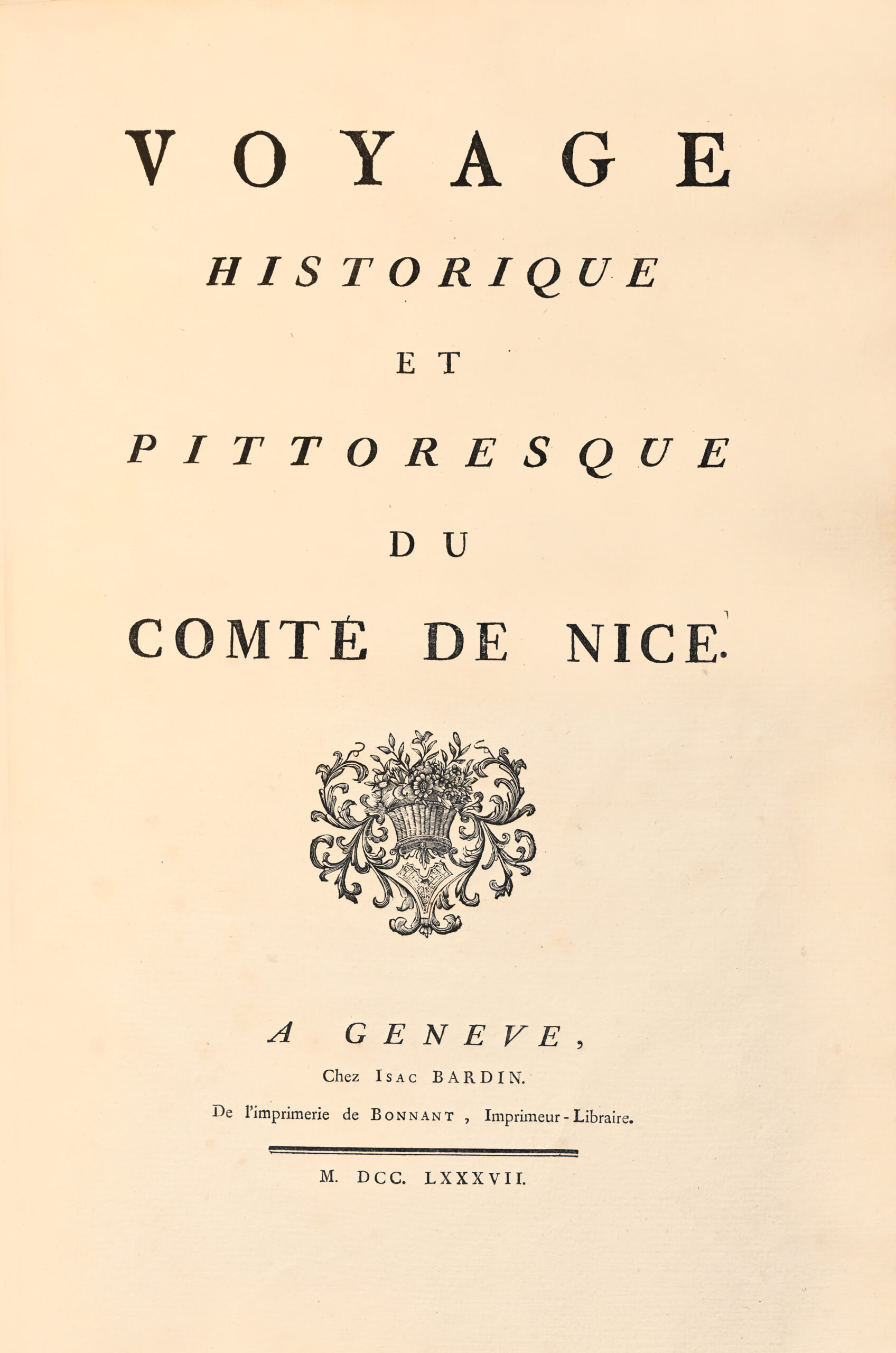
À Genève, chez Isaac Bardin, 1787.
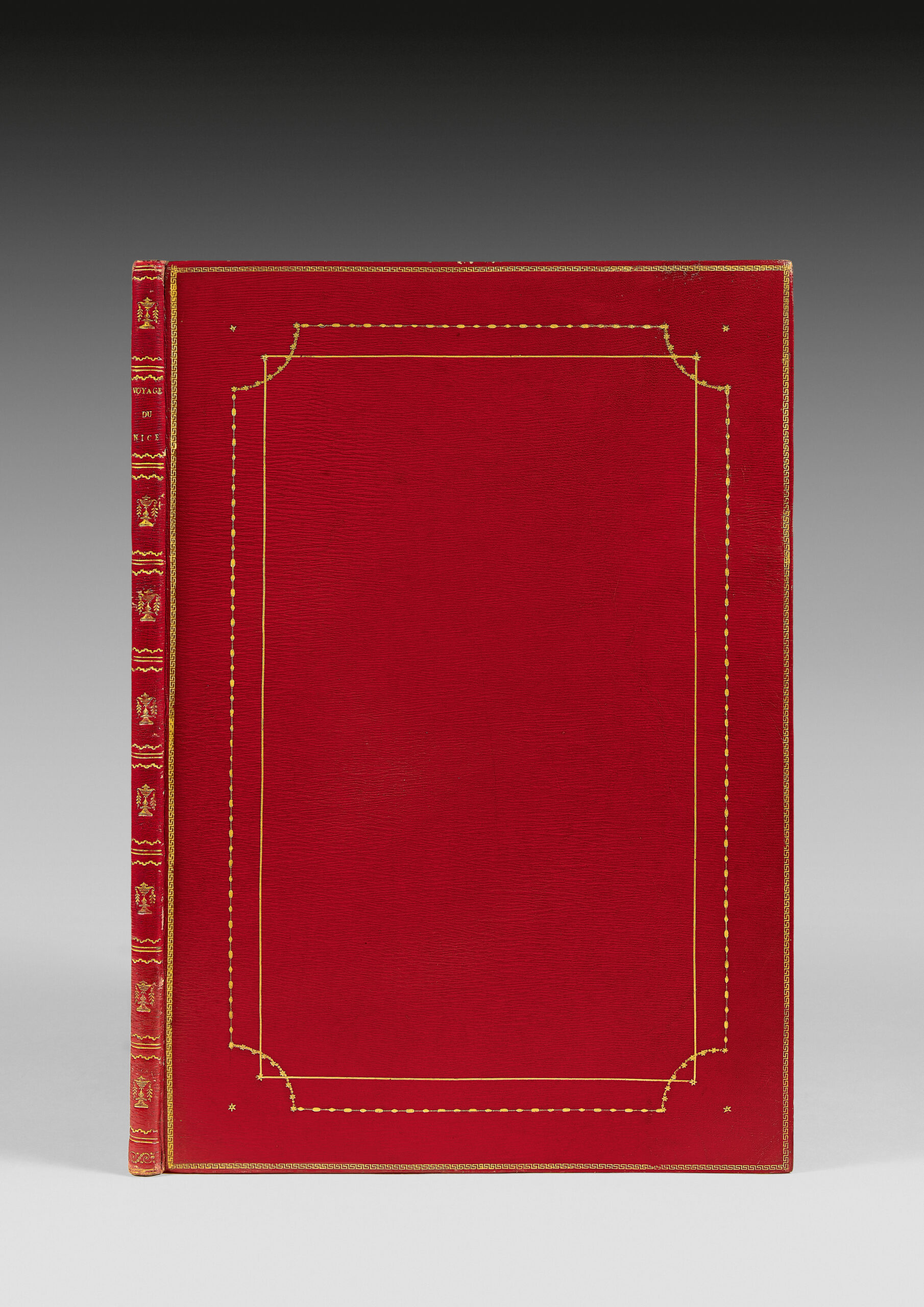
Folio of (1) l., 16 pp., 1 folded plate explanation leaf, 12 numbered engravings, 1 colored topographic map. Red straight-grain morocco, flat spine decorated with gilt urns, covers ornamented with fillets, a wide Greek key dentelle and a gilt festoon-and-star chain motif at the corners, inner dentelle. Contemporary binding.
475 x 320 mm.
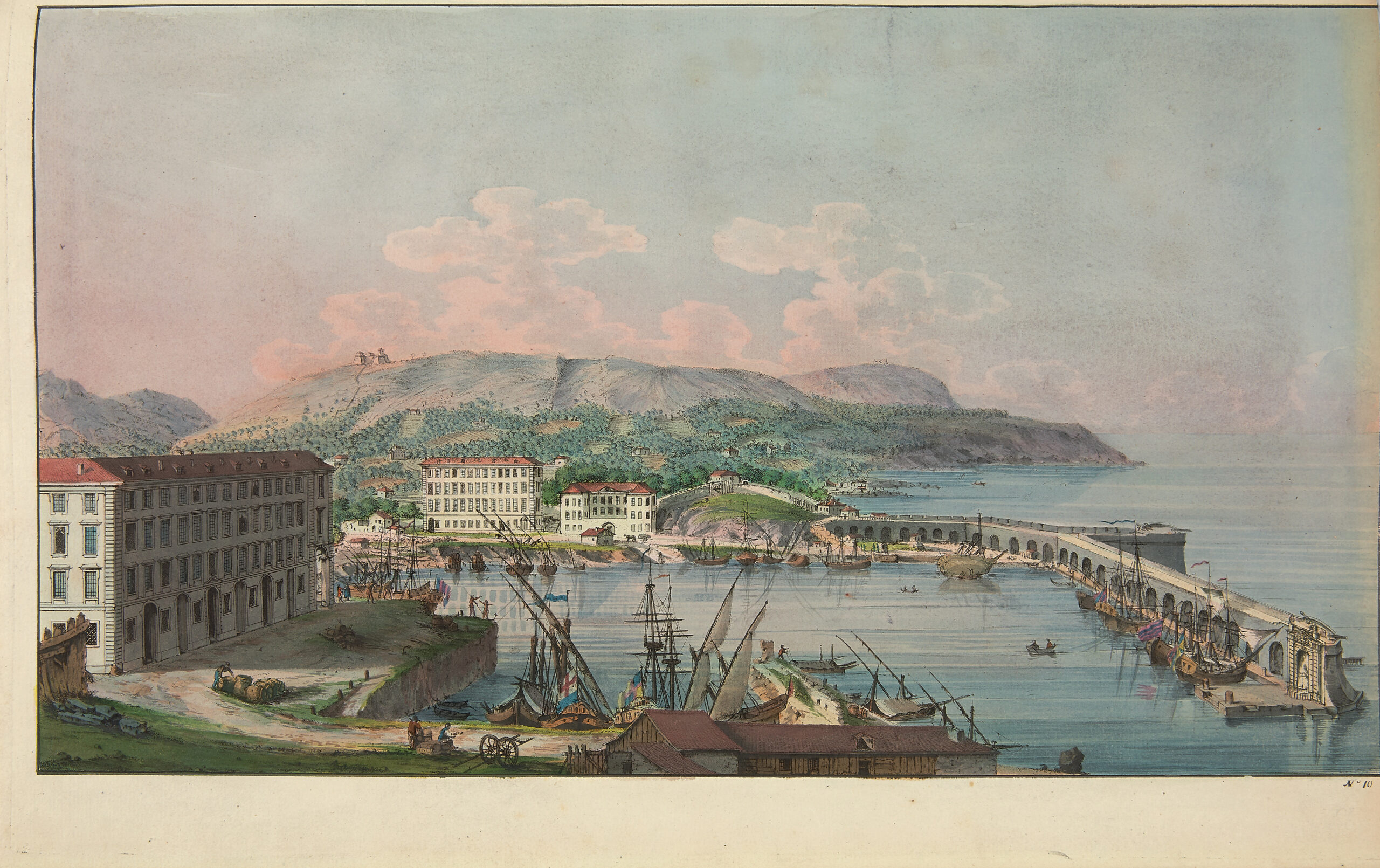
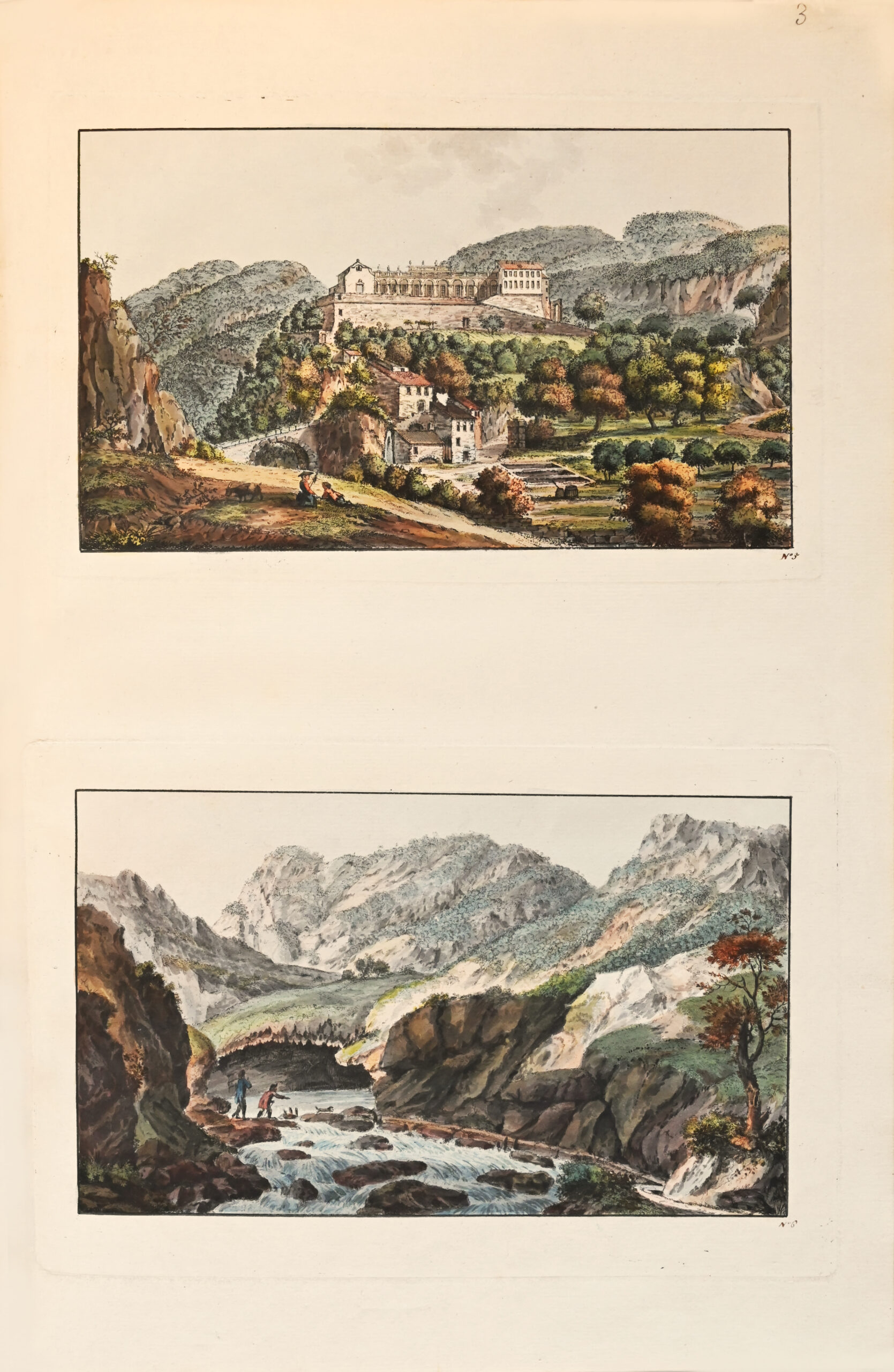
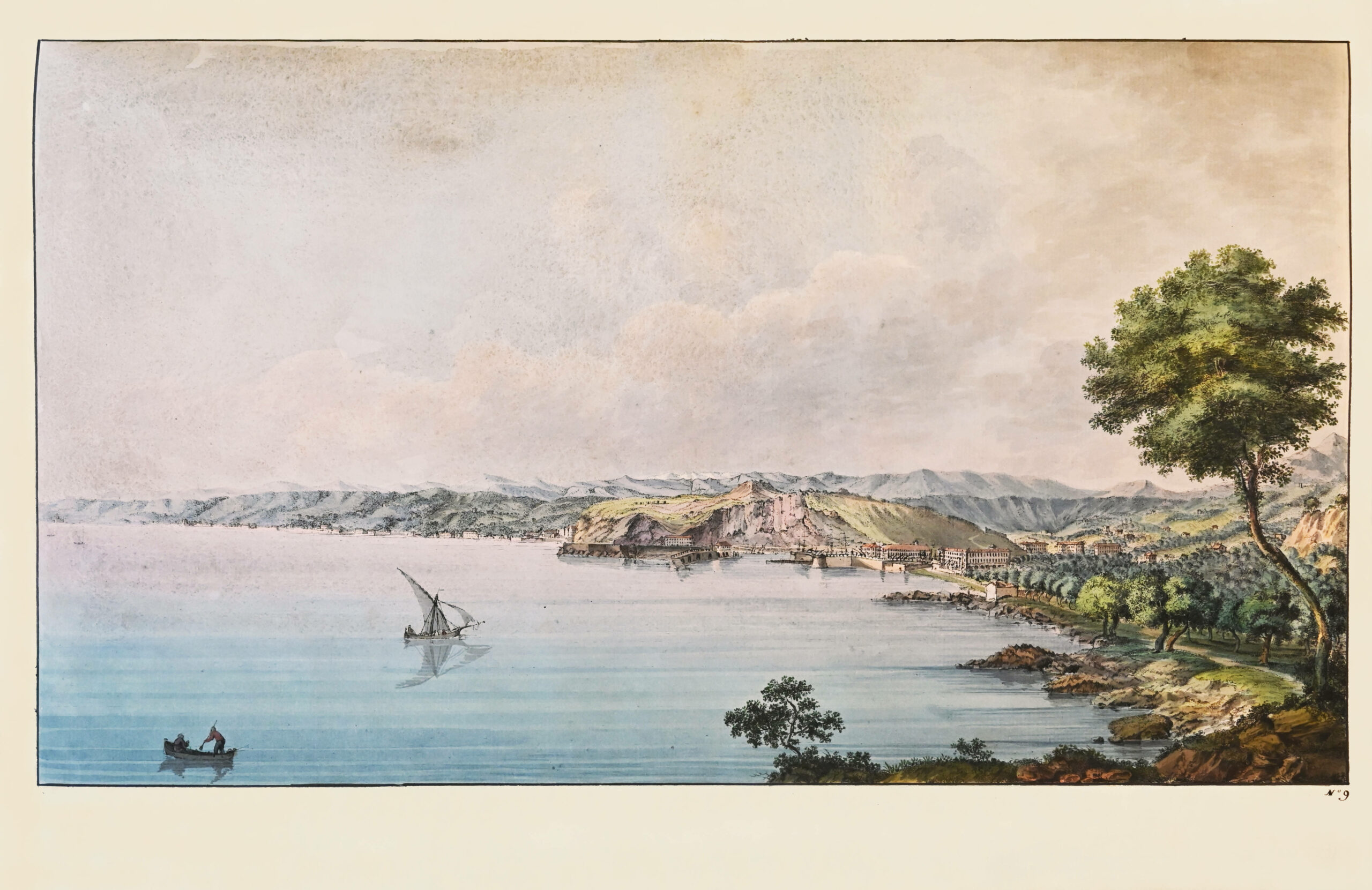
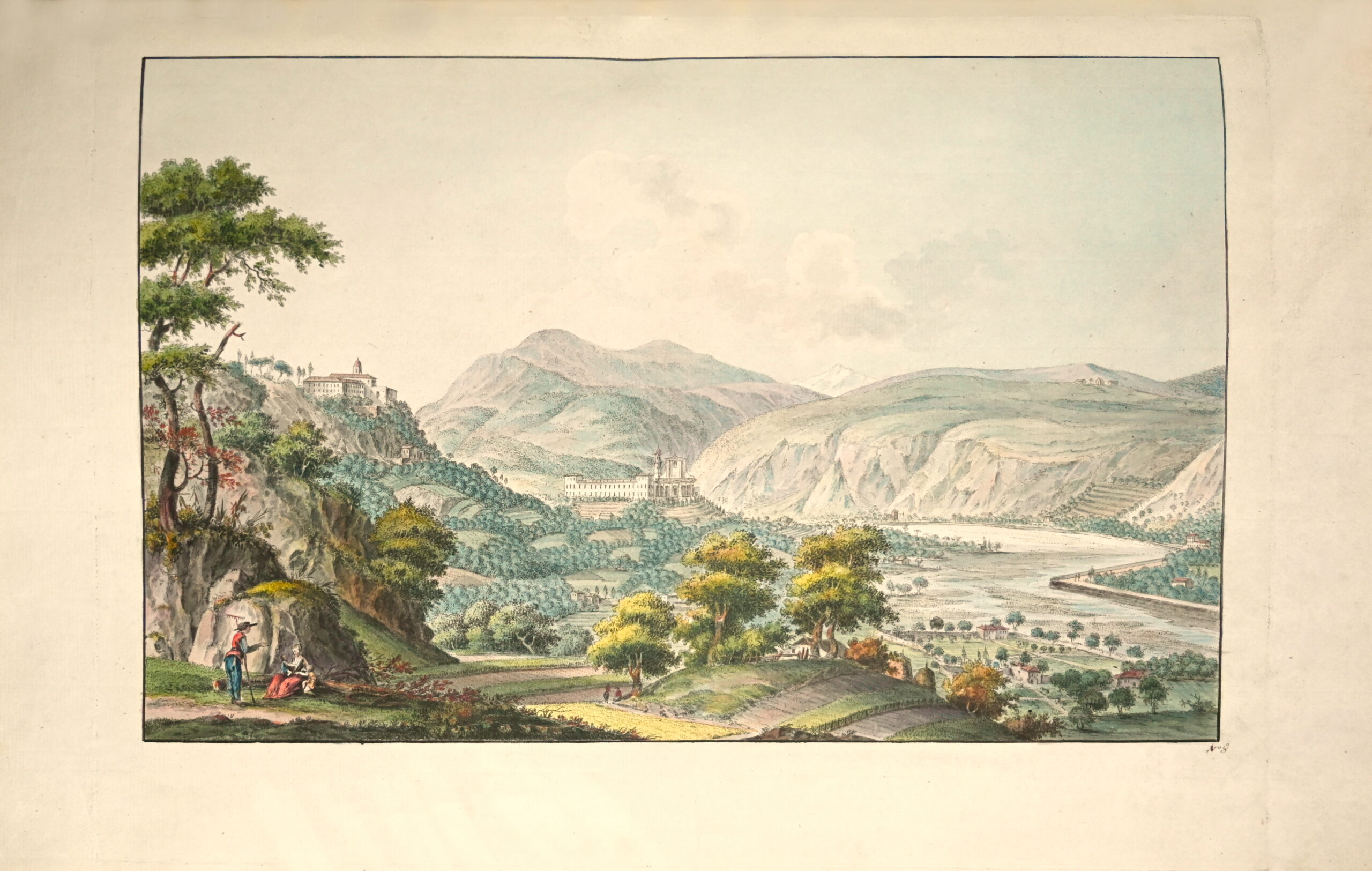
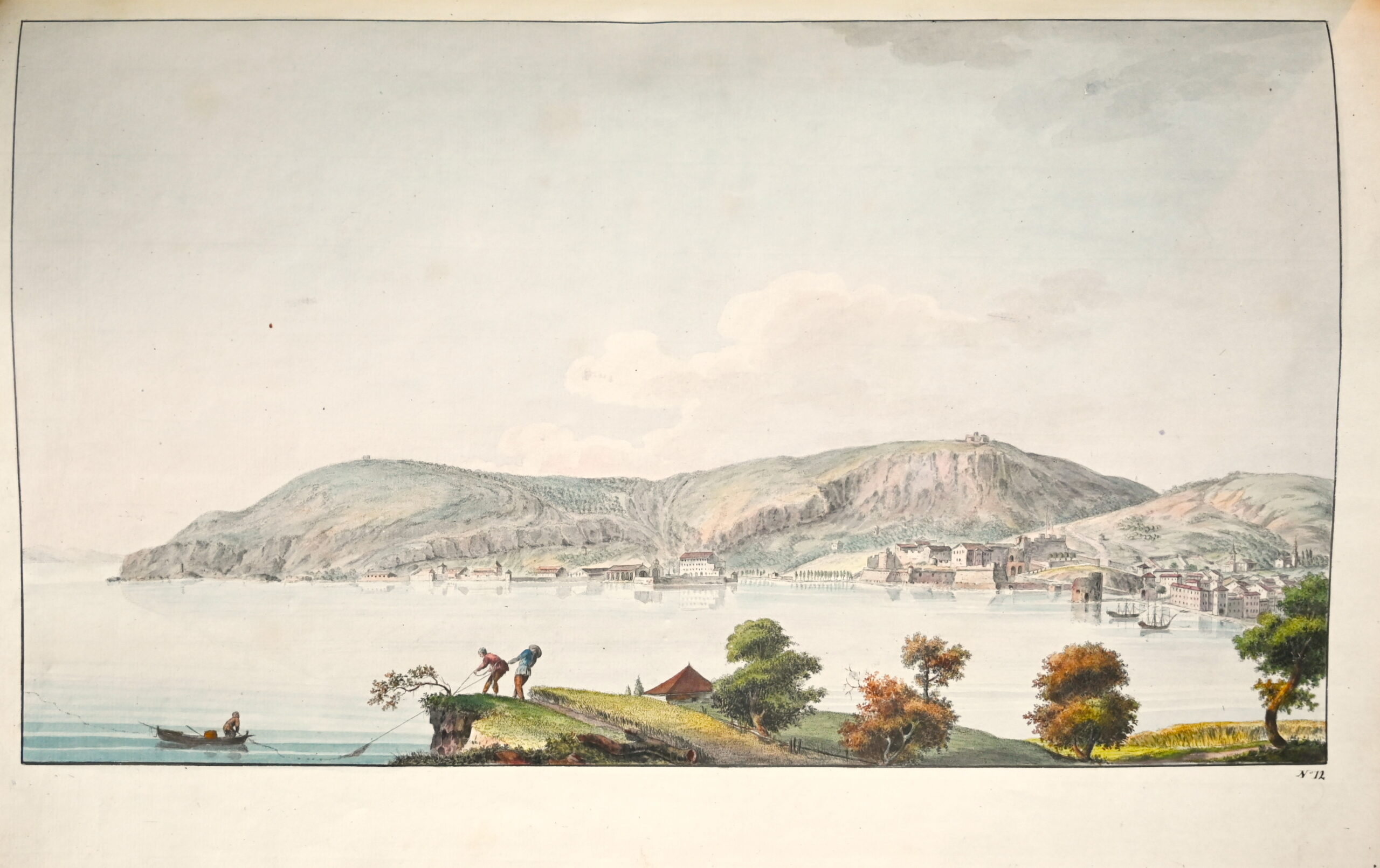
First issue of the 12 very beautiful views of Nice and its surroundings, engraved and very finely colored at the time.
“La Côte d’Azur is in many ways an English invention. It is, first of all, an invention in the etymological sense of the term: between 1760 and 1860, like non-European worlds, the coastline of eastern Provence and the County of Nice became a subject of discovery. Here, it is the foreign tourist, that of the Grand Tour, who lays eyes on an unspoiled nature—a Mediterranean perceived as Edenic.
Then comes the appropriation through the gaze of the outsider, through the literary and iconographic representations in travel accounts and vedute. Finally comes the launch, to use the established expression—that is, the integration of the localities into the network of the first international holiday resorts. It is above all a British invention: travelers from across the Channel were indeed the creators, promoters, and main actors—between the second half of the 18th century and the early 20th—in the development of tourism on the Riviera. The beginnings of the English holiday lifestyle from Cannes to Monaco between 1760 and 1860 offer an exceptional field of study for the process of tourist invention due to their early nature and longevity, as well as the diversity of manifestations and consequences. The coastline between the Esterel massif and the first foothills of the Apennines stood out and became individualized in the minds of early travelers as the gateway to Italy. The Riviera remained, until the mid-19th century, closely tied to the imagination of the Grand Tour or the journey to Italy. And yet, the time of settling in for winter stays had already begun in Nice in the 1760s. Early on, English quarters emerged that began to shape the landscape through the introduction of new building styles and urban planning. These first colonies of winter residents included New Borough in the Croix de marbre district of Nice, the Croix des Gardes district in Cannes, and the Carnoles or Garavan quarters in Menton. Set apart from the towns and their local societies, their influence steadily grew thanks to the financial capital they mobilized and the fame of their most illustrious members. Notable figures such as Lord Brougham in Cannes and James Henry Bennett in Menton emerged—the inventors of the new resorts between 1834 and 1860. British holidaymaking gave rise to cultural and technical transfers whose many manifestations profoundly transformed the local economy and, therefore, traditional society. The lifestyle of these winter residents and their perception of Mediterranean landscapes gave birth, between 1780 and 1860, to projects for seaside villas, gardens, and original urban plans. The introduction of sea bathing on the Riviera before 1860 is emblematic of these British cultural transfers. Nice’s uniqueness lies in the dual influence—Italian and British—on its seaside customs and architecture.”
Jean-François Albanis de Beaumont (1753–1811), an agronomist, settled in Nice after studying military science at the École de Mézières. He is credited with introducing merino sheep from Spain into France. The superb plates depict views including the Tour de Tourbie, St. Auspice, the Château de St. André, the Vard, Ponce, the port of Nice, the port of Villefranche, the coast of Nice, and other sites.
“As this work is in a style more picturesque than historical, I have gone into little detail regarding the origin and customs of the ancient inhabitants of the County of Nice; I thought it best to limit myself to simple notes on the local setting and on the things most necessary to know, which may interest those wishing to spend a season here, as well as those who, having stayed in this delightful land, wish to remember it.”
The quality of the coloring is certainly due to the talent of Gabriel Lory, who also added a personal touch to each plate, especially in the rendering of cloud formations, giving the plates greater animation and realism.
Abbey Travel, 47 & 48 (“The colouring in this 1787 volume is certainly very beautiful and delicately done and plays a major part in building up the image”).
Superb copy with very fresh coloring, in a lovely and freshly decorated contemporary binding of this rare collection dedicated to the Duke of Gloucester. Of the utmost rarity in full contemporary morocco.