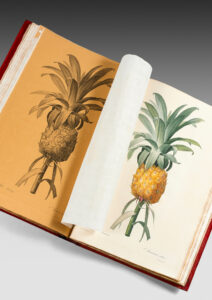
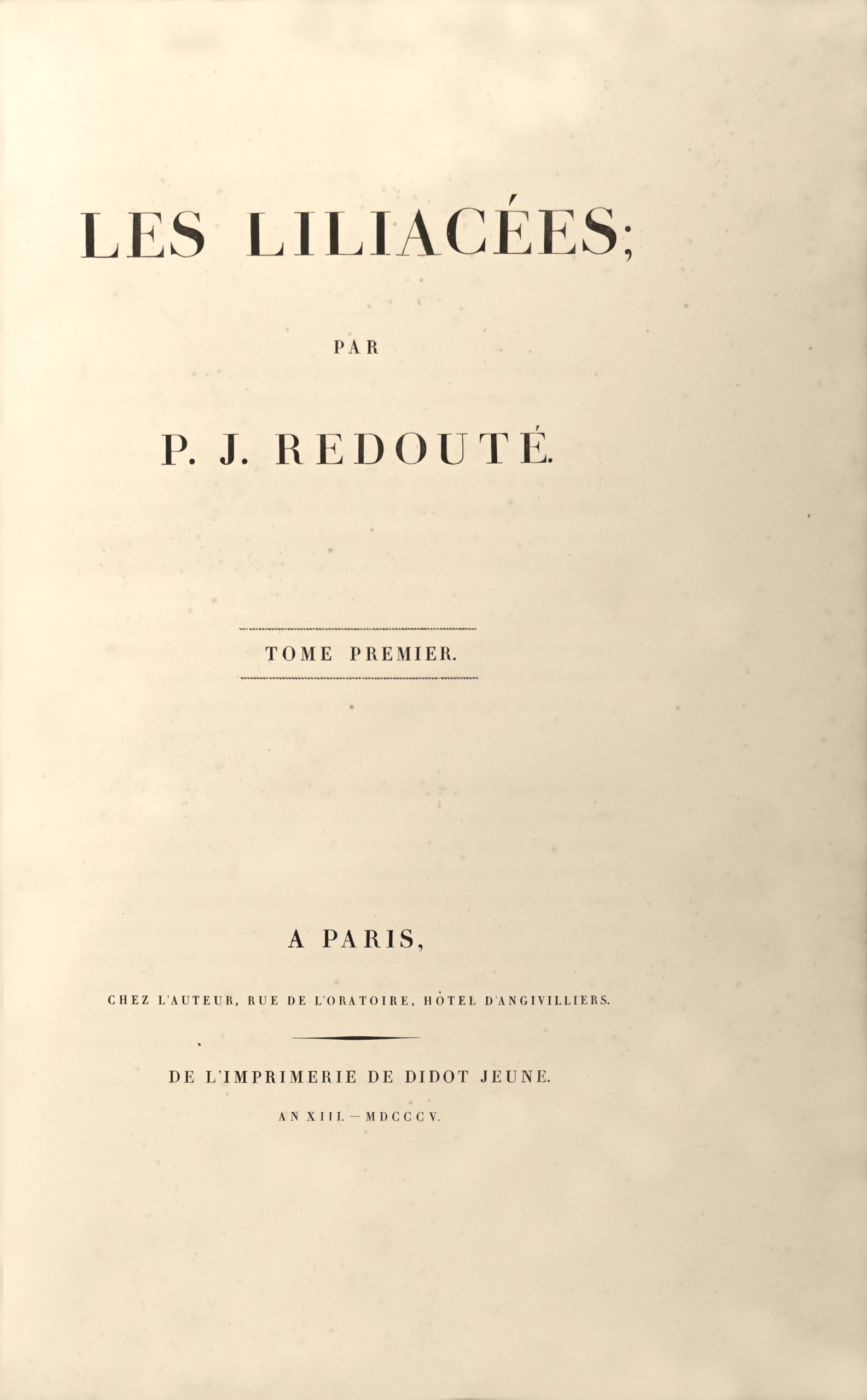
Paris, published by the author, printed by Didot Jeune, 1805-1816.
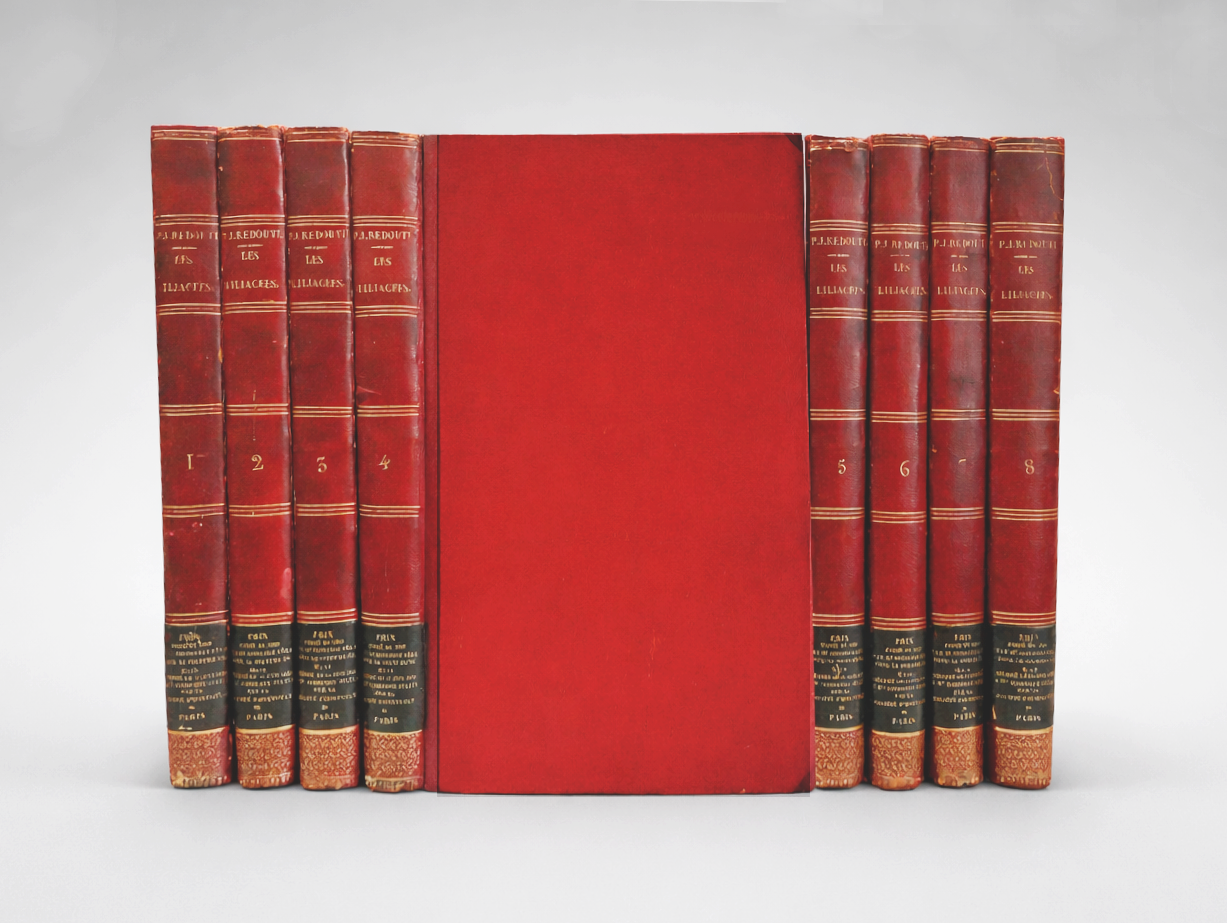
8 volumes large folio [540 x 355 mm.]: I/ (2) ll., ii pp., 60 full-page plates numbered in double states in black and in color, 63 ll. of text (53*, 54* and 60*), (1) l. of table; II/ (2) ll., plates 61 to 120, (1) l. of explanatory text per plate except for plates 75-76 and 77-78 which have their explanations printed on the same sheets, (2) ll.; III/ (2) ll., plates 121 to 180, as many ll. of explanatory text, (2) ll.; IV/ (2) ll., plates 181 to 240, as many ll. of explanatory text, (1) l. of table; V/ (2) ll., plates 241 to 300, 1 l. of explanatory text per plate except plates 261-262, 277-278 and 279-280 which have their explanations on the same sheet, (1) l. of table; VI/ (2) ll., plates 301 to 360, as many ll. of explanatory text except for (2) ll. of explanatory text for plate 302, and only 1 l. for plates 307-308, 326-327 and 328-329, (2) ll.; VII/ (2) ll. (light foxing), plates 361 to 420, as many ll. of explanatory text except for plates 370-371-372 which have the same text l., plates 382-383 and 401-402 as well, (2) ll.; VIII/ (2) ll., plates 421 to 486, 2 plates bear number 428, as many ll. of explanatory text except for plates 443-444, 448-449 and 455-456 which have the same explanatory leaf, (1) l., 14 pp. of table. A total of 486 plates.
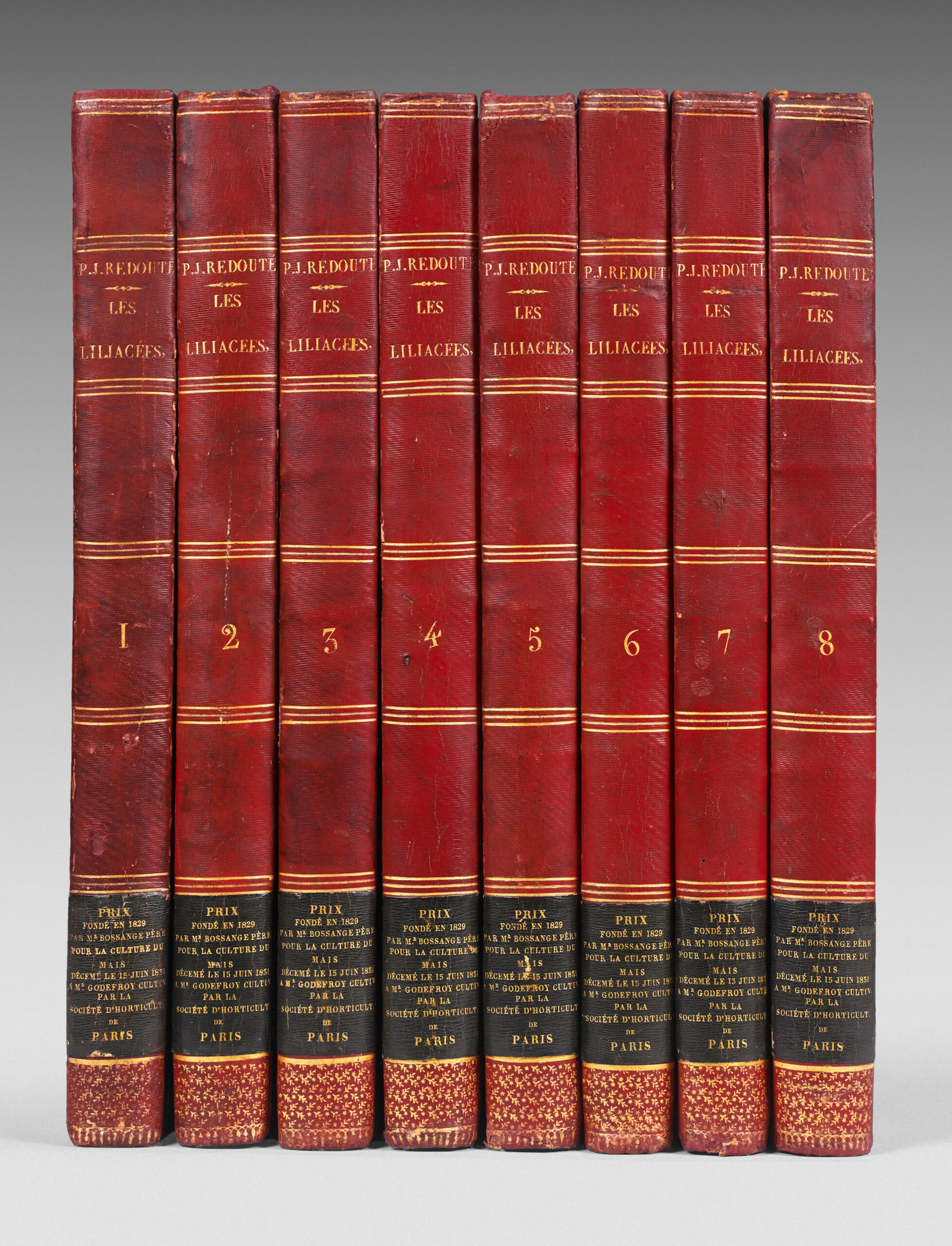
Red quarter-morocco, flat spines decorated with gilt fillets, untrimmed. Contemporary binding.
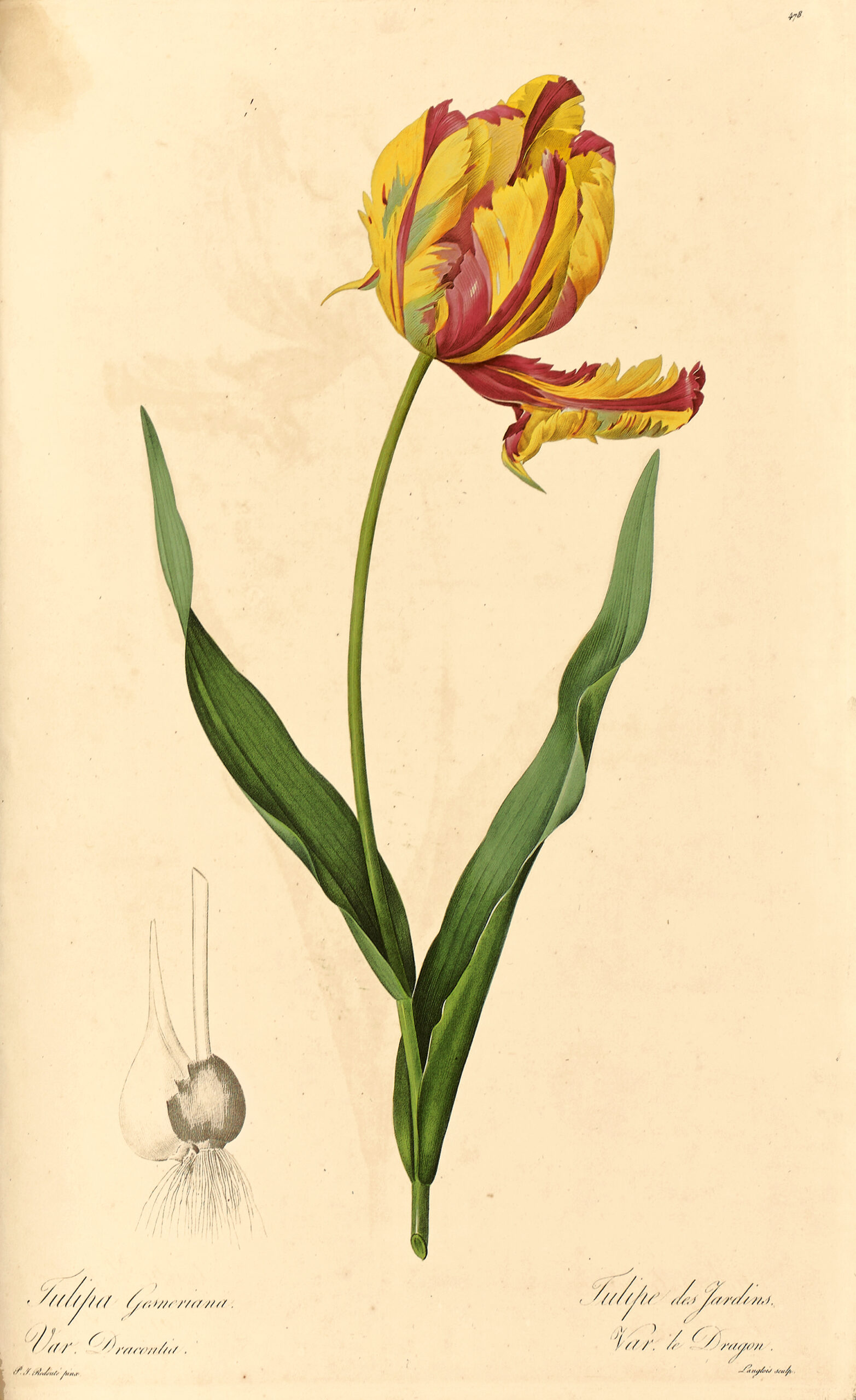
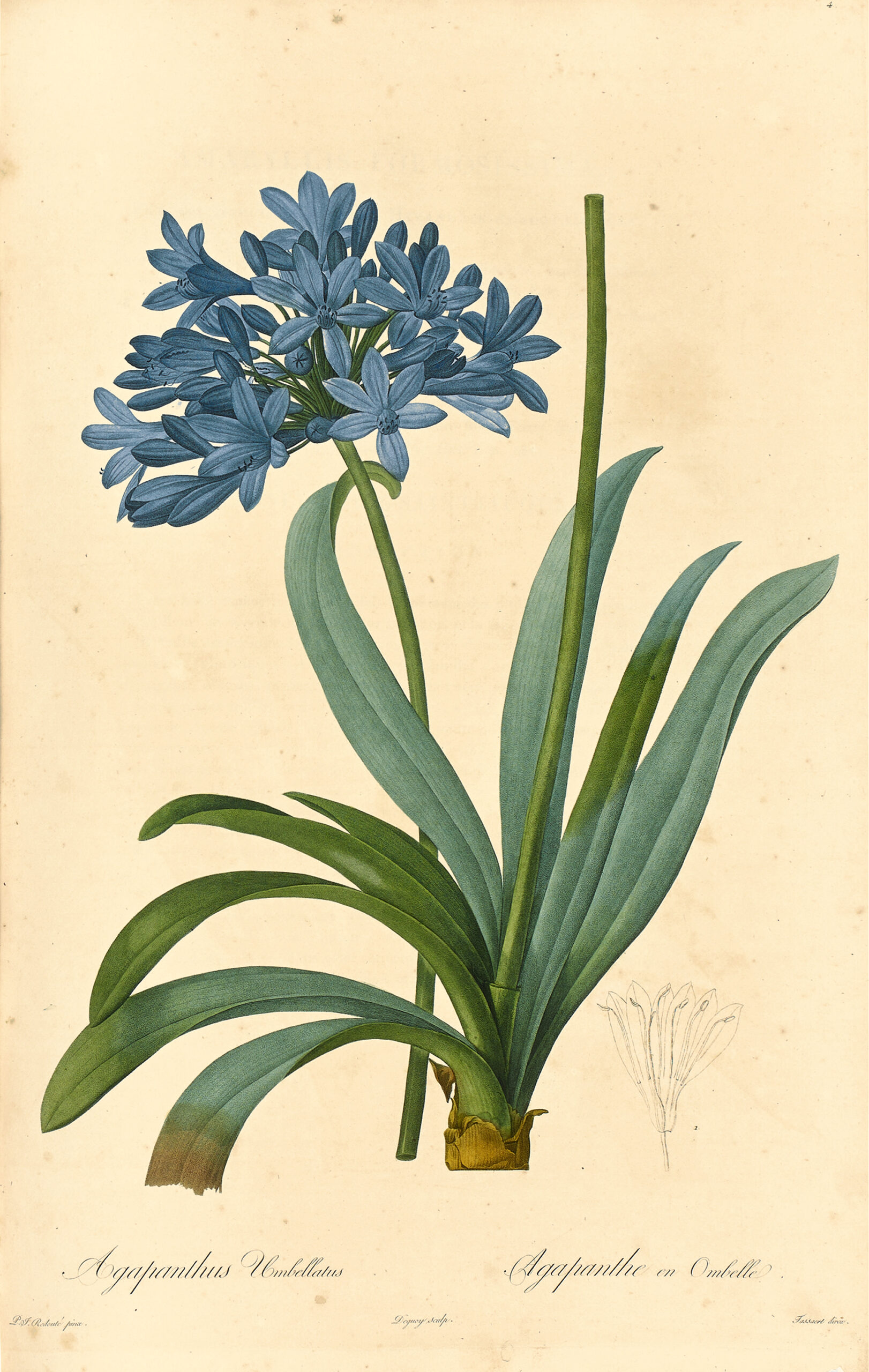
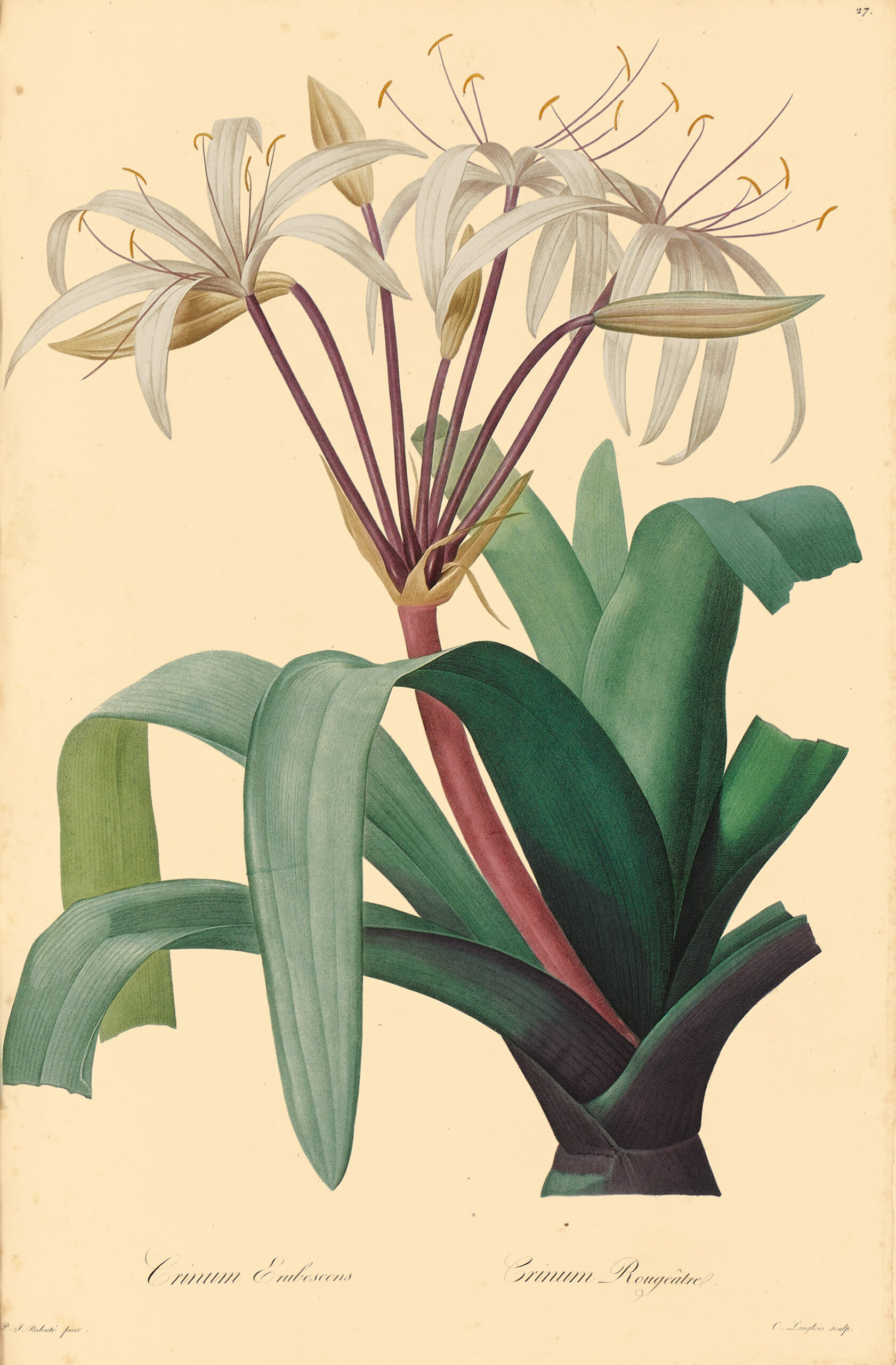
First edition of Redouté’s largest and most ambitious work and a masterpiece of botanical illustration.
Dunthorne 231; Great Flower Books, p. 71; Hunt, Redoutéana 10 & pp. 20-23; Lank 48; Nissen BBI 1597; Pritzel 7353; Stafleu TL2 8747; MacPhail, “Books Illustrated by Redouté,” in G.M. Lawrence A catalogue of Redoutéana exhibited at the Hunt Botanical Library (Pittsburgh: 1963), 10.
Les Liliacées was limited to 280 copies issued in 80 parts between 1802 and 1816.
Les Liliacées was the first of Redouté’s three great collections of botanical prints, preceding his Les Roses and Choix des plus belles fleurs. He had come to the attention of Empress Josephine through his contributions to Ventenat’s Jardin de la Malmaison (1803-04) and indeed it was for her that he produced some of his best work. With the prints of Le Jardin de la Malmaison, Redouté’s Liliacées ‘constitute the highest peak of [his] artistic and botanical achievement’ (Hunt Redoutéana, p. 21).
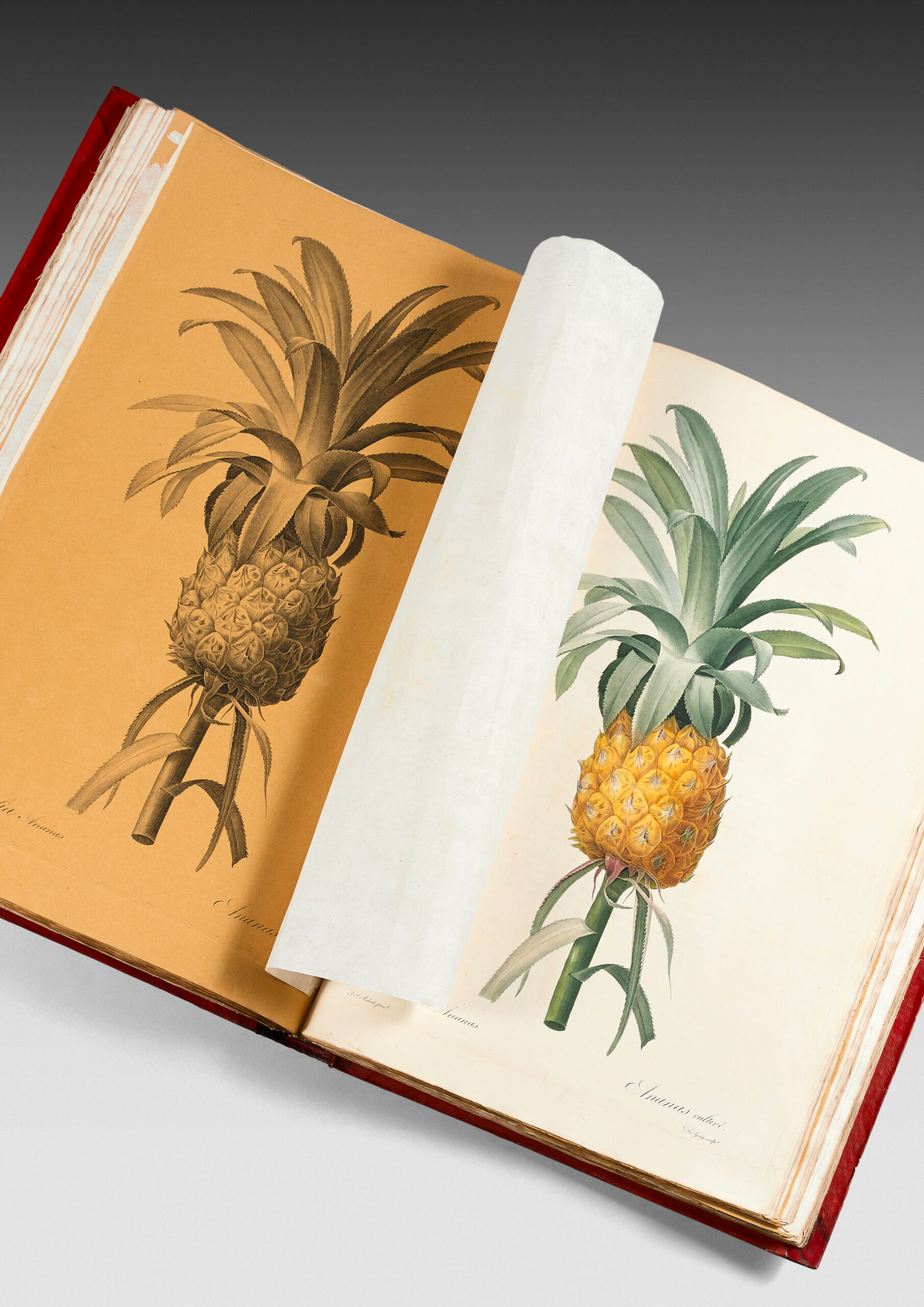
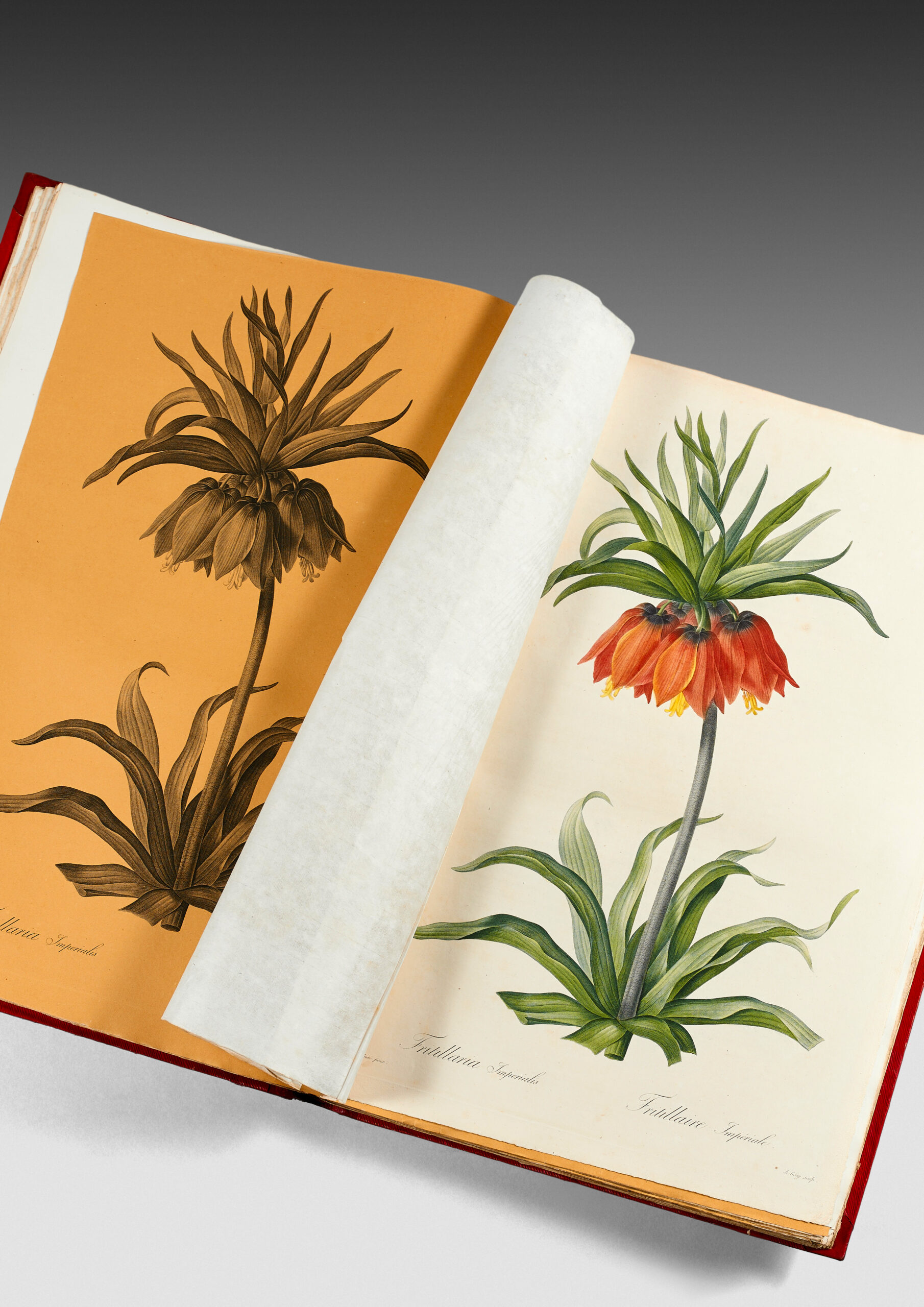
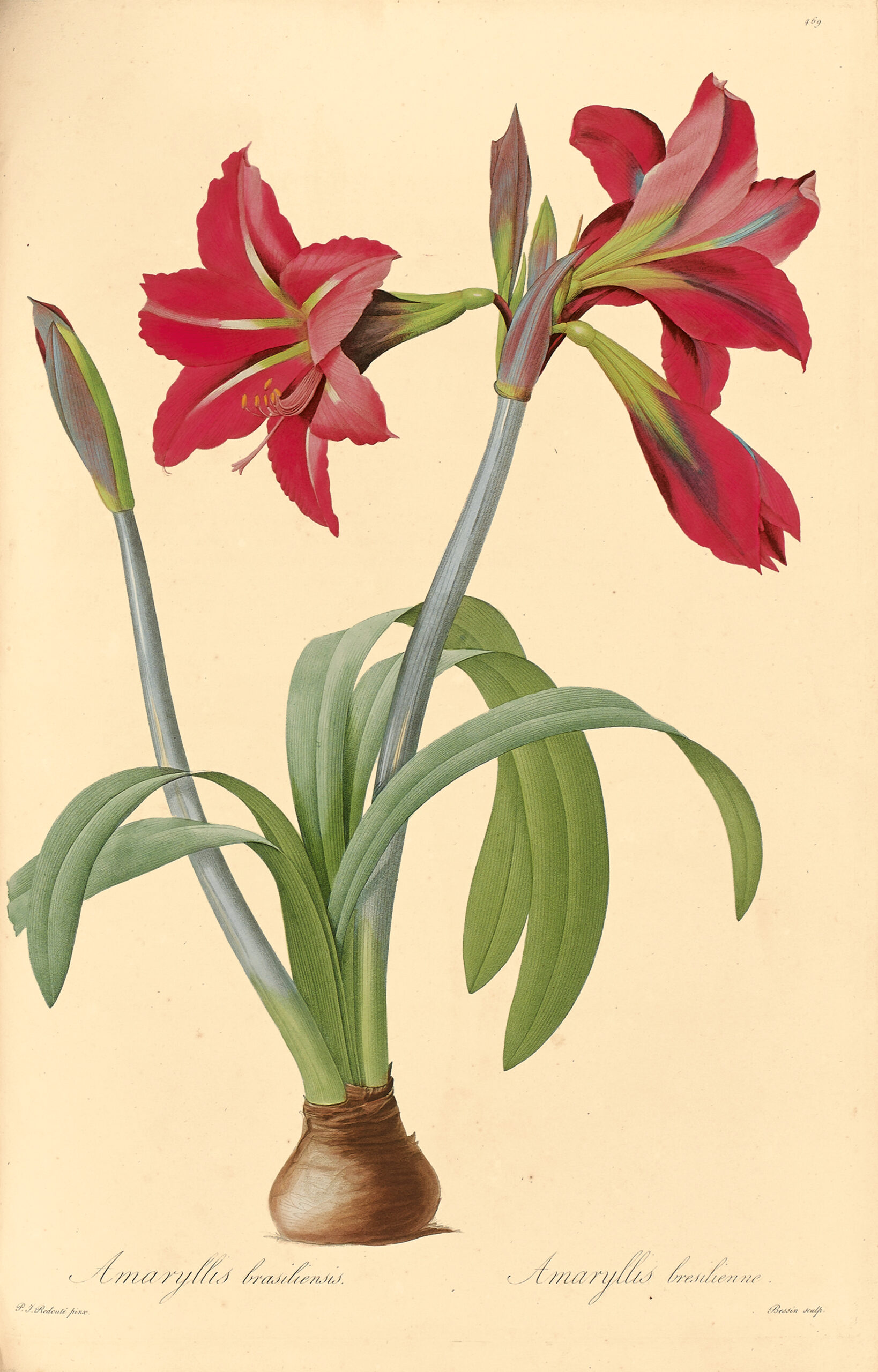
Many of the flowers depicted in Les Liliacées were drawn at Malmaison, and he named a rare specimen after the empress, Amaryllis josephinae, illustrating its luscious beauty here as the sole double-page plate. Redouté combined his brilliant artistic skills with technical mastery to bring botanical illustration to a level never achieved before or since. He adopted the painstaking technique of applying all the colors to a single stipple-engraved plate, thus requiring re-inking after each impression. This method was ideally suited to the subtle expression of tone and contour but had not been previously applied to the depiction of flowers. The great beauty of his work has somewhat overshadowed his scientific contribution, but for each lily Redouté gives the history, nomenclature, plate description, and observations. His work on lilies was particularly useful in providing detailed images of a fragile plant impossible to preserve as a dried specimen. Also, the work is far more than a monograph of the lily, as the specimens illustrated ‘encompass petaloid monocotyledons in general’ (Blunt and Stearn): irises, orchids, heliconias, agaves, amaryllis, and bromeliads, including pineapple and banana.
Les Liliacées represents the peak of Redouté’s art. It is his largest work; he describes, sometimes for the first time, specimens of the lily family; and it contains the most extensive achievement of Redouté in stipple engraving, a technique he pioneered in France.
Redouté published Les Liliacées under his own name but owed much to the patronage of Empress Joséphine Bonaparte. Their association began in 1798, and Redouté painted watercolors for her chamber at Malmaison and contributed to the survey of plants in these vast gardens published in Ventenat’s Jardin de la Malmaison and Bonpland’s Description des Plantes Rares cultivées à Malmaison et à Navarre.
Under Joséphine’s influence, Chaptal, the Minister of the Interior, subscribed to 80 copies of Les Liliacées; it was probably only for these 80 copies, sent to libraries across France, that the dedication to Chaptal was printed.
Redouté paid tribute to Joséphine in Les Liliacées by renaming an amaryllis Amaryllis Josephinae, represented on the sole fold-out plate of the work (370/371). He explains that a bulb had been brought back from South Africa, where it had not flowered in 20 years. When it finally bloomed, Joséphine bought the amaryllis, and it had already flowered twice since she had taken care of it.
Redouté’s masterly use of colored stipple engraving greatly contributed to the artistic and accurate rendering of flowers. He learnt the technique from Francesco Bartolozzi while visiting England with L’Héritier de Brutelle and brought it back to France.
This technique, which had never been employed on flowers in England, allowed for a finesse of line and color that could not be achieved with classic engraving and hand coloring.
The plates of Les Liliacées were then enhanced with colors applied by hand.
The title Les Liliacées is modest, as the work encompasses a wide variety of flowers including irises, orchids, amaryllis, agaves, etc.
“The highest peak of Redouté’s artistic and botanical achievement… Among the most important monuments of botanical illustration ever to be published” (Stafleu, in Redoutéana).
A journalist and friend, Jules Janin, praised the flower painter by writing after Redouté’s death: “This dazzling and elegant family of Liliaceae, with such a difficult genealogy, these diverse races that blend and merge so well that it took a genius to describe them…” (Léger, Redouté et son Temps, 1945, p. 111).
The text was written by Augustin-Pyramus de Candolle (volumes 1 to 4), François Delaroche (vols. 5 and 6), and Alire Raffeneau-Delile (vols. 7-8).
The sumptuous illustration comprises 486 stipple-engravings, printed in color and finished by hand by Bessin, Chapuy, and other artists after Redouté.
A precious copy uniformly bound at the time.