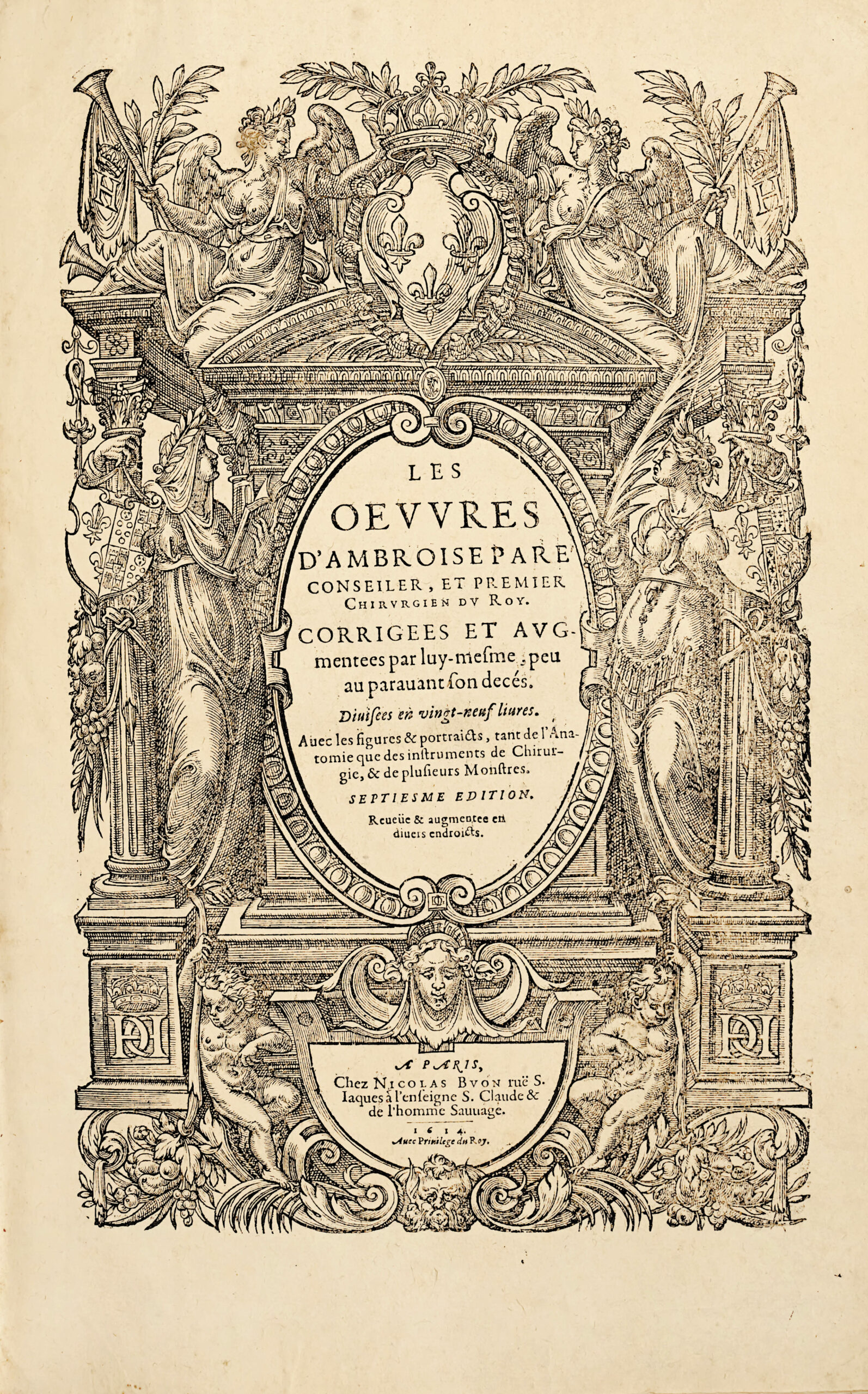
Paris, chez Nicolas Buon, 1614.
Folio [346 x 223 mm] of (13) ll., 1128 pp., (1) bl. l., (57) ll. of table. Title reinforced, a few handwritten notes in ink in the margins, hole in the margin pp. 755 and 913, clear stain p. 923.
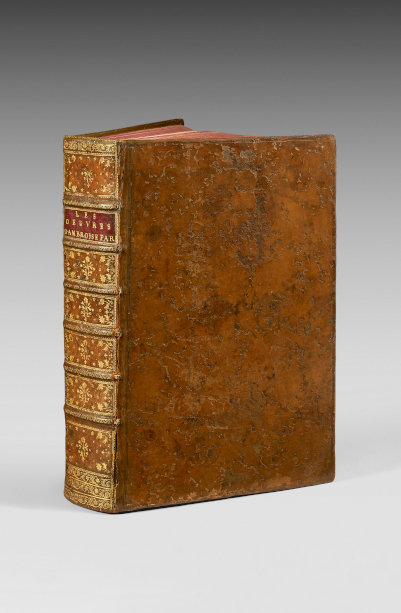
Light brown granite-like calf, blind-stamped fillet around the covers, spine ribbed and richly decorated, lettering piece in red morocco, red edges. Binding from the beginning of the 18th century.
Seventh edition of Ambroise Pare’s works, sought-after like all the folio editions of the author, which according to Brunet, are all different from one another and have a similar value.
This edition includes “l’Apologie et traité contenant les voyages faits en divers lieux“, which is not found in the first two editions, of 1575 and 1579.
It is only from the fifth edition, in 1598, that this collection contains the 29 books forming this seventh edition, the previous editions having only 27 or 28.
« The total number of leaves is the same in 1607 and 1614, but the latter is not a page-for-page reprint. » (Janet Doe, Ambroise Paré, a bibliography, n°35).
Since 1607, the printer of Ambroise Pare’s “Works” is none other than Nicolas Buon, the son of Gabriel Buon, himself at the origin of the first 5 editions of Ambroise Pare’s Works.
Brunet believes that it is an “estimated collection”, and of which each folio edition has approximately the same value. They are not the same however.” (Brunet, IV, c. 366 ; Janet Doe, Ambroise Paré a bibliography, n°35).
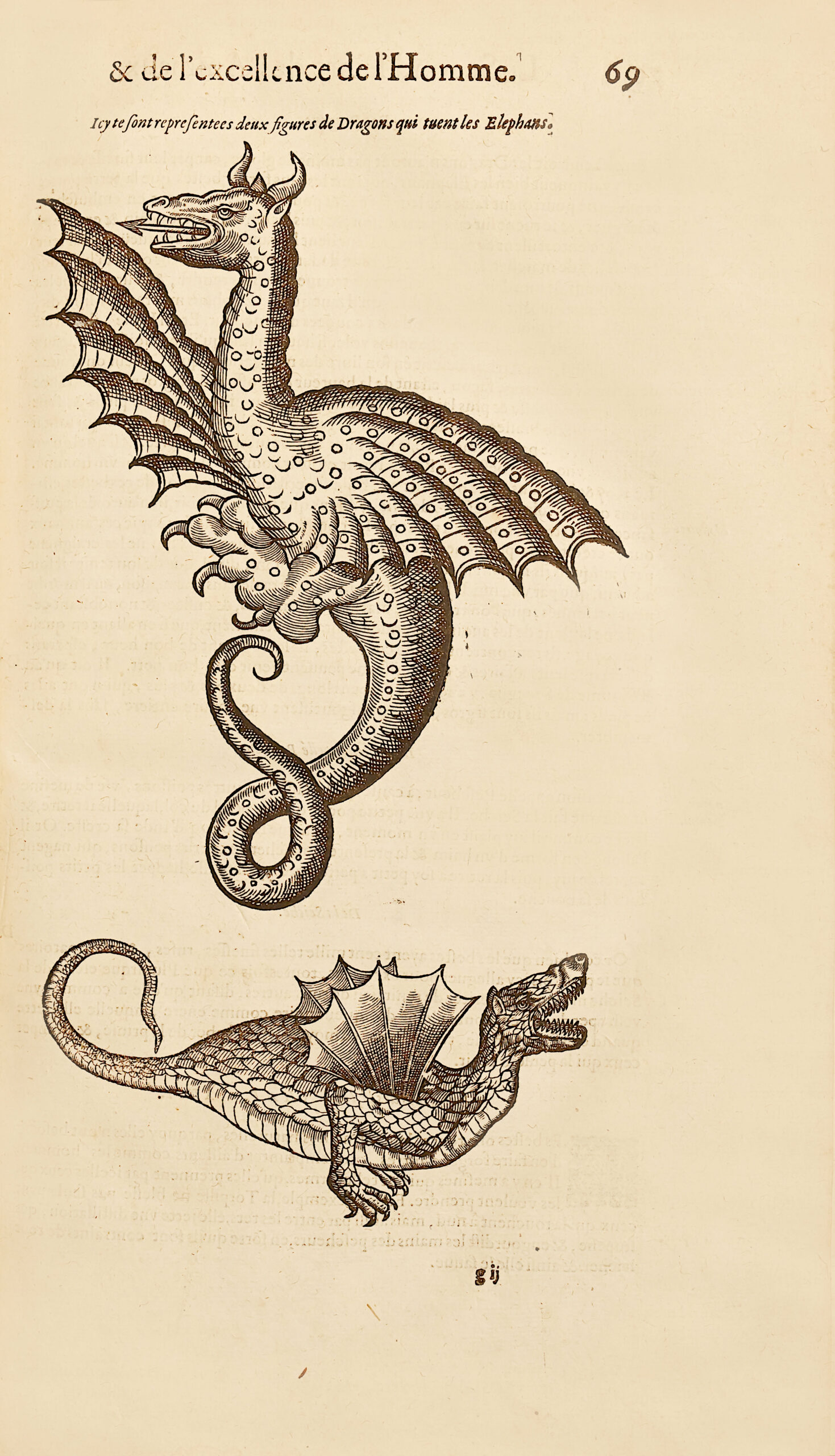
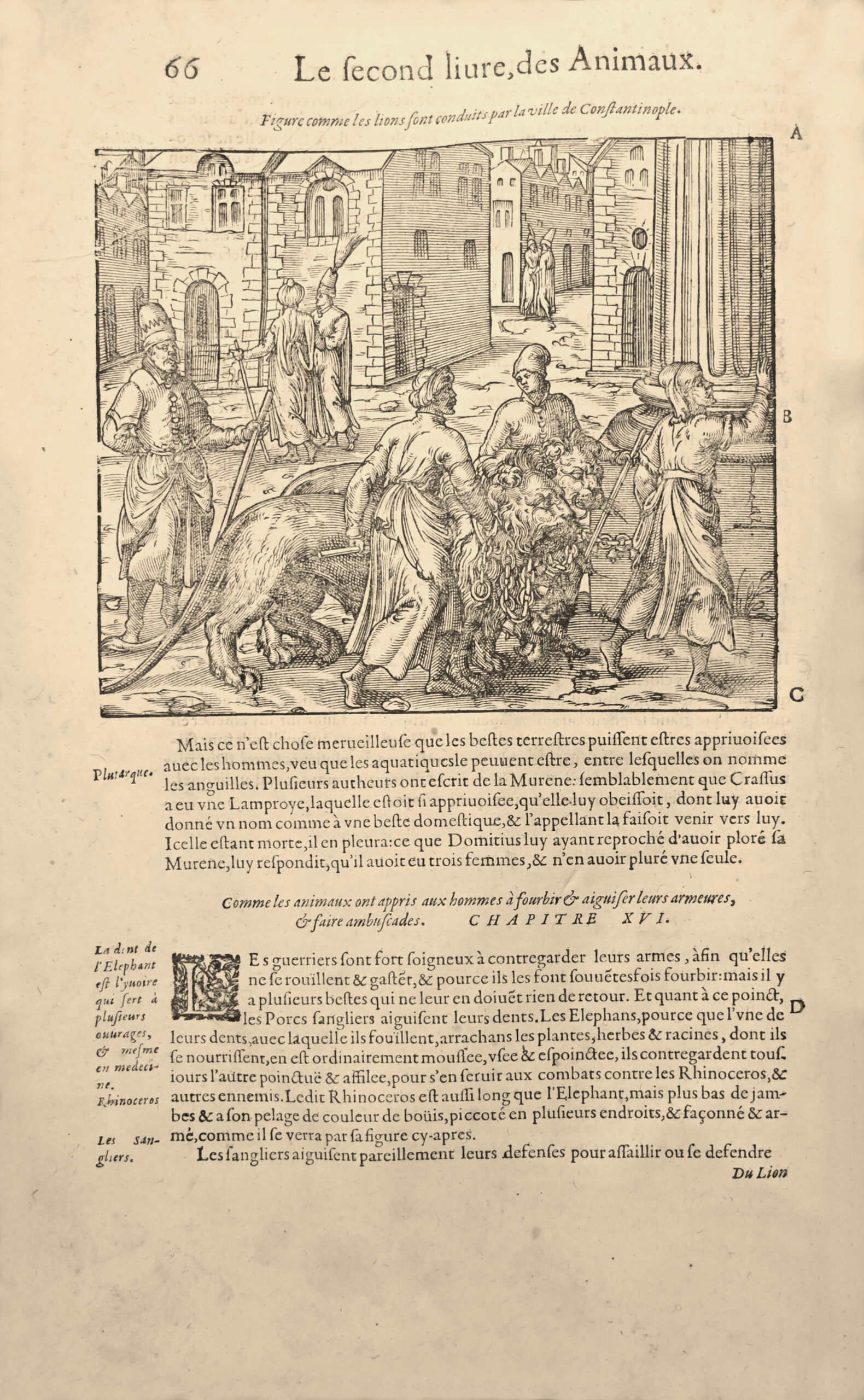
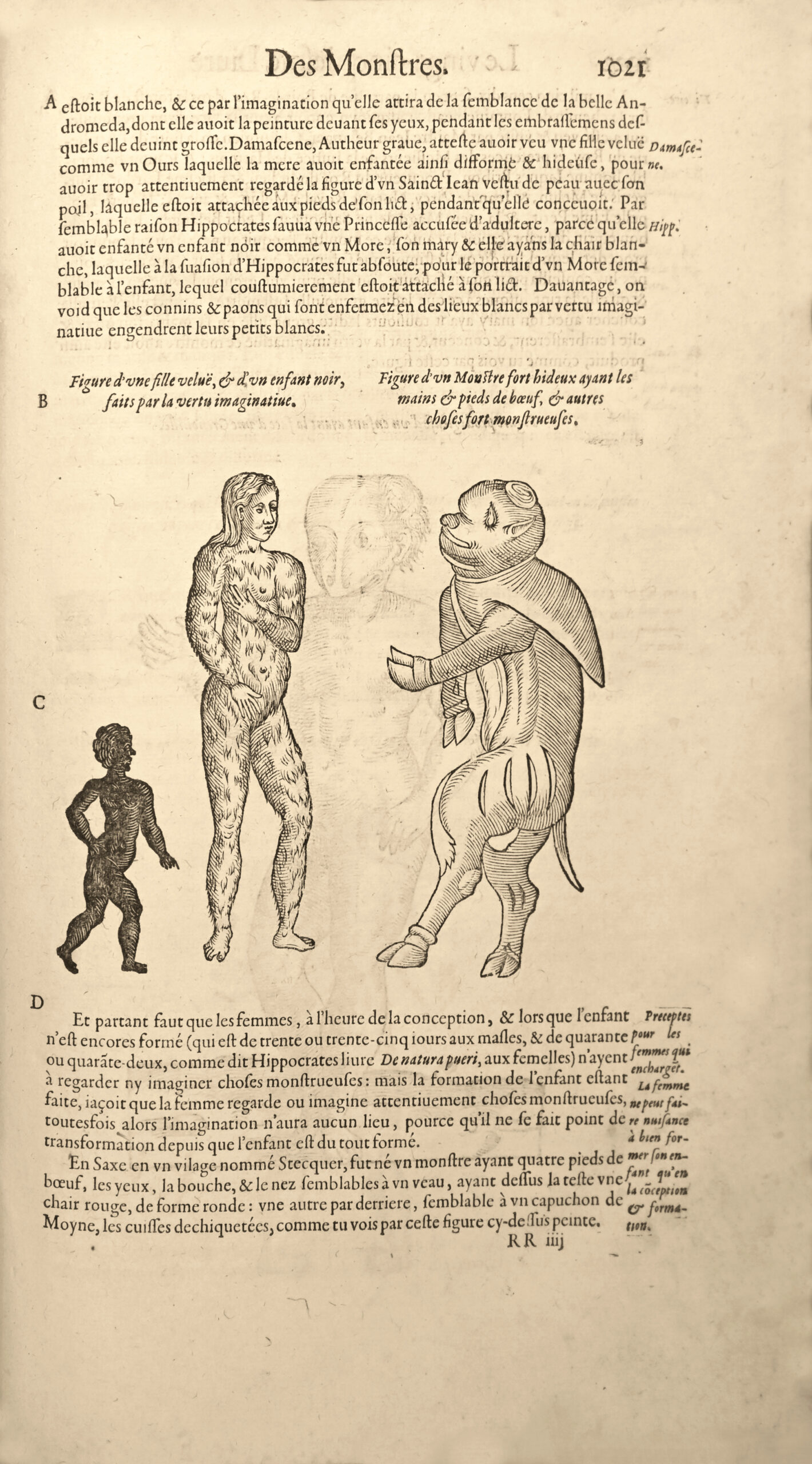
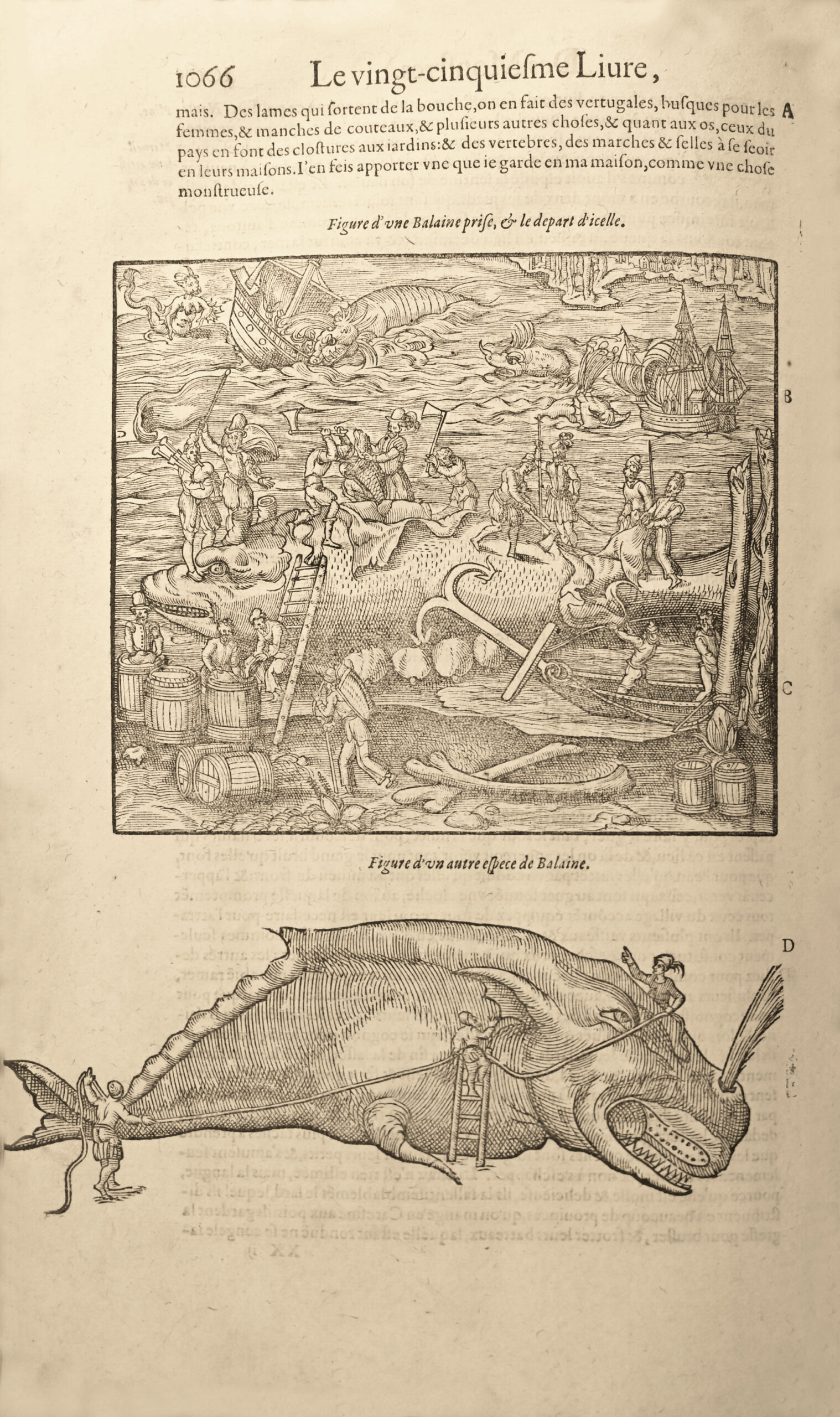
The edition is richly illustrated with many woodcuts, similar to those of 1585 and besides contains a portrait of the author, then aged 75, dated 1585 and signed by Vallée. This portrait was already present in some copies of the 1585 edition, but it is here a new issue since the cartouche specifying the name of the artist and the date of the portrait has been slightly enlarged. The printing of the text is besides punctuated with many tail-pieces, banners and historiated initials.
All in all, Ambroise PAre’s capital contribution concerns two essential areas: gun shot wounds and hemostasis.
Beautiful copy, with wide margins, preserved in an elegant binding from the beginning of the 18th century.
See less information