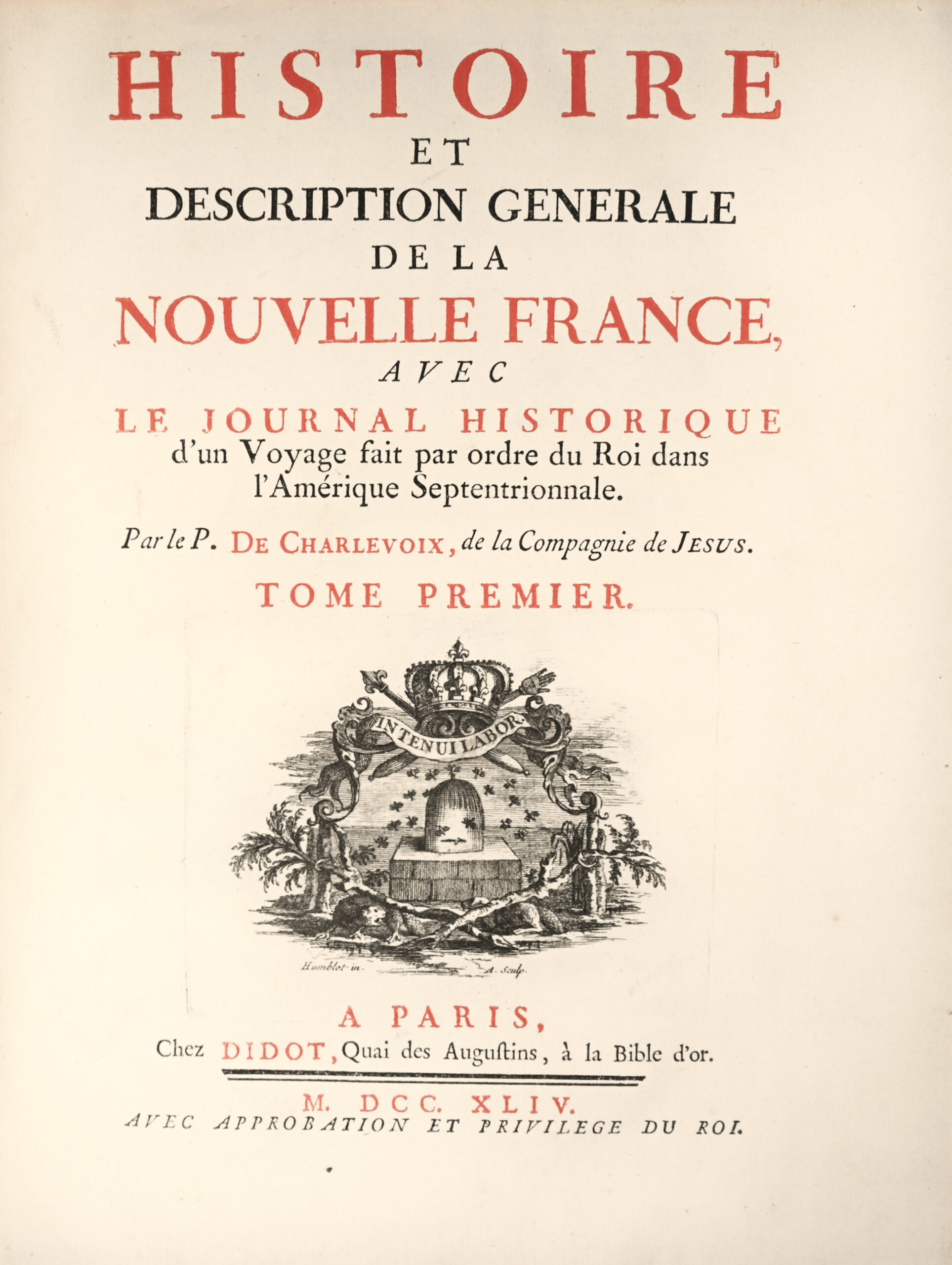
Paris, Didot, 1744.
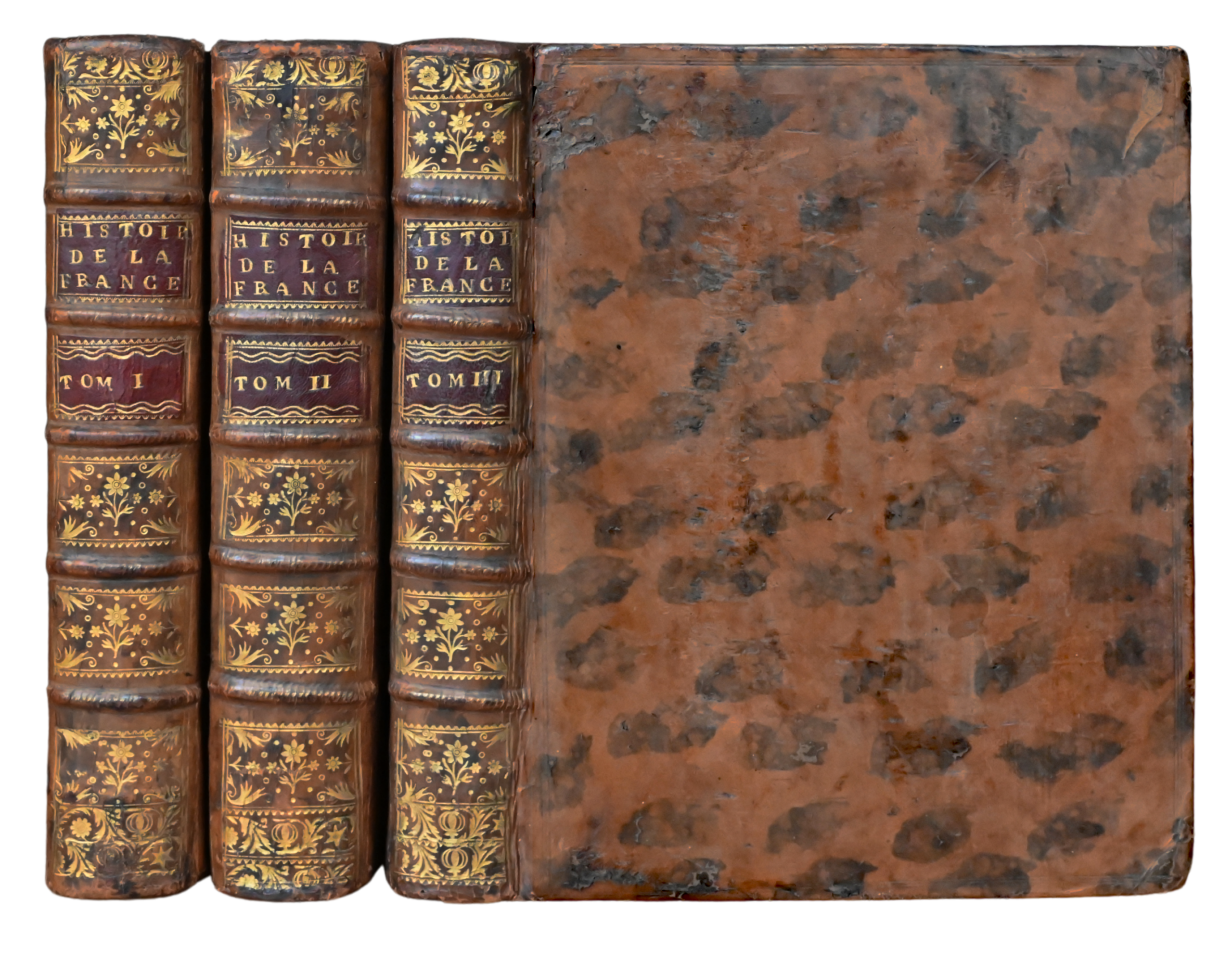
3 quarto volumes: I/ (4) leaves on large paper, including the dedication to “Monseigneur le duc de Penthièvre,” xxvi pp., 664 pp., 10 maps, 8 of them folding, and 2 vignettes; II/ (2) leaves on large paper, lxi pp., (3) pp., xv pp., (1) p., 582 pp., 8 folding maps, 56 pp., and 22 folding plates; III/ (2) leaves, xix pp., (1) p., xiv pp., 543 pp., 10 maps, 9 of them folding — worming in the lower blank margins of about twenty leaves, not affecting the text. Full marbled tan calf, decorated raised-band spines, red edges. Contemporary binding.
254 x 193 mm.
First edition.
The Didot printing, the rarest, unknown to Sabin, who cites only the Giffart; Nyon fils; Veuve Ganeau; and Rolin fils printings.
According to Leclerc, it is the most important and complete [work] on the history and geography of our former colony.
Father Charlevoix embarked in 1720 for the Canadian missions. He traveled up the St. Lawrence, made an excursion into the Illinois country, descended the Mississippi to its mouth, and returned to France in 1722.
“It is indispensable to anyone wishing to understand the origins and development of French power in these lands.” (Chadenat).
“This is one of the most important works there is relating to Canada. It contains not only what the author saw himself but he has collected from the best authorities and with great judgment”. (Rich).
The Jesuit Pierre François Xavier de Charlevoix (1682–1761) embarked at La Rochelle in July 1720 for the Canadian missions. Arriving in Quebec, he traveled up the St. Lawrence, stopped in the Illinois country, and descended the Mississippi to its mouth before heading for Santo Domingo; but his ship was wrecked at the entrance to the Bahama Channel.
A second voyage enabled him to reach Santo Domingo.
His work, which records his personal observations, particularly on the geography and flora of the regions he traveled through, also provides a very comprehensive account of contemporary knowledge of Canada and Louisiana.
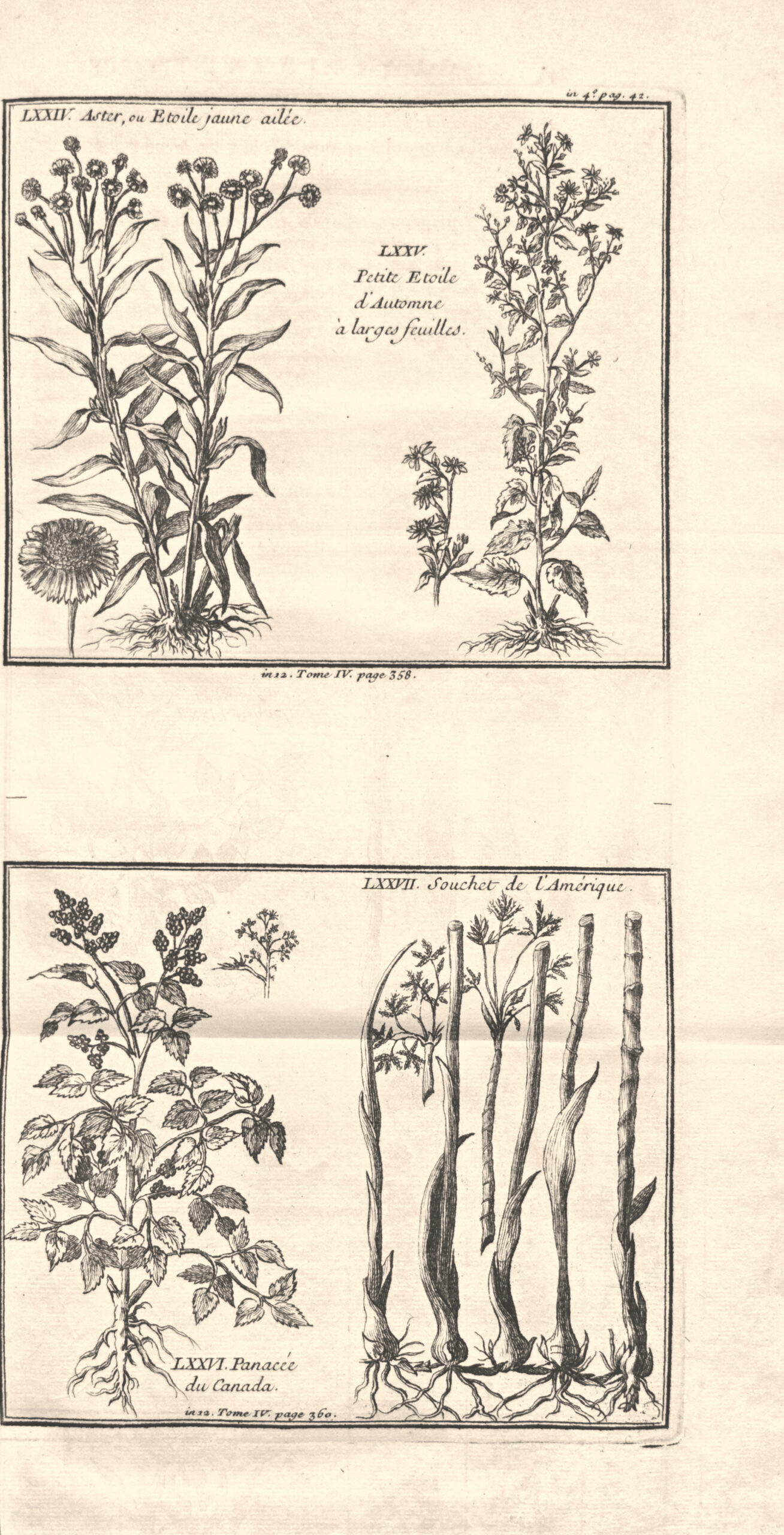
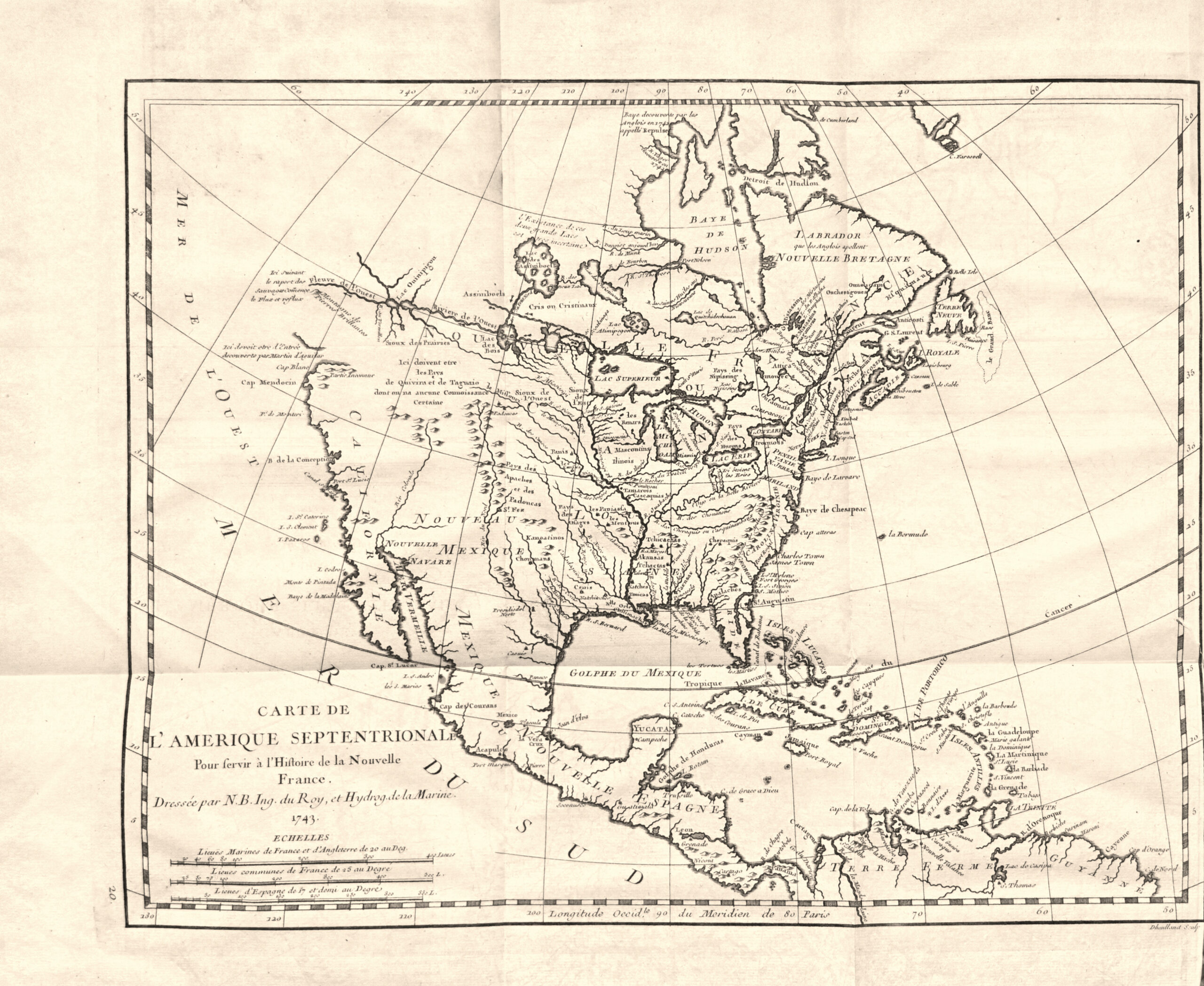
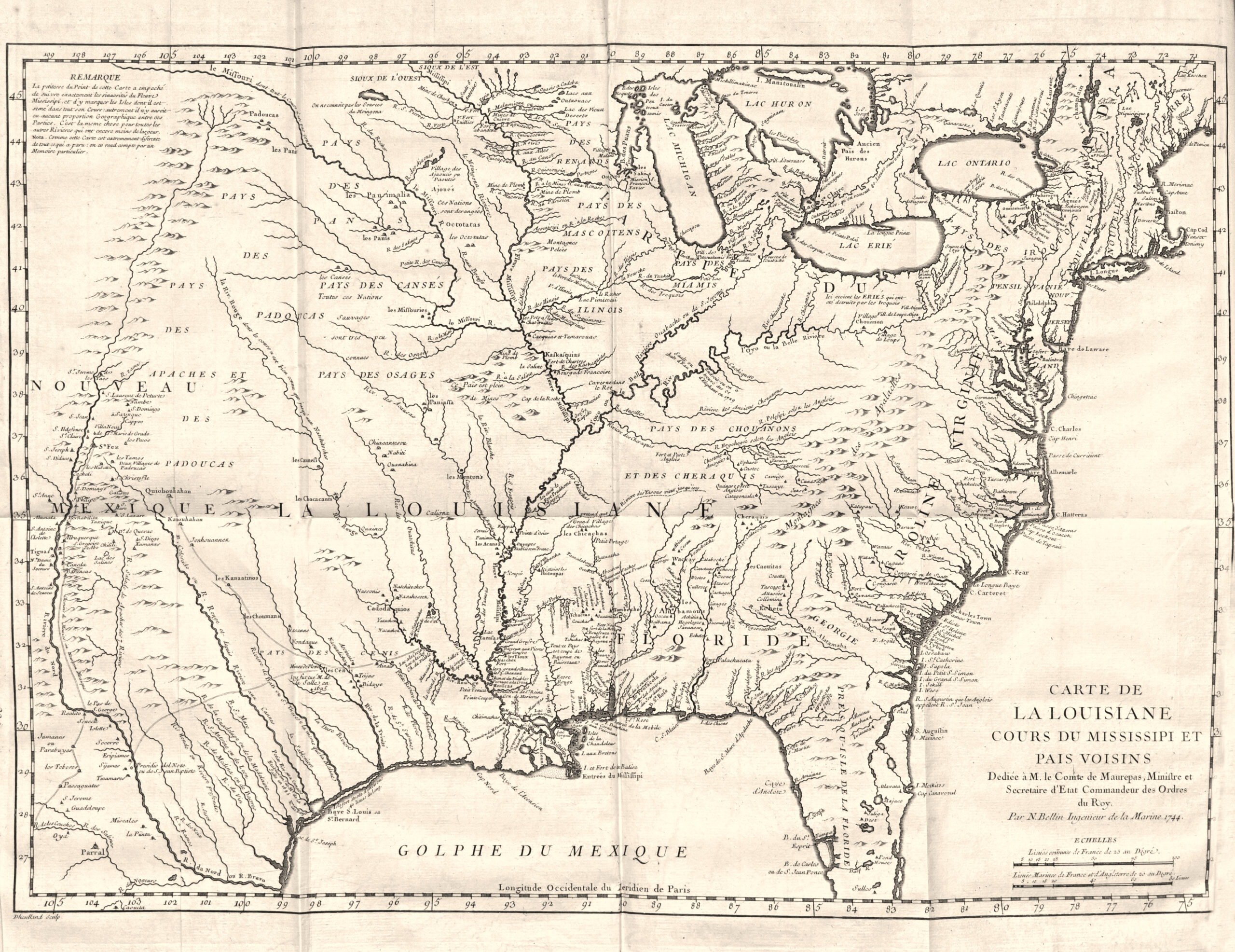
The exceptionally abundant illustrations, of great documentary interest, comprise 22 folding plates of flowers and plants and 28 large, multiply folded maps drawn by Jacques Nicolas Bellin the Elder from information supplied by Charlevoix.
« These maps are of clear interest because, dated 1743, they record the latest discoveries made in 1742 in the far north of America.” Sabin.
All these folding maps abound in concrete details about the various peoples they locate and note the existence of territories still unexplored. Some are particularly large (approximately 560 x 405 mm; 460 x 295 mm…).
The elegant botanical plates combine documentary accuracy with genuine aesthetic refinement.
The Histoire et description générale de la Nouvelle France comprises two parts.
The first, consisting of 22 “books” or chapters, traces the history of the French colonies in Brazil, Florida, Acadia, Louisiana, and New France, from French fishermen’s first contacts with Canada’s Atlantic coast in 1504 to the return of Louisiana to the Crown in 1731.
The second part, the Journal historique, recounts Charlevoix’s travels in North America from 1720 to 1722. To fully understand the work’s significance and interest, one must examine his “Projet d’un corps d’Histoires du nouveau Monde,” published in January 1735 in the Journal de Trévoux.
According to historian Léon Pouliot, Charlevoix saved the country from a “misfortune” by producing a “continuous history” of France’s efforts “to establish its spirit and soul on American soil.”
Indeed, many French-Canadian historians were marked by the spirit of his work, some even influenced to the point of reproducing entire pages of it.
In truth, French-Canadian historiography owes a considerable debt to Charlevoix. His mythologizing vision of the past shaped the teaching of history in Quebec’s schools, colleges, and universities until the Quiet Revolution. Thus developed a clerical-nationalist ideology founded on the heroic saga of a people called upon to defend spiritual values within a materialistic America. It sustained the veneration of a past as glorious as it was edifying—a past that could compensate for the defeat of 1759 and abandonment by the “mother country,” and that ultimately reinforced the power of a clergy quick to denounce the advances of the Revolution of 1789. The Histoire et description générale de la Nouvelle France is indeed a testament to a mythical France, eldest daughter of the Church and guardian of the faith and the language.
The paradox, not to say the irony, of this testament is that Abbé Raynal and Diderot plundered it to write some of their most virulent critiques of French colonization in the Histoire des établissemens et du commerce des Européens dans les deux Indes, and that, according to the English translator of Charlevoix’s work, the British came to appreciate the importance of New France through reading it.
If Charlevoix’s work still has meaning today, it is to be found in sociology and the history of ideas: the Histoire et description générale de la Nouvelle France has itself become a historical object.”
An exceptionally rare copy from the celebrated Didot printing, the rarest of all, unknown to every bibliographer.