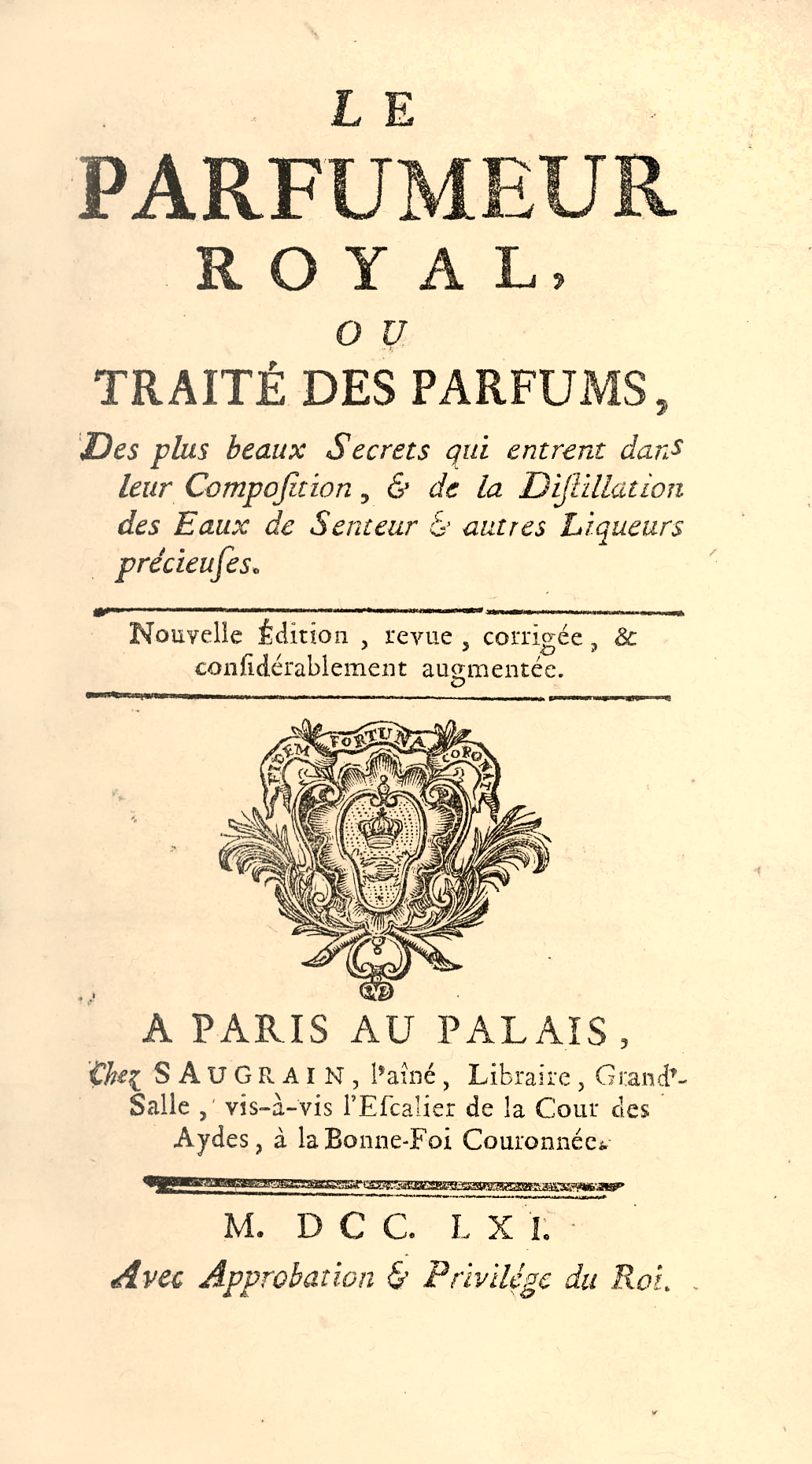
A Paris, au palais, chez Saugrain, 1761.
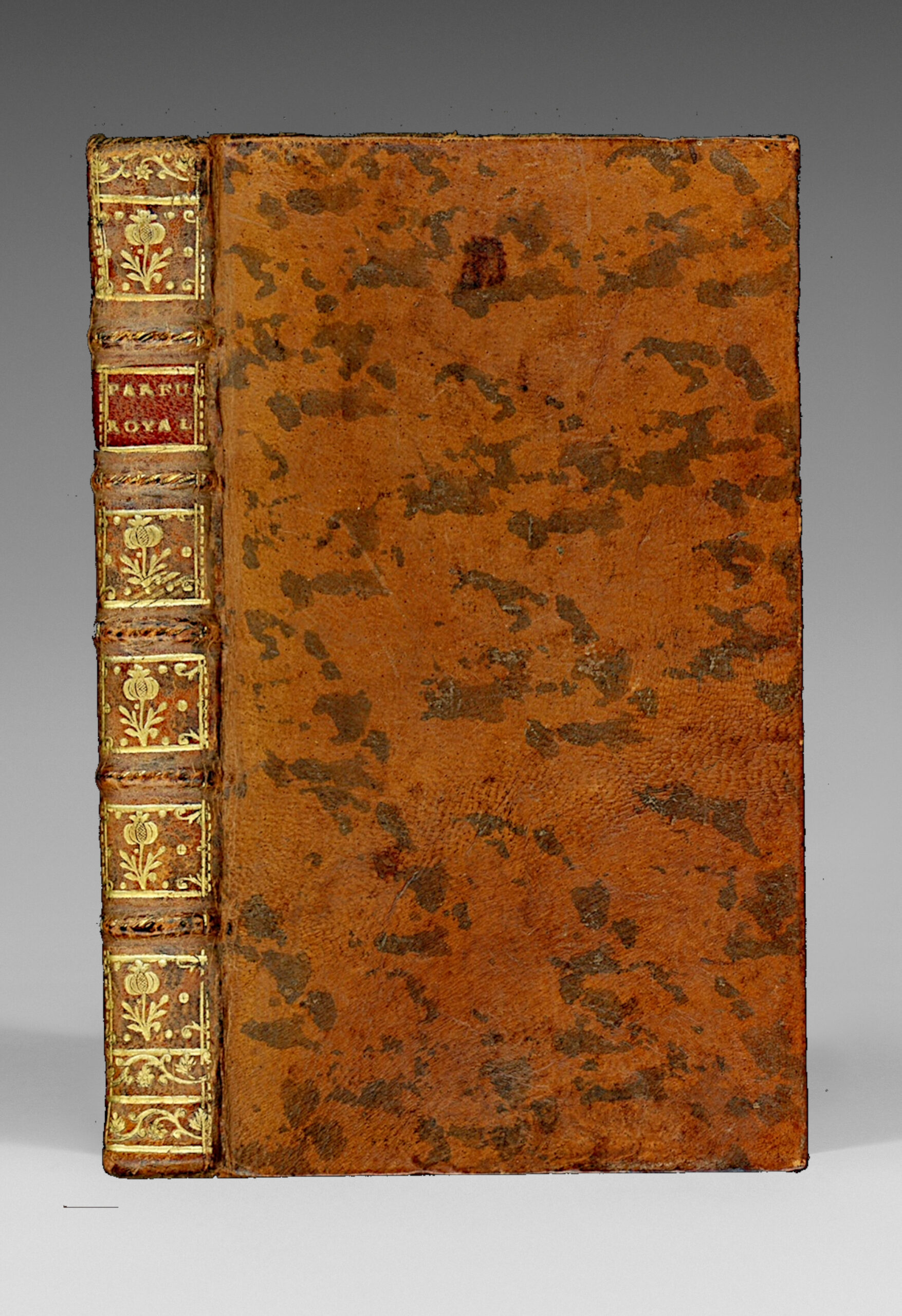
12mo, (1) l., 242 pp. wrongly numbered 142, (2) ll, marbled calf, ribbed spine decorated with gilt fillets and fleurons, burgundy morocco lettering-piece, marbled edges. Contemporary binding.
161 x 94 mm.
Enlarged second edition of “Le Parfumeur Royal” attributed to Simon Barbe, 17th century perfumer.
This famous book opens with the Traité des parfums et des plus beaux secrets qui entrent dans leur composition (pp. 1-86); followed by the Traité de toutes les différentes sortes de savonnettes (pp. 87-105); the Traité des pommades (pp. 106-124); the Traité des poudres pour les cheveux (pp. 125-140); le Traité des grosses Poudres de Violette (pp. 141-159); Le Traité des Eaux de Senteurs (pp. 160-174); le Traité des Pastilles à brûler (pp. 175-179); le Traité des Liqueurs & Parfums à la Bouche (pp. 180-204): this chapter contains recipes for Ratafias and other liqueurs. Finally, the Traité de la distillation (pp. 205-226).
Simon Barbe, who lived in Paris on rue des Gravilliers à la Toison d’Or, was undoubtedly the most famous perfumer of his century. He wrote two perfumery manuals, recording his knowledge and expertise. The first, Le Parfumeur françois, was written for non-professionals, with the aim of teaching everyone how to compose perfumes, particularly for “the entertainment of the nobility and the use of religious people“, and was published in 1693.
In 1699, he wrote his second treatise, Le Parfumeur Royal, this time aimed at professionals. He presents this work as useful to “those who collect flowers and necessary to glove-makers, wig-makers and liquor merchants“. Here, no more dedication, no more preface; the author no longer claims to be writing for the entertainment of the nobility, nor for the use of religious people. One senses that the vogue for perfumes has come to an end. Why the change of heart? They had had the clumsiness of inconveniencing Louis XIV. From then on, it was all over for them. “As the King dislikes scents,” says Marana, “everyone makes a point of hating them; ladies faint at the sight of a flower”.
A precious copy of this treatise on perfumes, preserved in its contemporary marbled calf binding.
Ex-libris from the library of Viscount Émile de Guizelin.