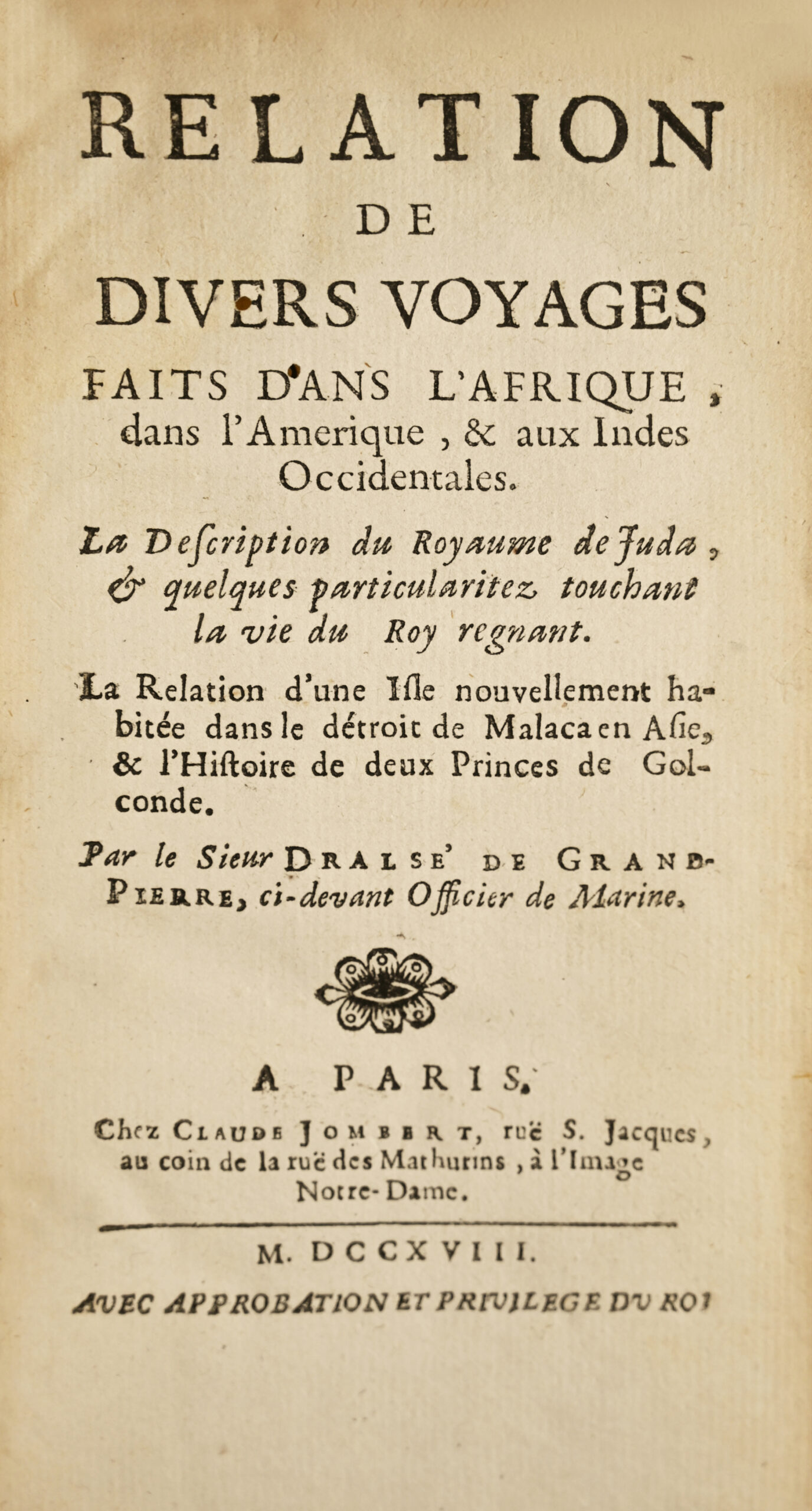
Paris, Claude Jombert, 1718.
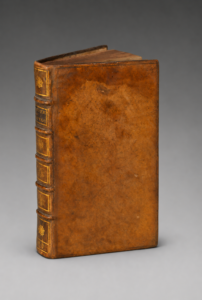
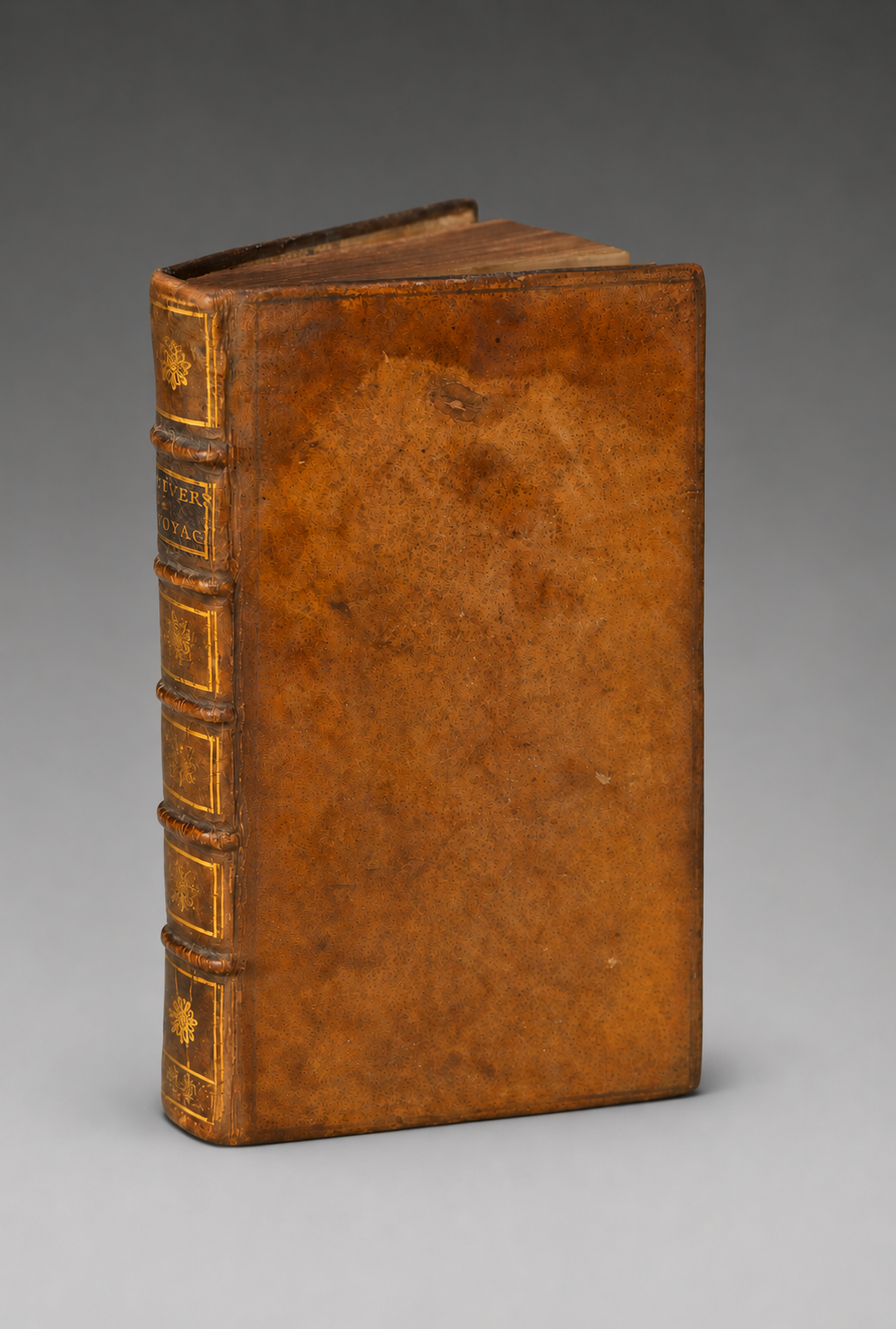
Duodecimo, (3) leaves, 352 pp., (2) leaves. Bound in contemporary full speckled tan calf, with a blind-ruled border on the covers, a raised-band spine decorated with gilt floral ornaments, decorated board edges, and red-speckled edges. Contemporary binding.
169 x 91 mm.
The famous, almost unobtainable first edition of this collection of accounts of voyages undertaken by Draslé de Grandpierre around the world between 1700 and 1718.
Leclerc 266 and Palau 260452.
A naval officer, Dralsé de Grandpierre made four voyages to America, Africa and Asia. His accounts offer detailed descriptions of the various cities and kingdoms he visited, enriched with anecdotes “all of which are of interest” (Boucher de la Richarderie).
A manifesto for the colonization of South Africa and Australia.
“On his first voyage, Draslé visited Buenos Aires in Paraguay. He described the city fairly accurately and dwelt on the fertility of its territory, the wealth of its trade, the character of its inhabitants, and especially that of its women.
On a second voyage, the misfortune of being taken prisoner by the English brought him into contact with several regions along the coast of Guinea. After his release, he went to Martinique, where he took part in a buccaneering expedition.
The purpose of his third voyage was to visit several regions of West Africa, such as the kingdom of Juda, or Benin, about which he provided some rather curious details concerning the country’s religion and customs. From there he set out for Mexico. His description of its capital is brief but informative. In these various accounts, Draslé included a number of anecdotes, all of which are of interest.” (Boucher de La Richarderie, I, 273).
He later traveled through the Strait of Malacca and discovered a new island there, which he describes in his account.
“These accounts always contain something new or unusual in their descriptions of places and the adventures of the voyages.” (no. 14)
A precious first edition in a contemporary binding, so rare that it remained unknown to Brunet, Deschamps and Chadenat.
See less information