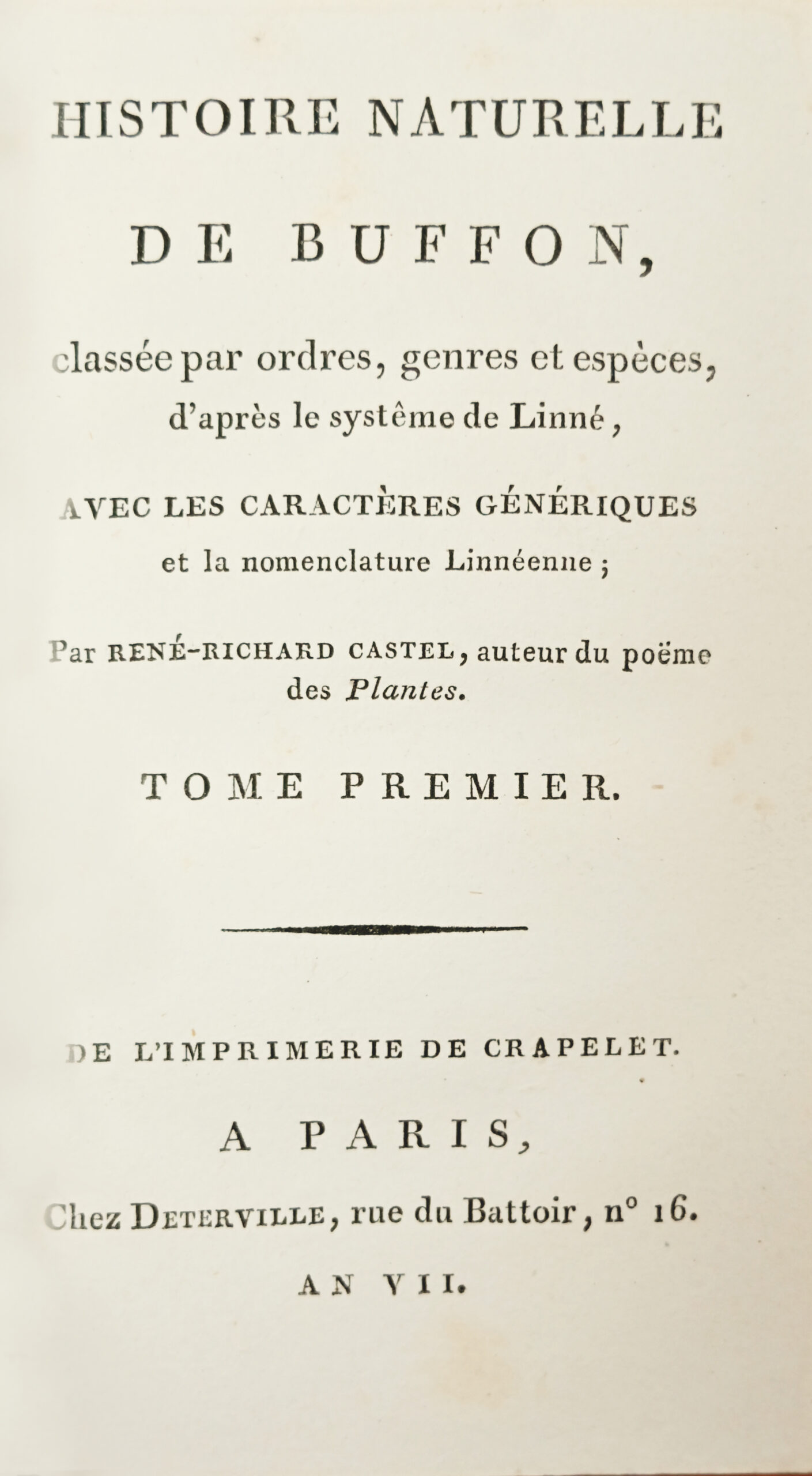
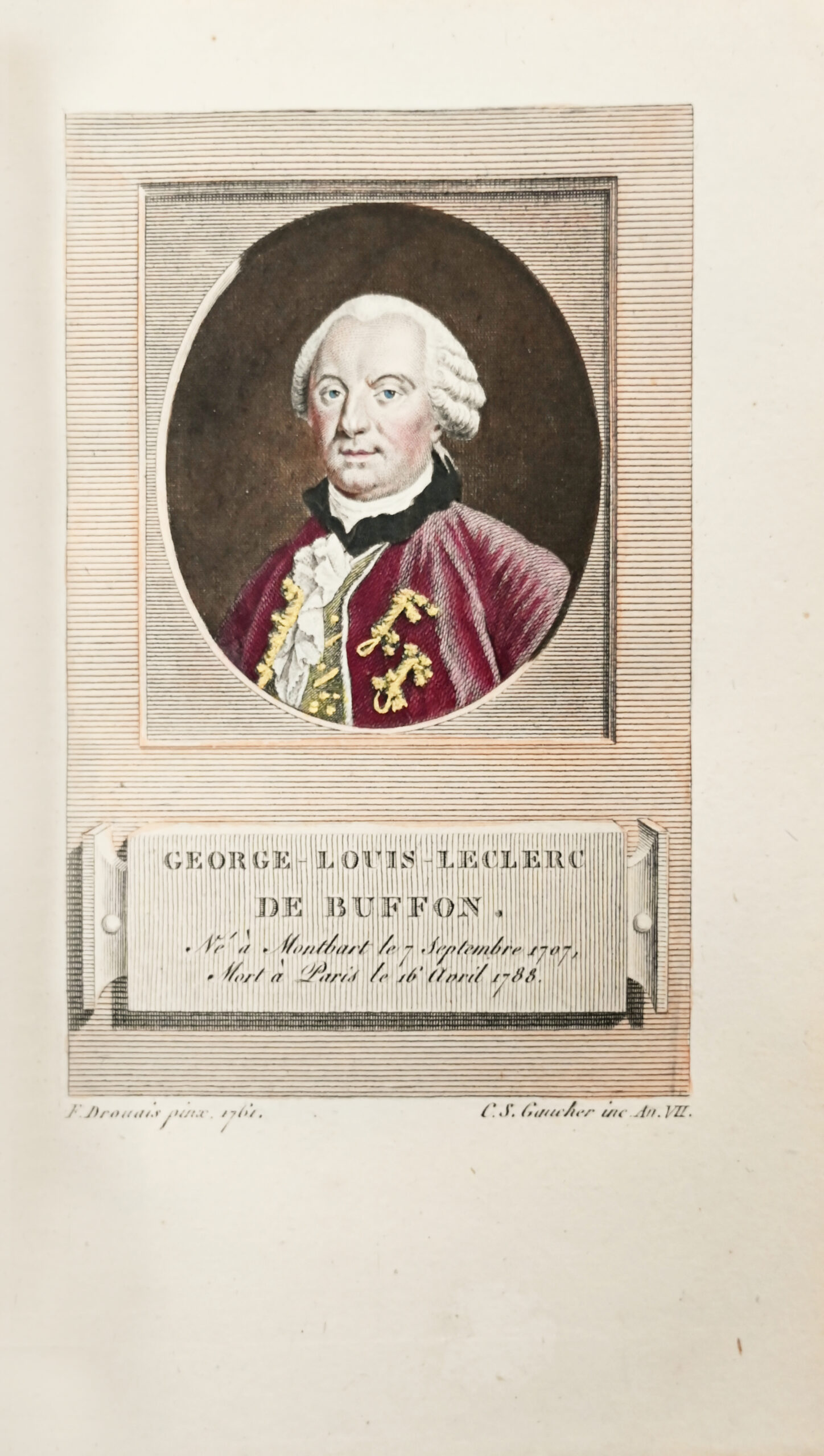
Paris, Crapelet for Deterville 1799-1803.
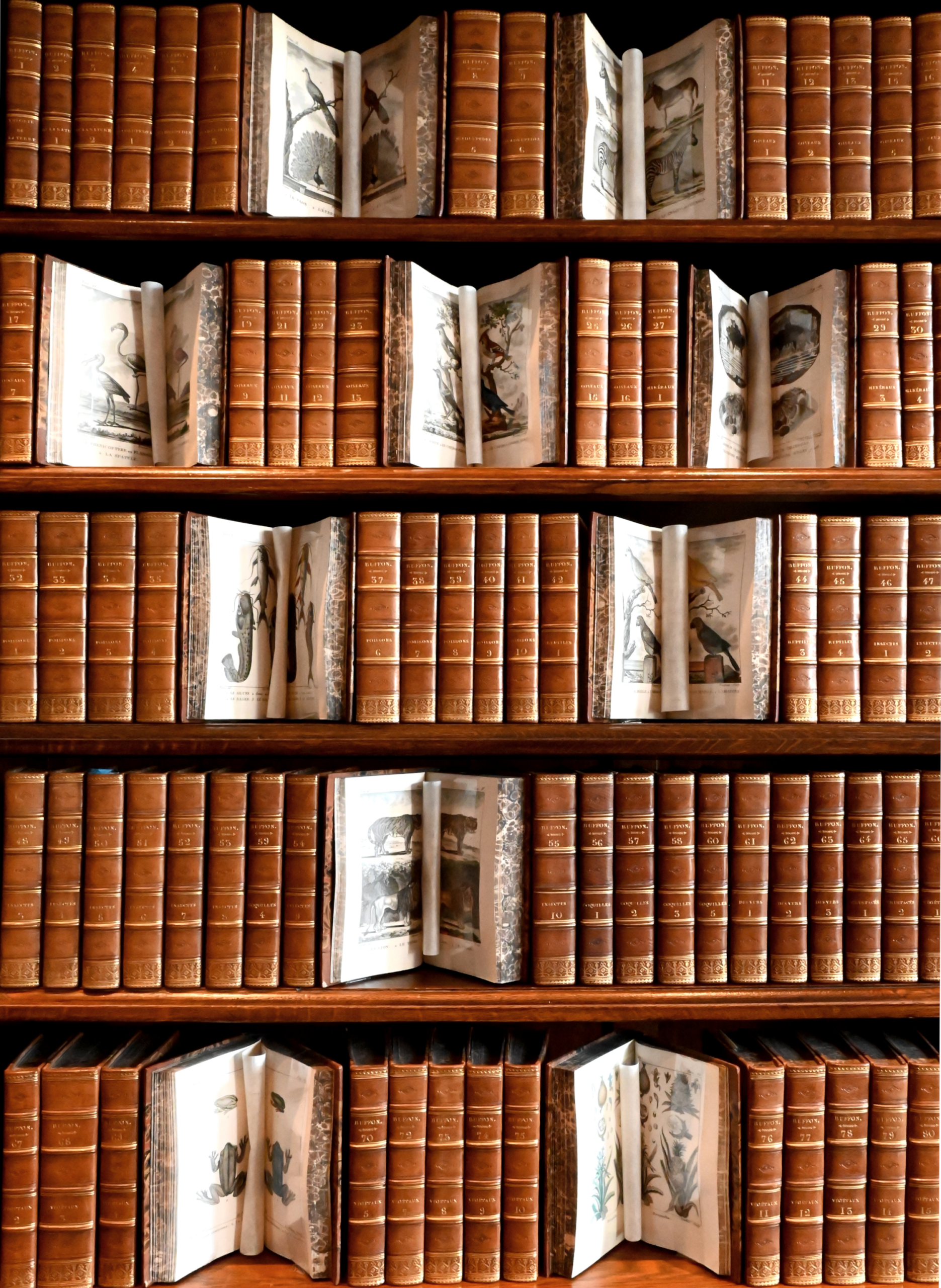
80 volumes in-16 illustrated with 1 portrait of Buffon and 780 full-page engravings in two states, in black and colored. Contemporary bindings in half Russian mahogany leather with corners, spines with four raised bands adorned with gilt and blind motifs, marbled edges. Binding of the period.
135 x 88 mm.
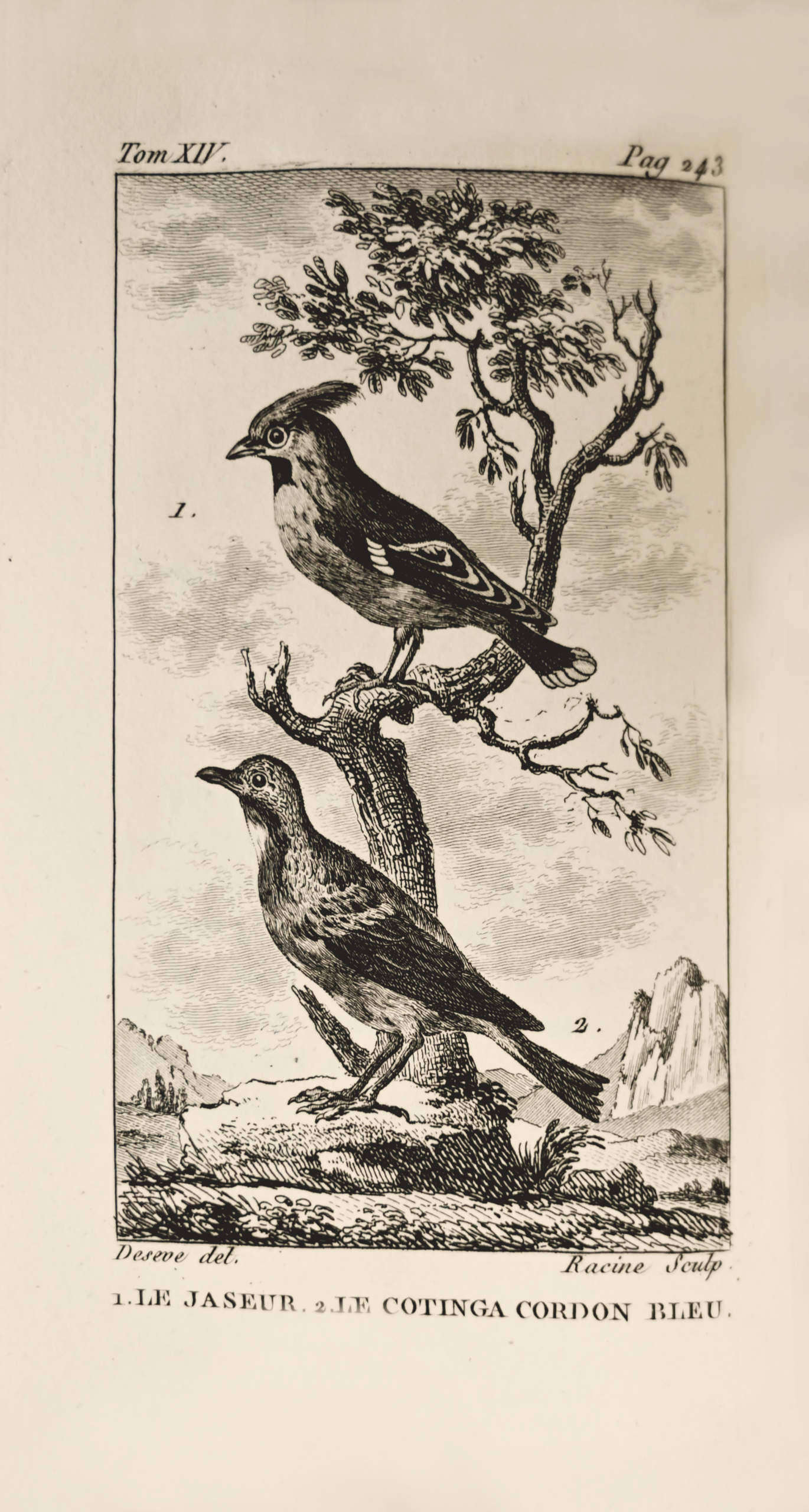
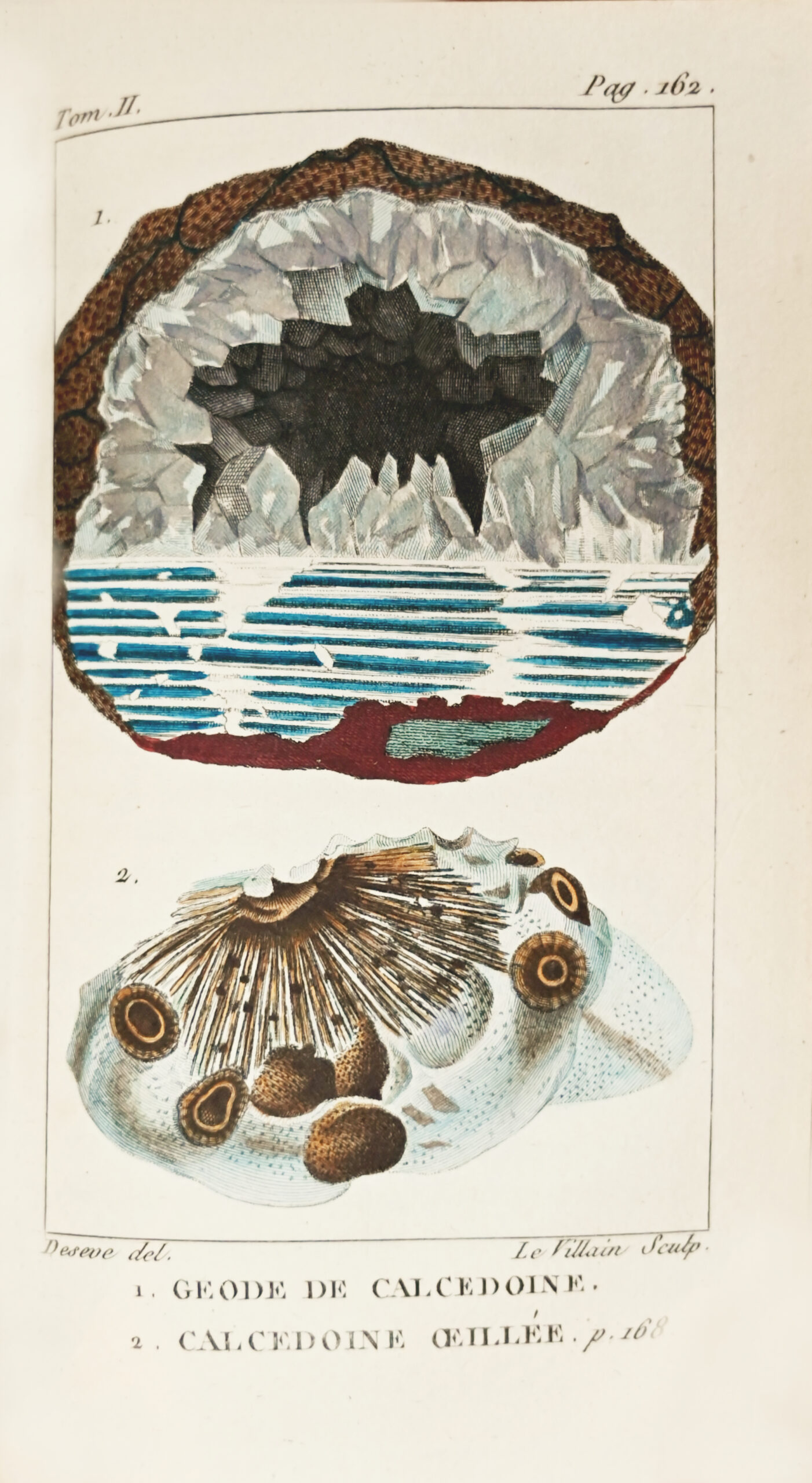
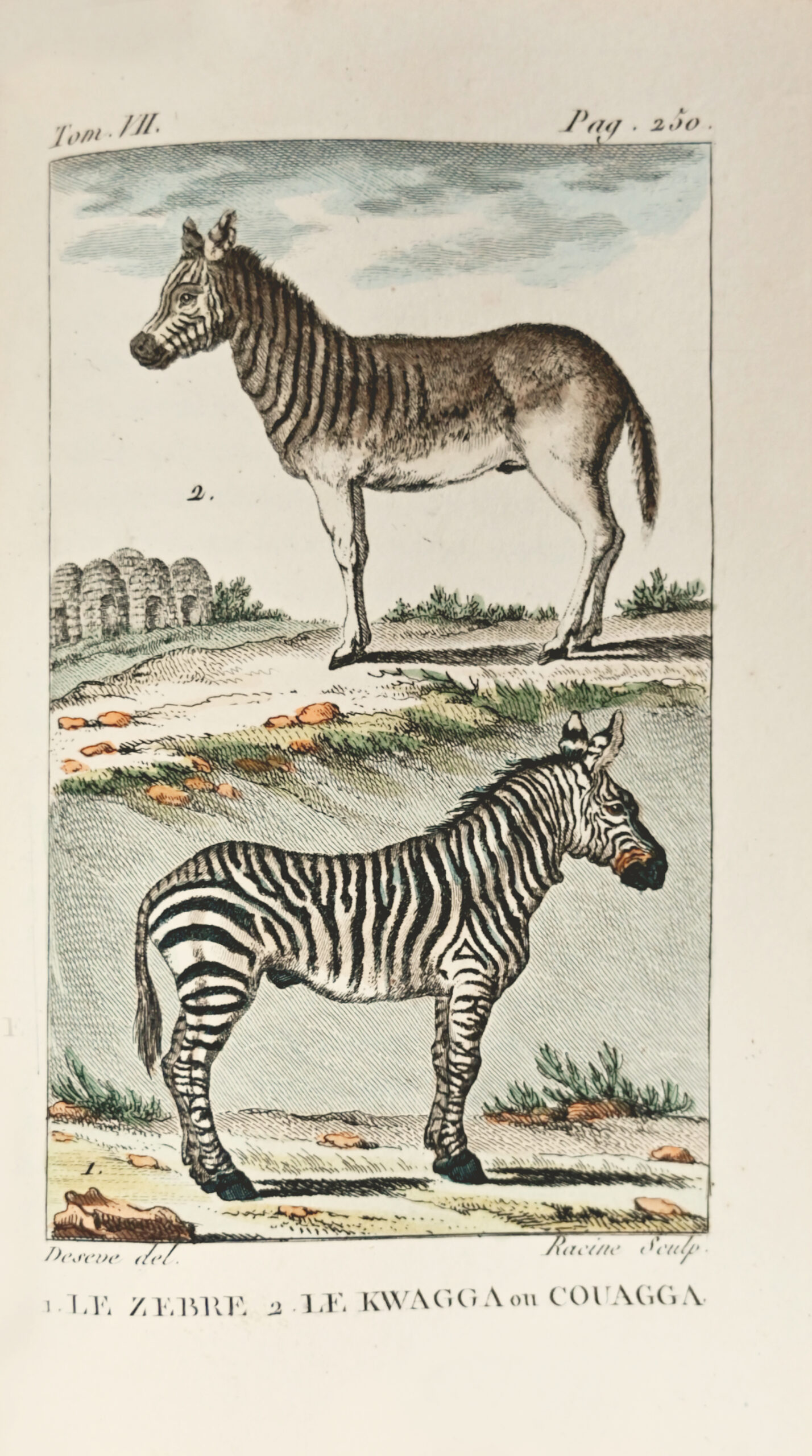
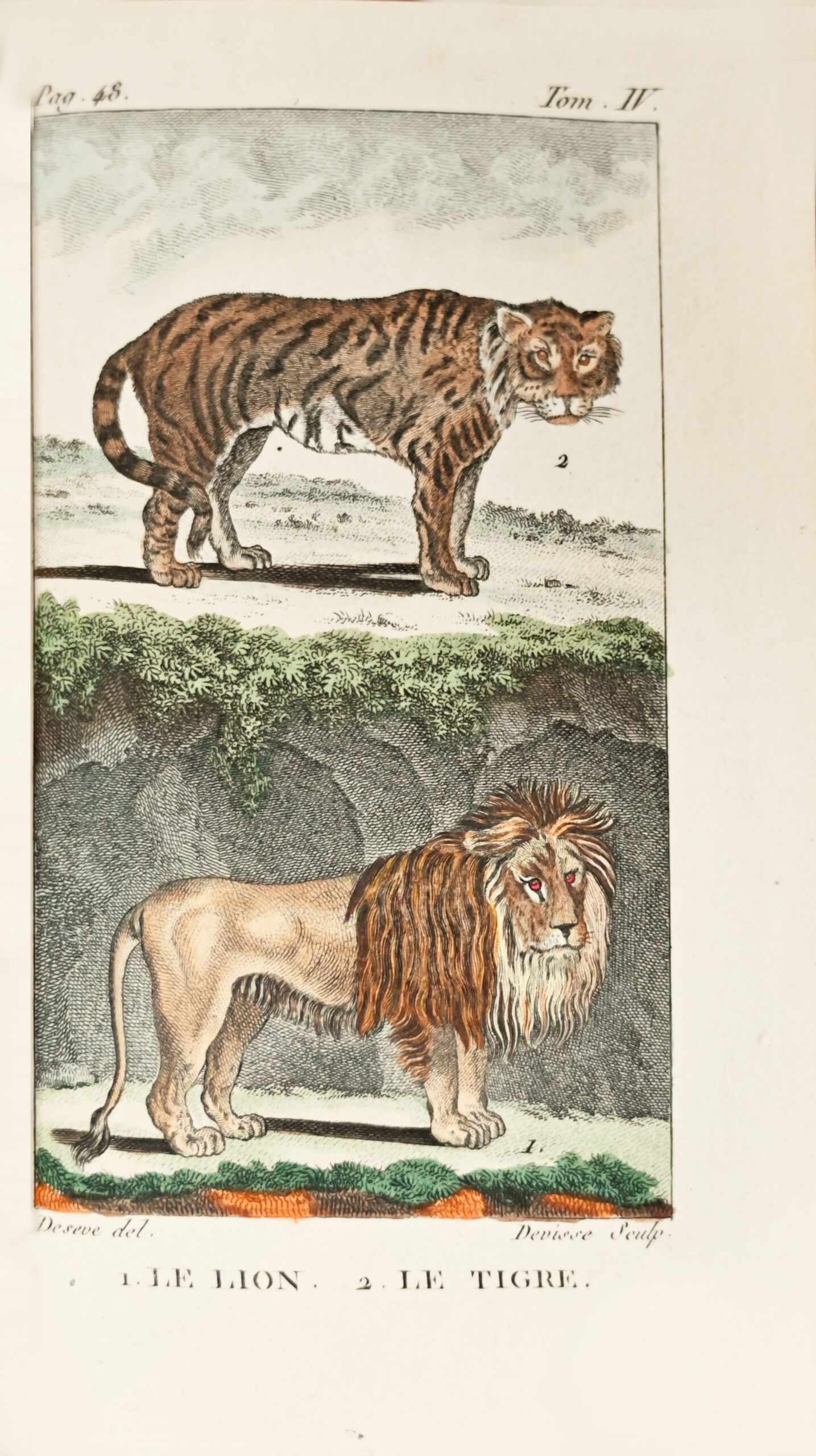
Charming pocket edition of Buffon’s complete works, adorned with 780 full-page engravings.
Nissen, IVB, 673; Graesse, I, 566; Monglond, IV, 1154.
This was one of the most ambitious and complete works in scientific literature.
Here is the division of this course:
Theory of the Earth; Natural History of Man, Quadrupeds, and Birds, by Buffon, classified according to Linné’s system, by R.-R. Castel, 26 volumes.
Minerals, by M. Patrin, 5 volumes.
Fish, by M. Castel, 10 volumes.
Reptiles, by MM. Sonnini and Latreille, 4 volumes.
Insects, by MM. Tigny and Brongniart, 10 volumes.
Shells, worms and crustaceans, by M. Bosc, 10 volumes.
Botany, by MM. Lamark and Mirbel, 15 volumes.
The 80 volumes cost 216 fr. black plates. – 350 fr. colored plates. – 530 fr. vellum paper colored plates.
(Brunet, Manual of the Bookseller and Book Lover, 296).
In the ” Plan of the Work“, Buffon expresses himself as follows regarding the section devoted to birds:
” This work is the result of nearly twenty years of study & research although during this same time we have neglected nothing to educate ourselves on birds, & to acquire all the rare species that we have even succeeded in making this part of the King’s Cabinet more numerous & more complete than any other collection of this kind in Europe, we must nevertheless admit that we still lack a fairly large number…
Our work will contain almost everything that is known about birds & yet it will be, as one sees, only a summary, or rather a sketch of their history, only this sketch will be the first that has been made in this genre, for the old & new works, to which the title of History of Birds has been given, contain almost nothing historical; as imperfect as our history will be, it may serve posterity to make a more complete and better one; I say to posterity because I clearly see that many years will pass before we are as knowledgeable about birds as we are today about quadrupeds […] What we provide here will thus serve for a long time as a base or as a rallying point to which new facts that time will bring can be referred. If the study & cultivation of Natural History continue, facts will multiply, knowledge will increase; our historical sketch, of which we have been able to trace only the first outlines, will gradually fill out & gain substance; this is all we can expect from the product of our labor, and perhaps it is too much to expound on its little value.” (Buffon).
” The History of Nature “… experienced, from the publication of the first volumes, a resounding success. Buffon was admired throughout Europe and immediately gained fame equal to that of Voltaire and Rousseau. He was called “the Pliny and Aristotle of France”; he entered the French Academy without taking any steps; a statue was erected in his honor during his lifetime.Natural History appeared, rightly, as one of the monuments of modern science and the awakening of the minds, just like the Encyclopedia, which is contemporary to it. It had, in any case, the merit of putting in vogue not these amateur experiments favored by people of the world, but real observational science, and it immediately sparked an intense development of natural sciences.
It was the first attempt at pleasant and refined popularization of the study of natural history that provoked a discovery and enthusiasm among the cultivated public and a desire to protect this science among the sovereigns and the great.
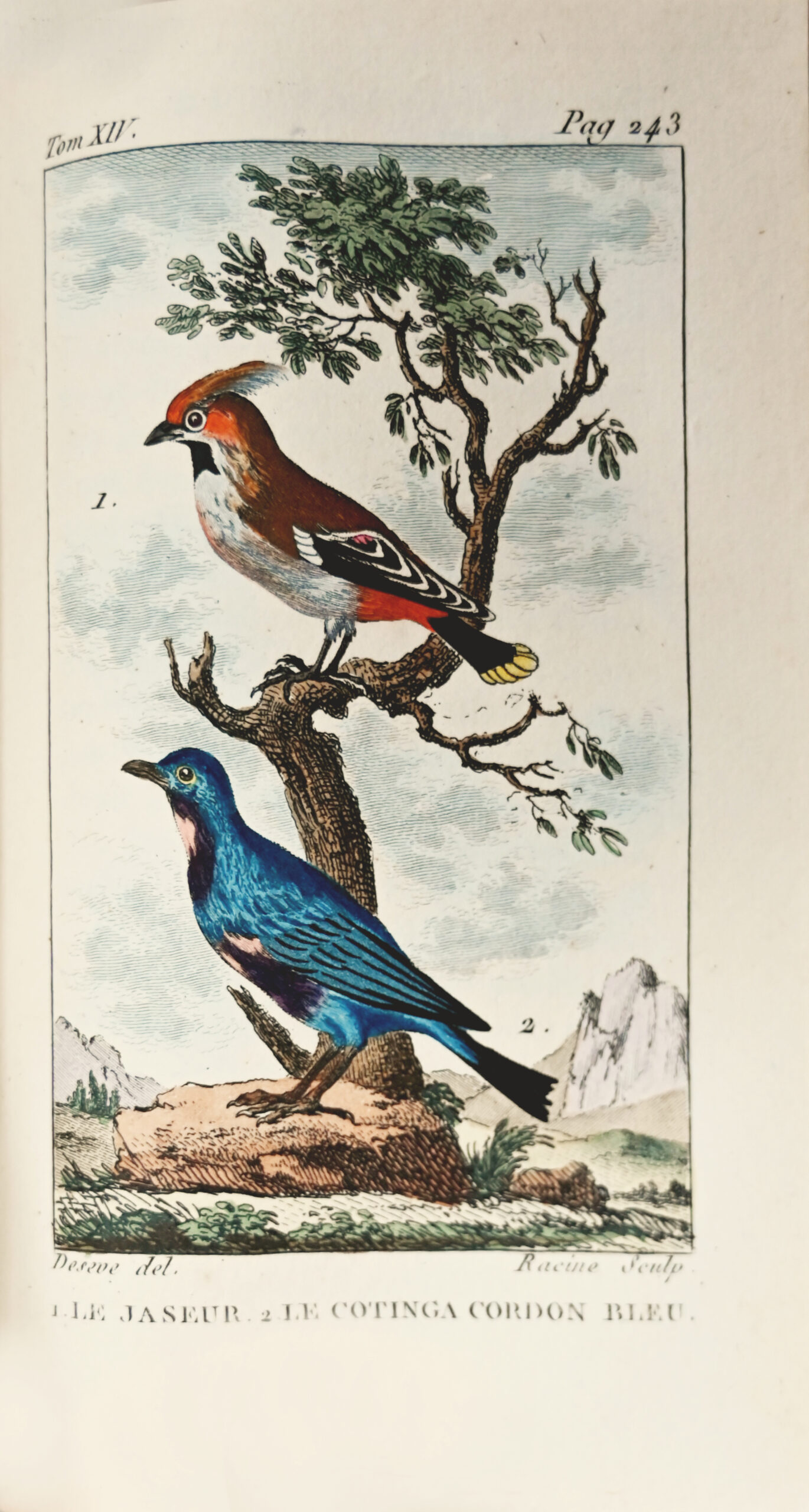
The abundant illustration of this edition consists of a portrait of Buffon engraved by Gaucher after Drouais, in double-state, and 780 metal-engraved plates by Barabant, Desève, Meunier, Pauquet, here in double state, in black and stenciled watercolor.
The 80 bindings executed around 1820 in an excellent Parisian workshop show no defects.
The last fifteen volumes contain the natural history of plants by Lamarck (120 plates). The portrait of Buffon is in two states, one of which is colored.
Beautiful copy with all the plates present in two states, in black and gouache from the time, preserved in its uniform bindings of the period.