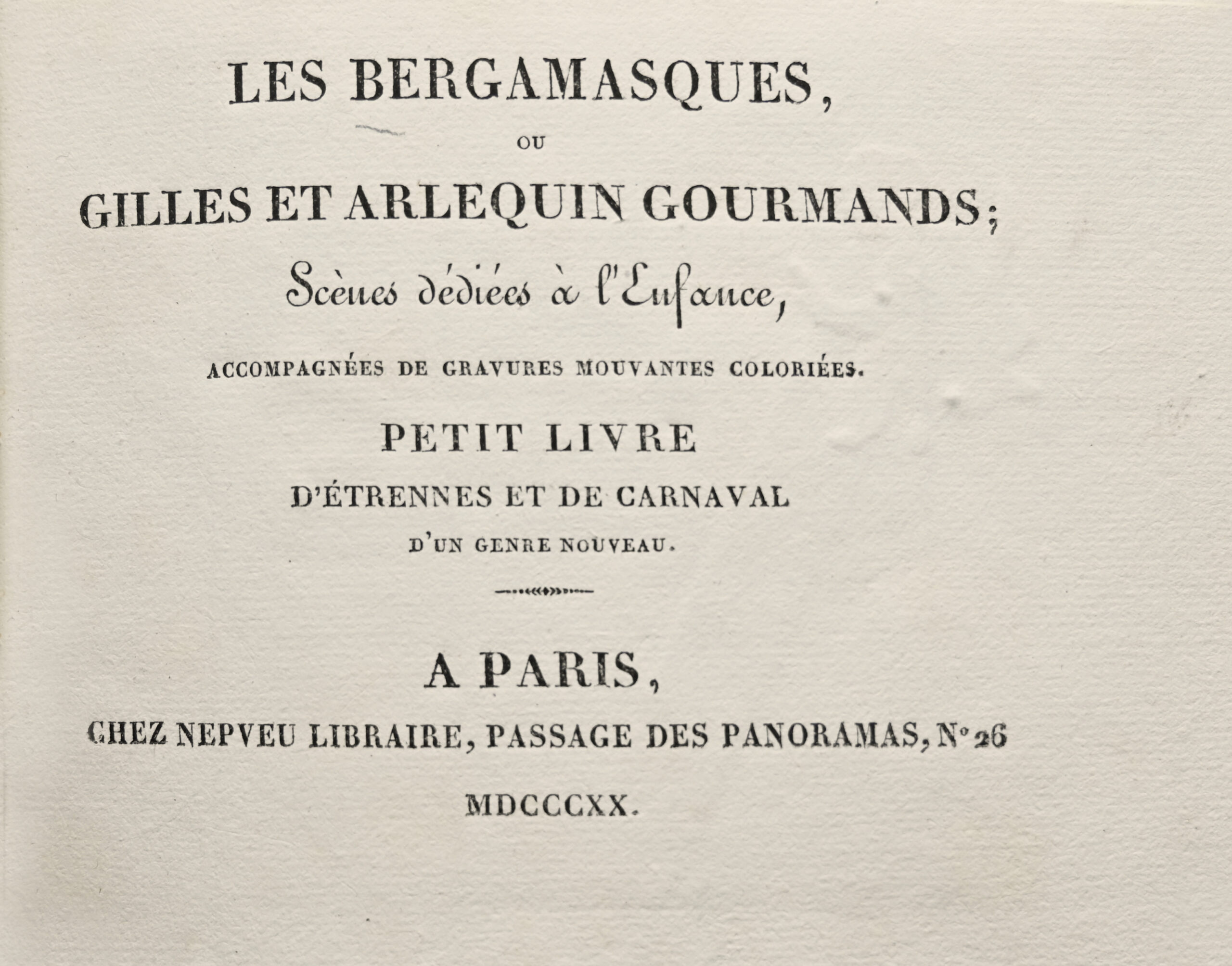
Paris, at Nepveu bookseller, 1820.
Octavo of 56 pages and 6 movable colored engravings, blue cardboard binding of the period, blue cardboard slipcase. *Binding of the period*.
138 x 101 mm.
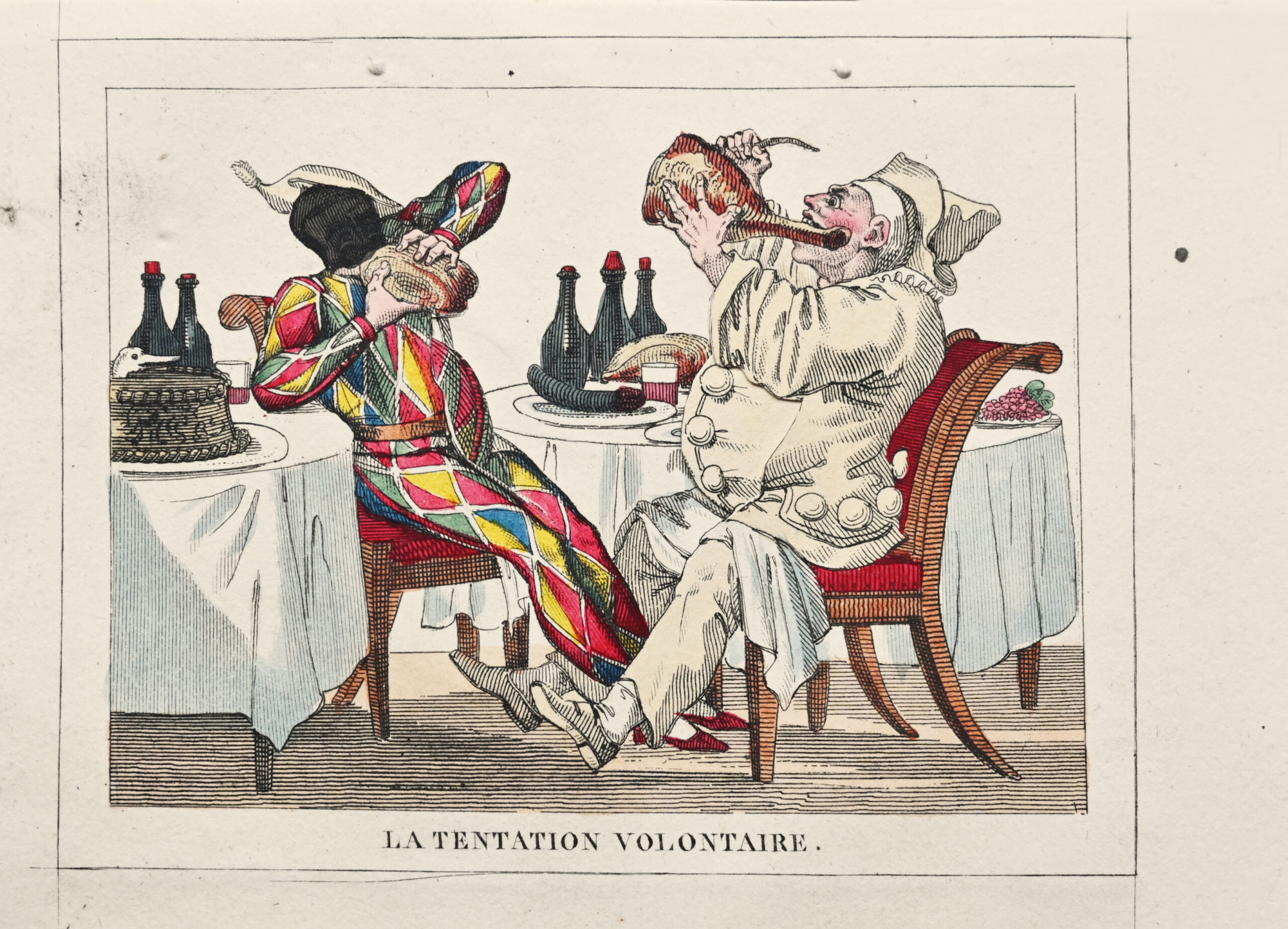
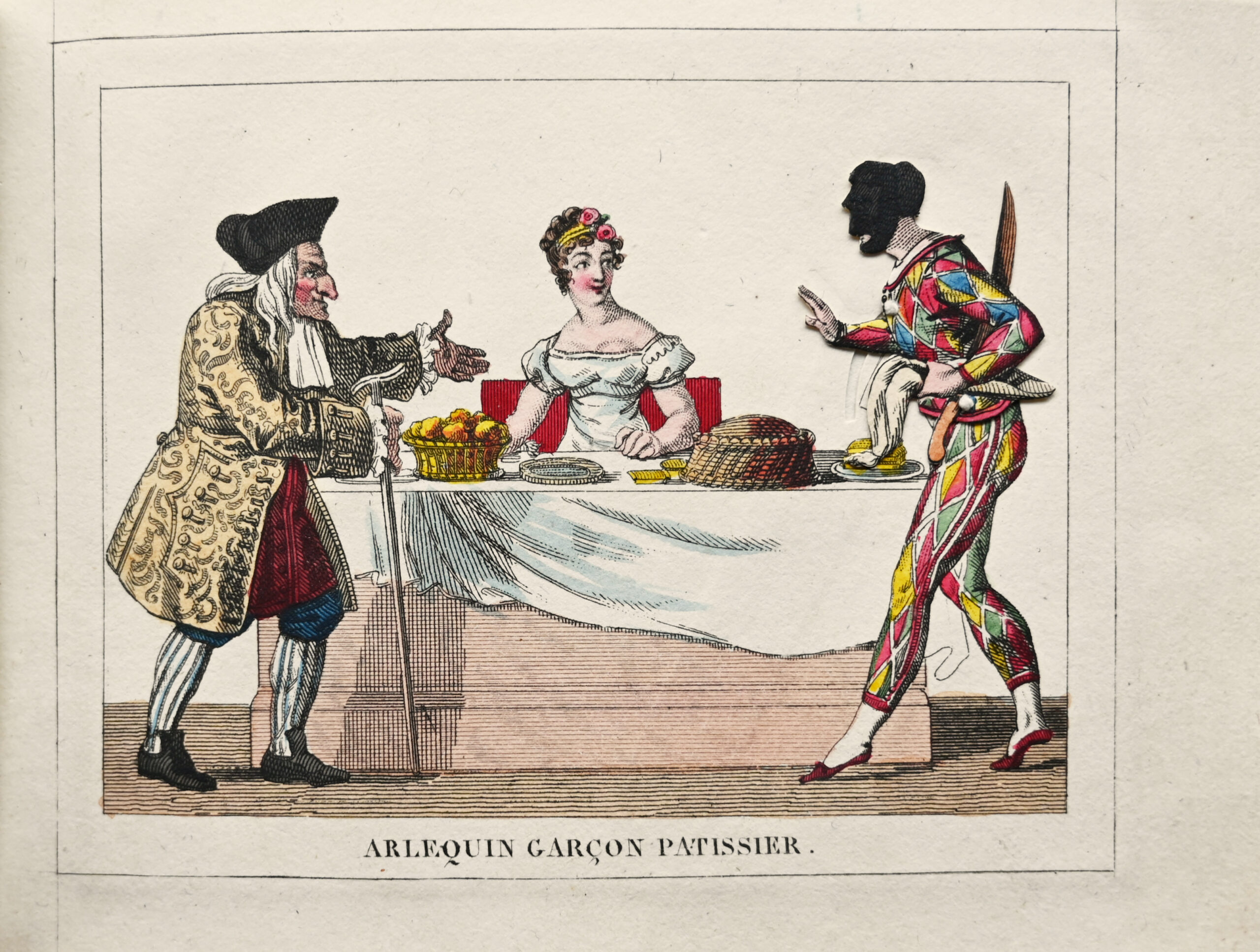
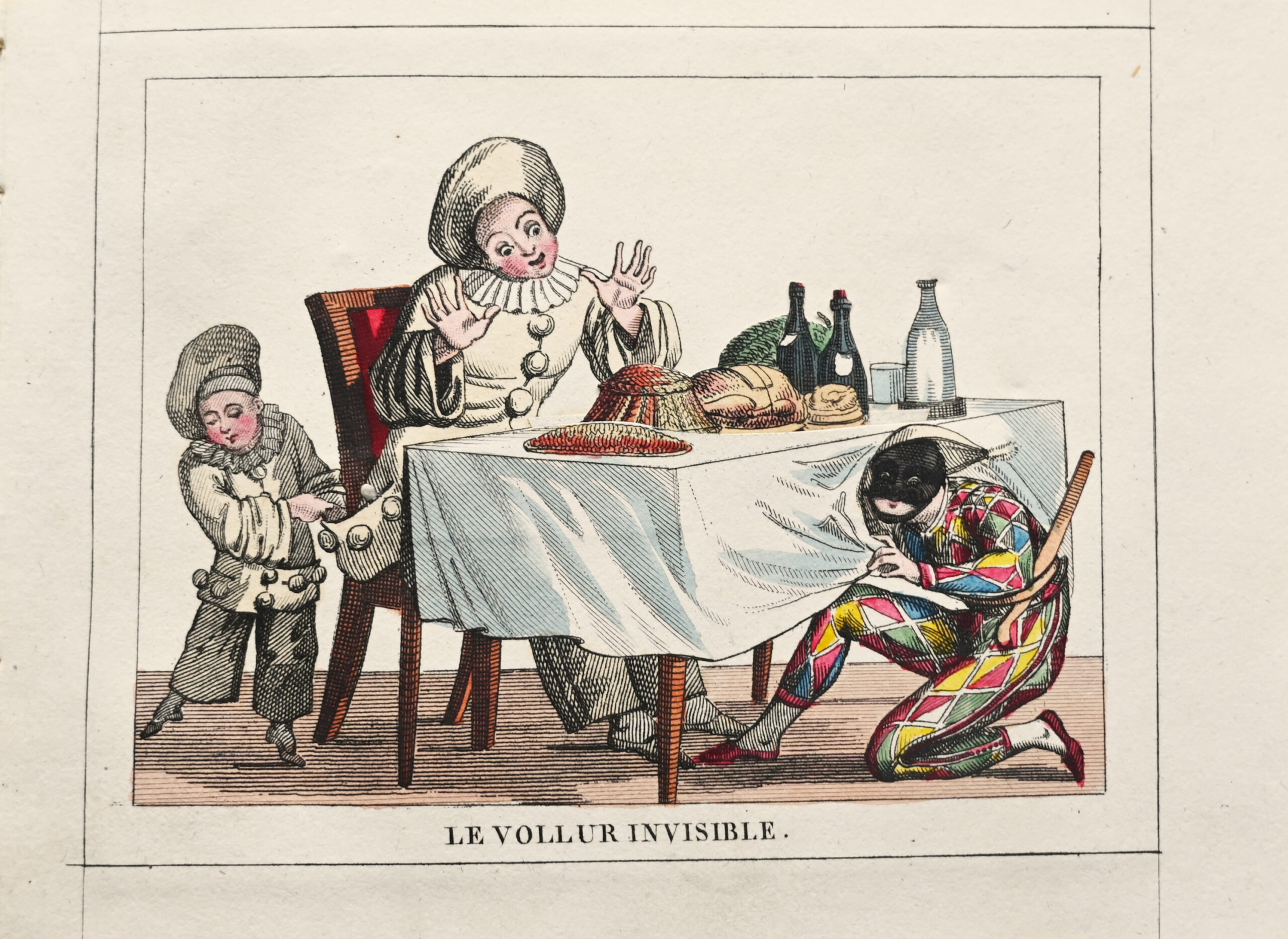
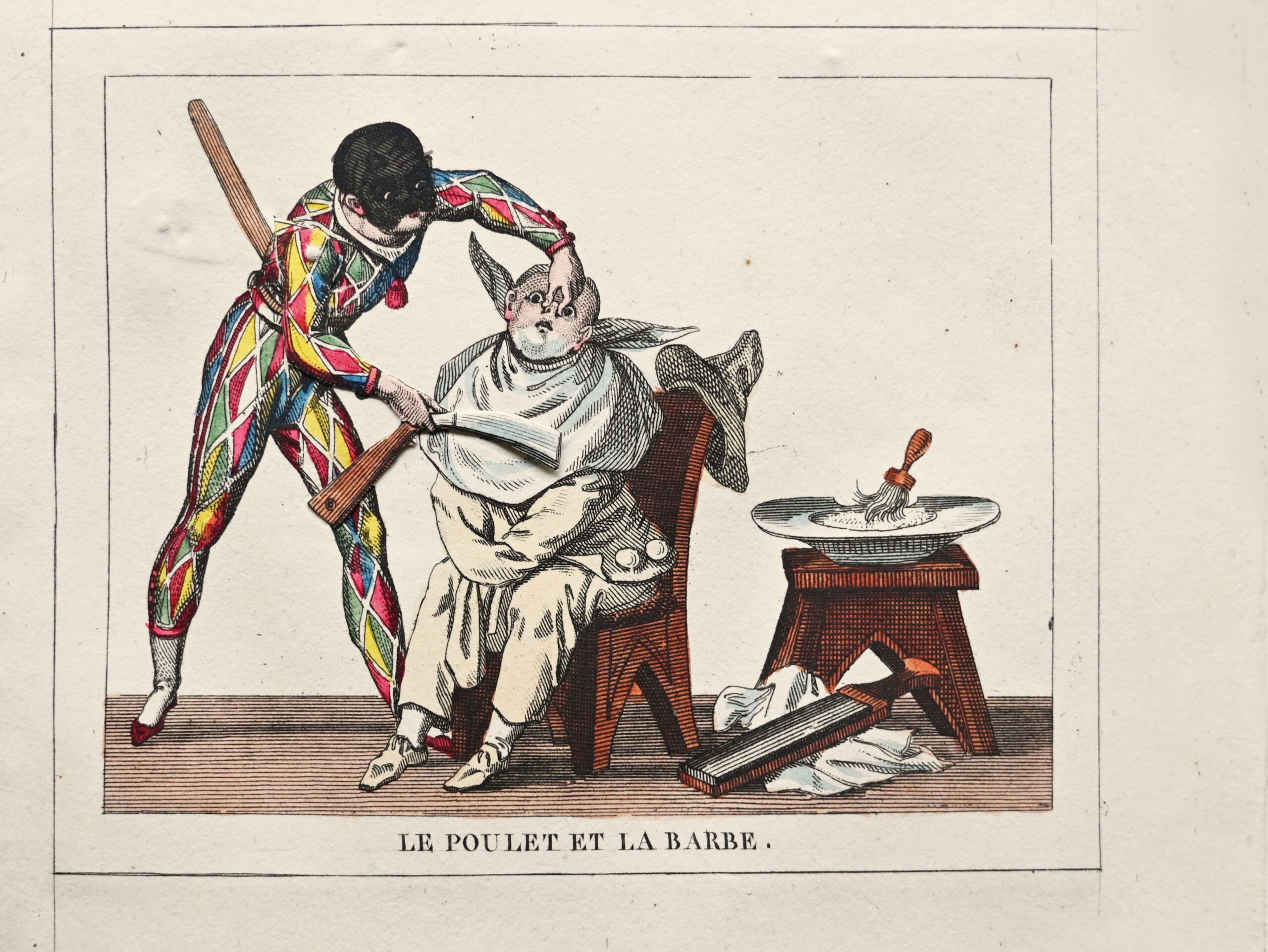
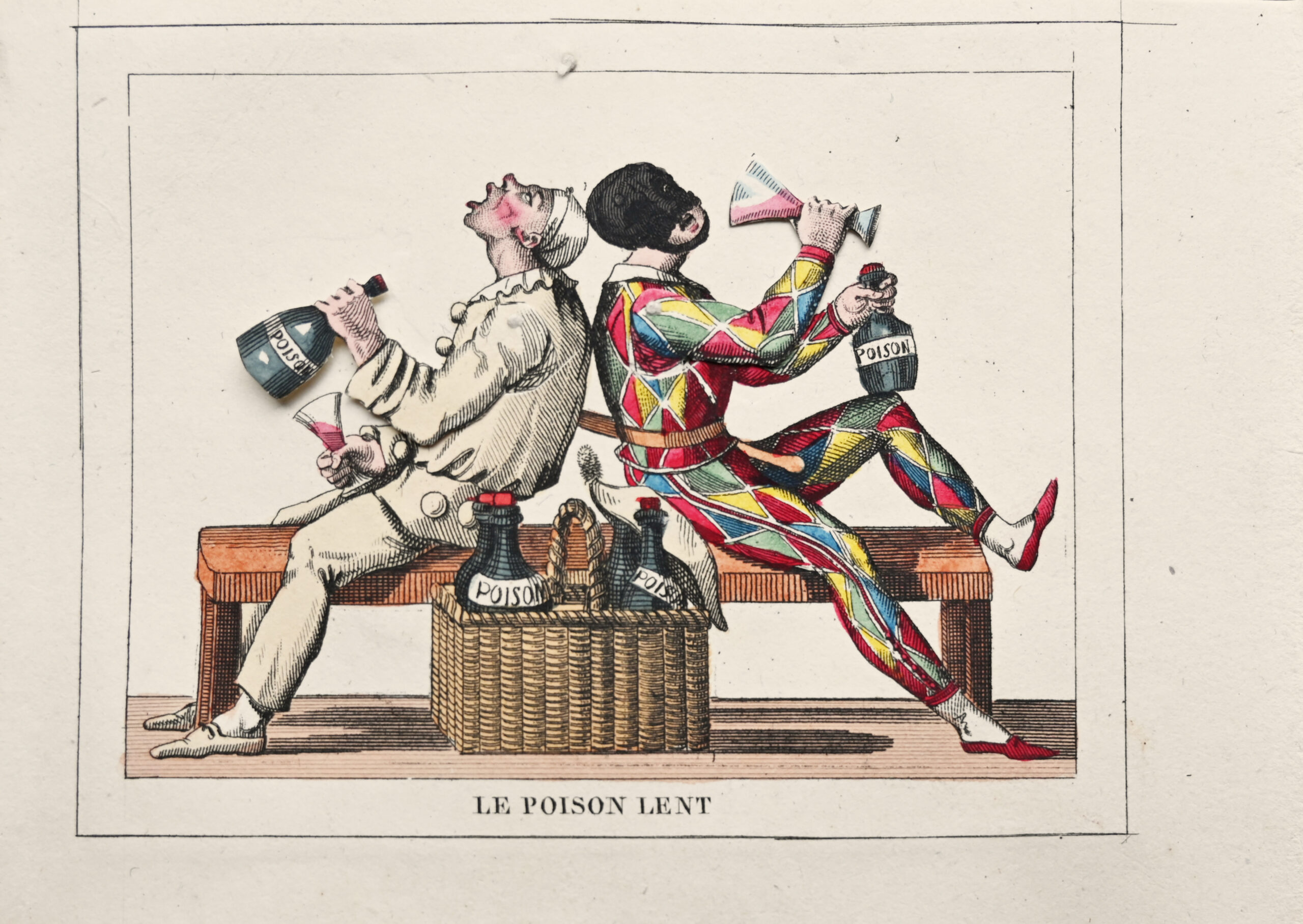
Original edition of this extremely rare children’s book featuring 6 hand-colored moving engravings.
“An early example of a mechanical illustration in a children’s book, which is also a charming specimen of the French paper engineer’s art.
In this story, Harlequin, the famous commedia dell’arte character, plays mischievous tricks on Gilles, who wears the flowing white costume of Pierrot. One day Gilles goes outside to watch an itinerant Savoyard entertainer with a magic lantern. To Gilles’ horror, his courtship of the beautiful Columbine is the show’s subject. The projection on the wall depicts his rival, Harlequin, winning her hand..
During the eighteenth and early nineteenth centuries, Savoyards with their magic lanterns were familiar sights on the street. Their presentations were sometimes based on local happenings and gossip, so this episode in Les bergamasques is an early example of reality-based drama.” (Cotsen, Magic Lantern, 2).
A.J.Q. Beuchot, 251; Catalogue de feu M. A. Nepveu, p.5, n°17.
At the beginning of the 19the century, the characters of Italian comedy were the favorite guests of the Funambules, a Parisian theater. In 1819 Jean Gaspard Debureau mimed Pierrot there..
While in Paris royalists and Bonapartists clashed during the ” White Terror“, Debureau revived the characters of the commedia dell’arte to the great delight of the French people.
” Nodier, Gautier, Hugo, Nerval, Jules Janin were enamored with Debureau’s performance. Nodier is said to have written a script for this extraordinary Pierrot. Jules Janin lauded Debureau as the greatest actor of the time. “Honor to Debureau,” he exclaimed, “In this worn-out world, he has been a completely new actor.» The worn-out world is that of the tragedies of the comedies… The new is that of the pantomimes. “
While Romanticism and ” for Henri de Régnier “the disappearance of the lively and mad comedy” is an opportunity to express the melancholy of past things,. Speaking of these Italian characters is to speak of Italy, to satisfy the need for escape, the taste for the picturesque. “, the commedia dell’arte becomes fashionable again in Paris and Marseille. (I.M. Frandon, Commedia dell’arte et imagination poétique, 1963, n°15, p. 263).
Gradually, Pierrot will come to be seen as the image of the “modern proletarian”.
Extremely rare children’s book with mechanisms in perfect condition admirably preserved in its period blue cardboard.
The 6 engravings in our copy have been finely hand-colored at the time.
We have encountered only one copy of this book in public institutions and international libraries (Princeton University Library) and no copy has ever come under the hammer on the international market.