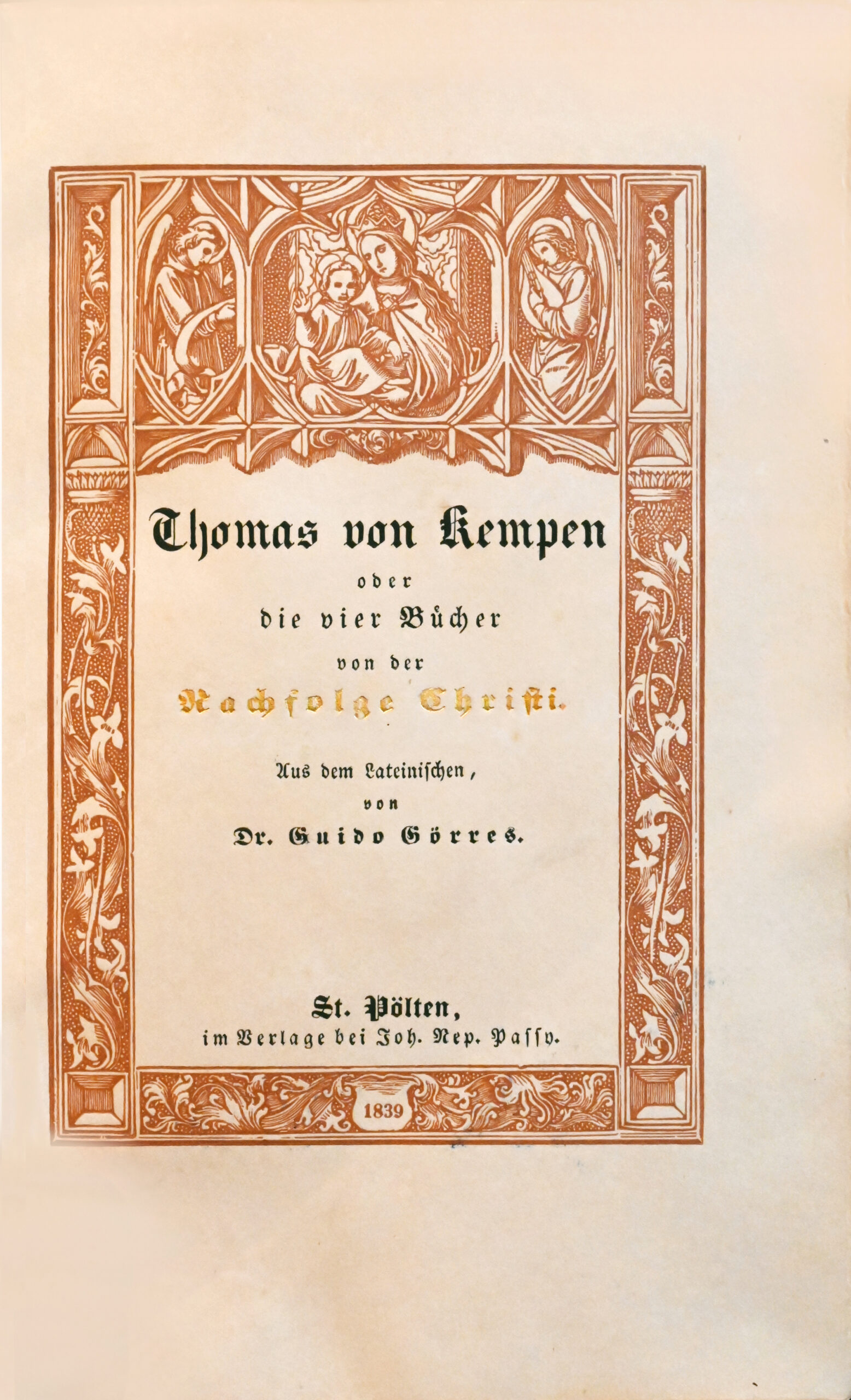
Passy in St. Pölten, 1839.
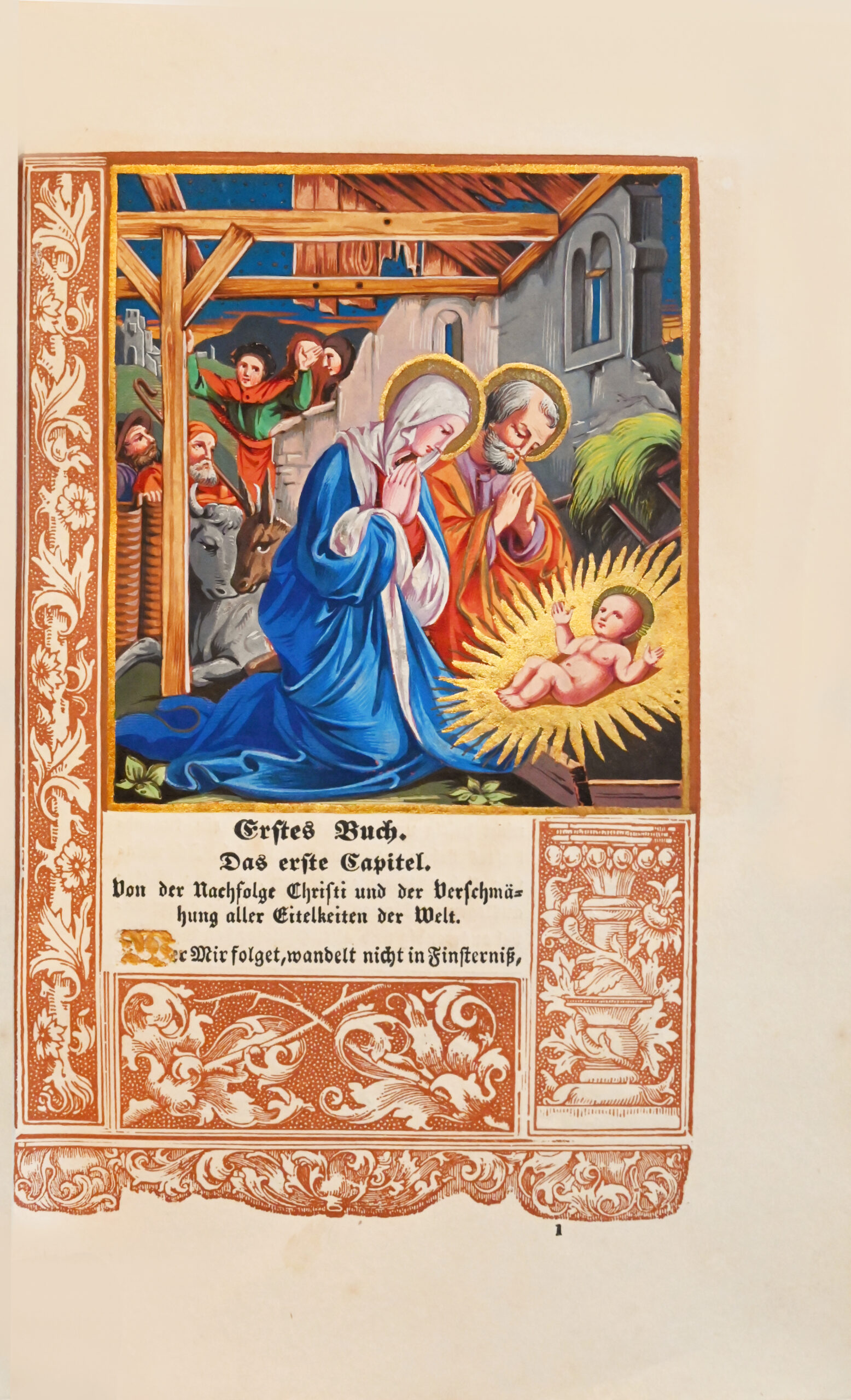
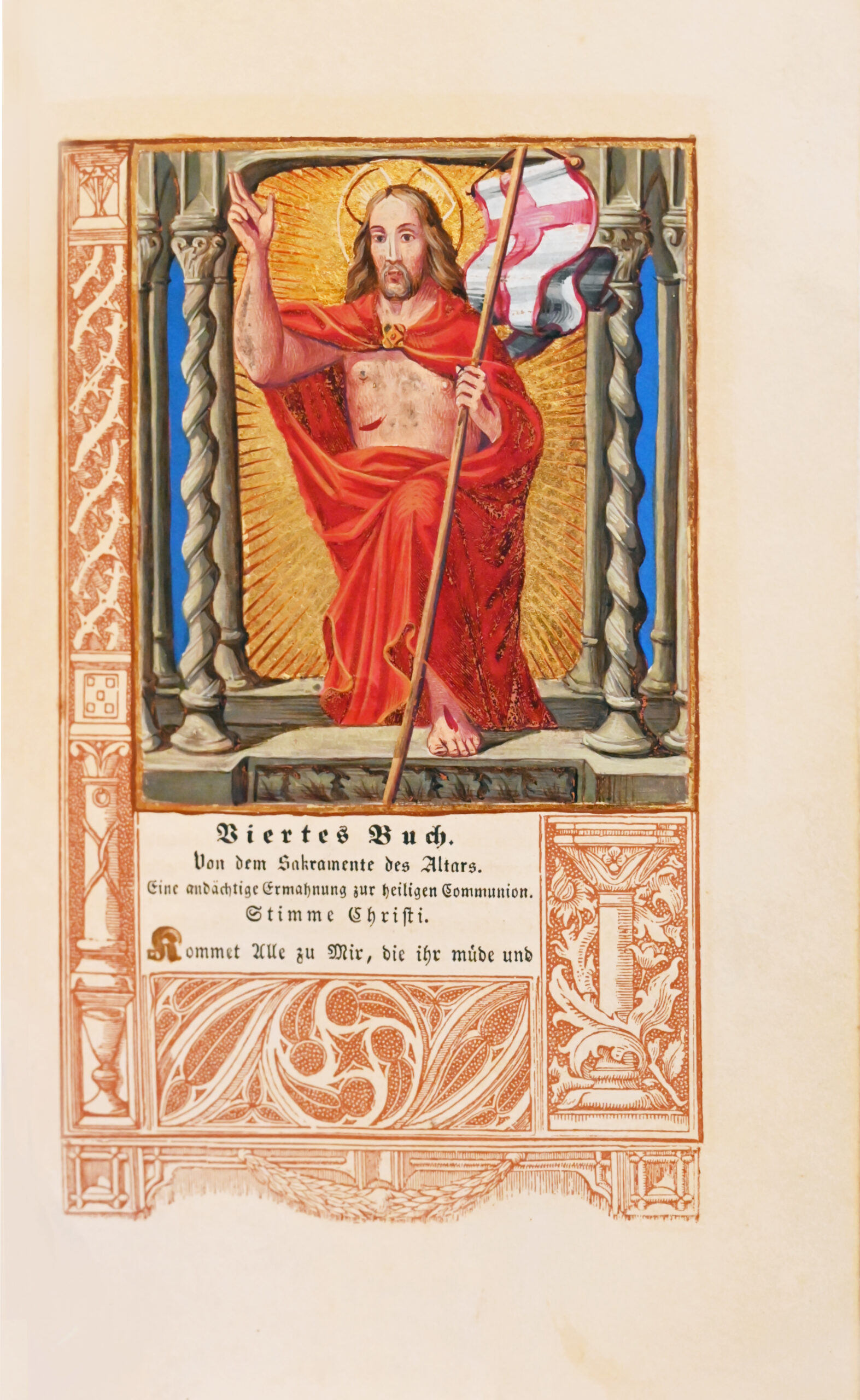
8vo of 186 pages. With 5 polychrome miniatures heightened with gold protected by silk serpentes, all pages (except for the last two sheets) framed with figurative borders in sepia according to Eduard Jakob von Steinle, with figurative initials printed in black, certain parts of the title and initials are printed in gold. The guard sheet has a handwritten note
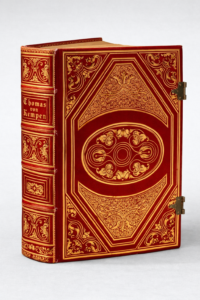
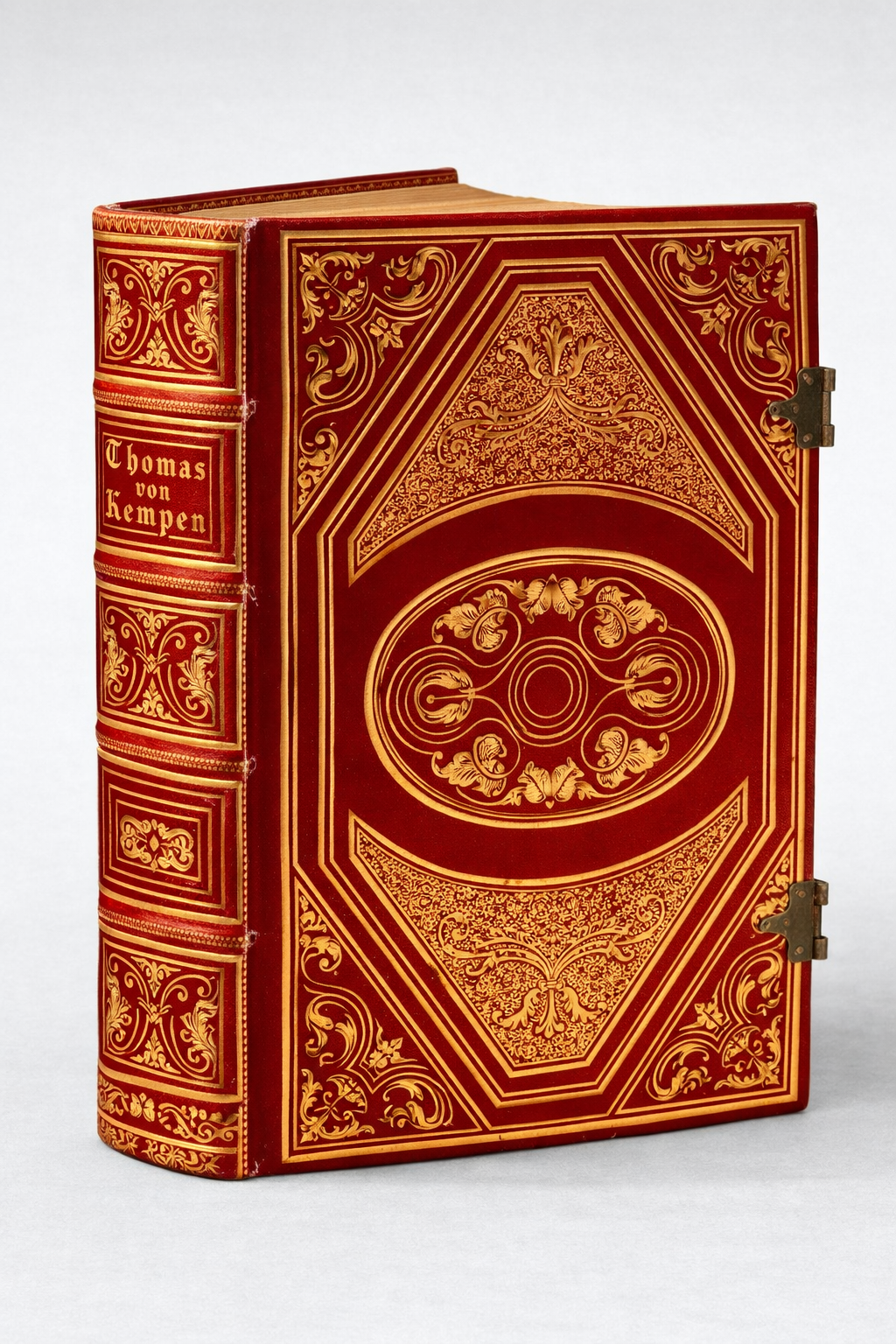
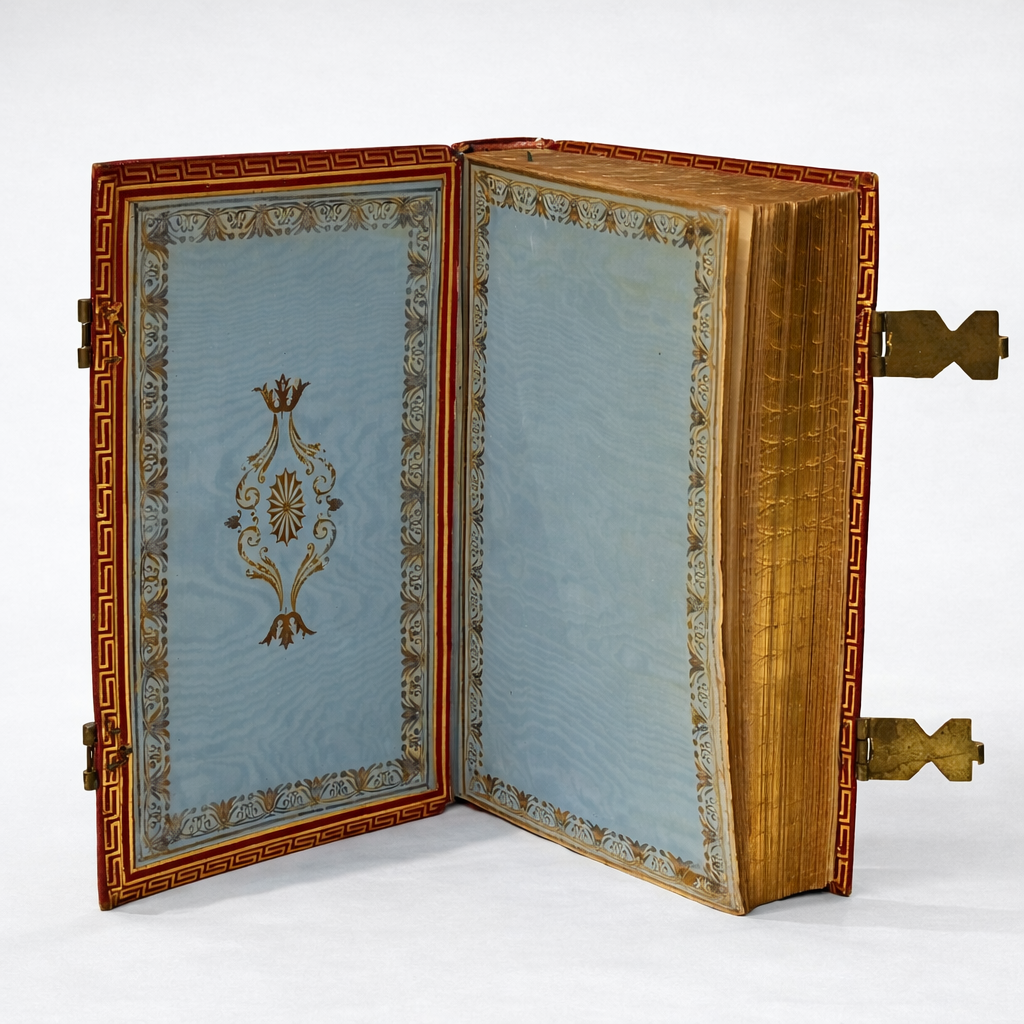
Binding in embossed red leather on wooden boards with rich decoration on the spine and covers, 2 metal clasps, gilt-edged pages, light blue silk-decorated endpapers. Contemporary binding.
Superb copy of the Imitation of Christ with 5 miniatures painted by hand at the time in bright colors and enhanced with gold.
Rümann 2539 (only mentions 4 miniatures).
The borders and initials are wood-engraved after E. J. von Steinle (1810-1886), the text in black and the borders in sepia.Thomas van Kempen, in Latin Thomas a Kempis, was born around 1380 in Kempen, North Rhine-Westphalia, near Düsseldorf, Germany. In 1395, he was sent to the Hanseatic city of Deventer, to the school of the Brothers of the Common Life. He became a skilled copyist, able to support himself. In 1399, he was admitted to the Augustinian monastery of Mount Saint Agnes near Zwolle, in the Netherlands, where his brother John had preceded him and had been elevated to the dignity of prior. Thomas was ordained a priest in 1413 and was appointed sub-prior between 1425 and 1429. This role, which he held until 1447, included, among other things, the position of master of novices. Thomas a Kempis died on July 25, 1471 in this monastery where he had lived since the age of nineteen. He was buried in the sanctuary of Saint Michael’s Church (Sint Michaëlskerk) in Zwolle. Thomas a Kempis was beatified by the Catholic Church.
He belonged to the school of mystics that extended along the banks of the Rhine, from Switzerland to Holland, passing through Strasbourg and Cologne.It is the most printed book in the world after the Bible and, according to Yann Sordet, archivist, director of the Mazarine Library, ” one of the greatest publishing successes that Europe has known from the end of the Middle Ages to the beginning of the contemporary era “. This last writes in a communication to the Académie des Inscriptions et Belles-Lettres in 2012: “The work of theImitatio Christi (Imitation of Christ) is one of the most complex cases, in Western literary history, of abundant tradition with multiple attributions. However, it is now generally agreed that the German-Flemish networks of the Devotio moderna, in the early 15the century, provided the most plausible ground for its composition, and more precisely that Thomas a Kempis is the very likely author of the four treatises which, combined around 1427, gave it birth (…). TheImitatio is both a best-seller and a long-seller without competition over the long term of the typographic Ancien Régime (15the-19th century) “.
As early as the 17the century, the Jesuit and translator Antoine Girard marveled at the editorial success of the work: “After the Bible, there is none that is found to have so much vogue, that has rolled so often under the press, or been translated into so many languages, nor contributed so much to the salvation & perfection of souls, nor has been approved by such a general consent of the whole world“.
Indeed, nearly 800 medieval manuscripts containing theImitatio Christi have been preserved; this corpus is considerable; it is hardly surpassed except by that of the biblical texts. It is estimated that several million copies circulated in Europe between the 15the and the 19the century.
The central theme is the Christ-like exemplarity, the mystical union with Christ’s sufferings, the inner and personal spirituality. The final plan adopted by the author presents a real gradation, a nuanced transition from the ascetic problem of acquiring virtues to the love of the Cross and the inner dialogue with Christ.
It can be thought that Thomas a Kempis, master of novices, conceived this work for his community of monks, encouraging individual piety. However, the simplicity of the text has won it, since the 15the century, a vast lay audience.Superb copy preserved in a very decorative binding.