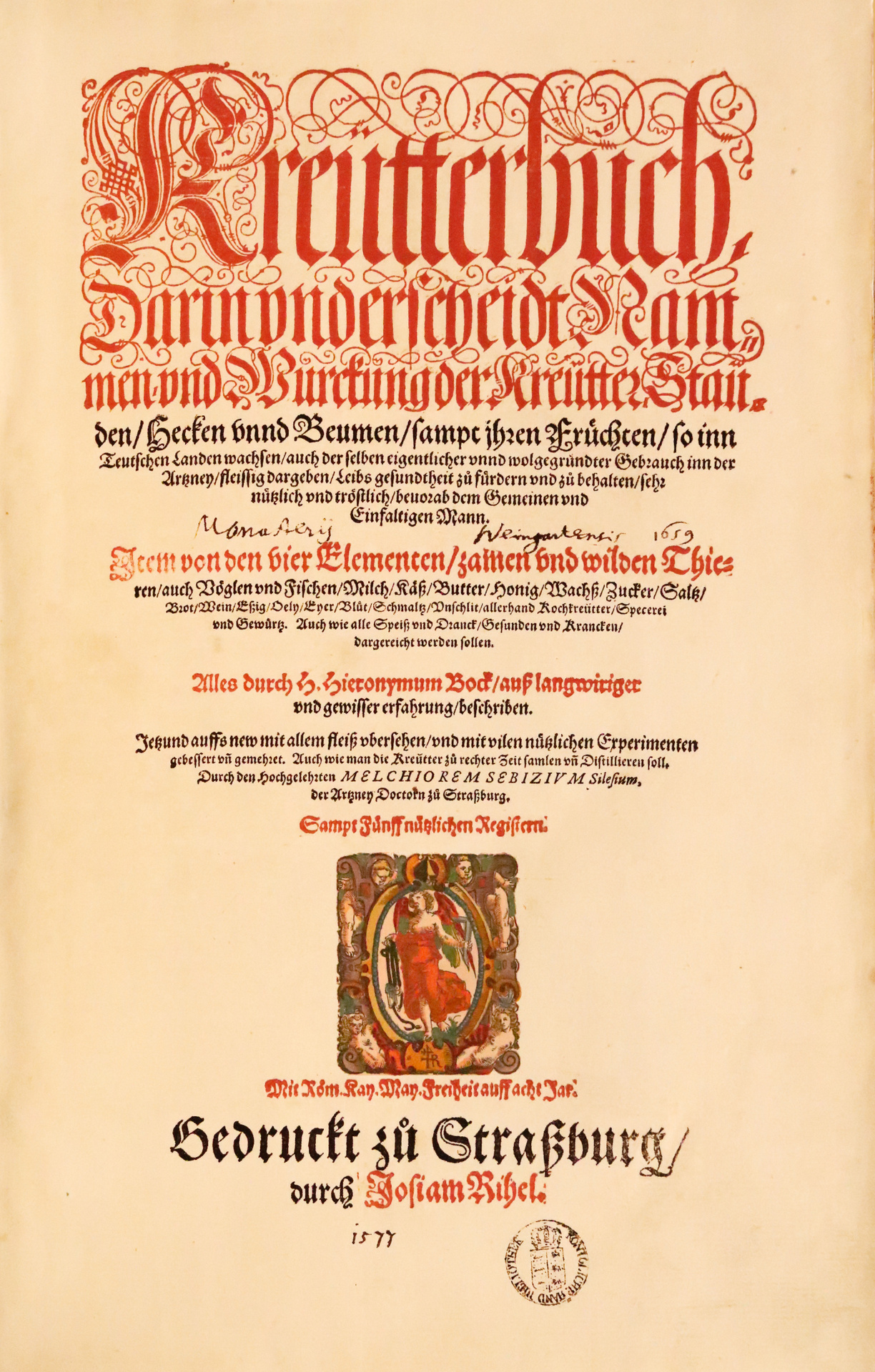
Strasbourg, Josias Rihel, n.d. [1577].
Large folio [335 x 216 mm] of (30) ll., 450 ll., (24) ll. the last one blank, old handwritten note in the margin of a l., small tear previously restored on l. 448.
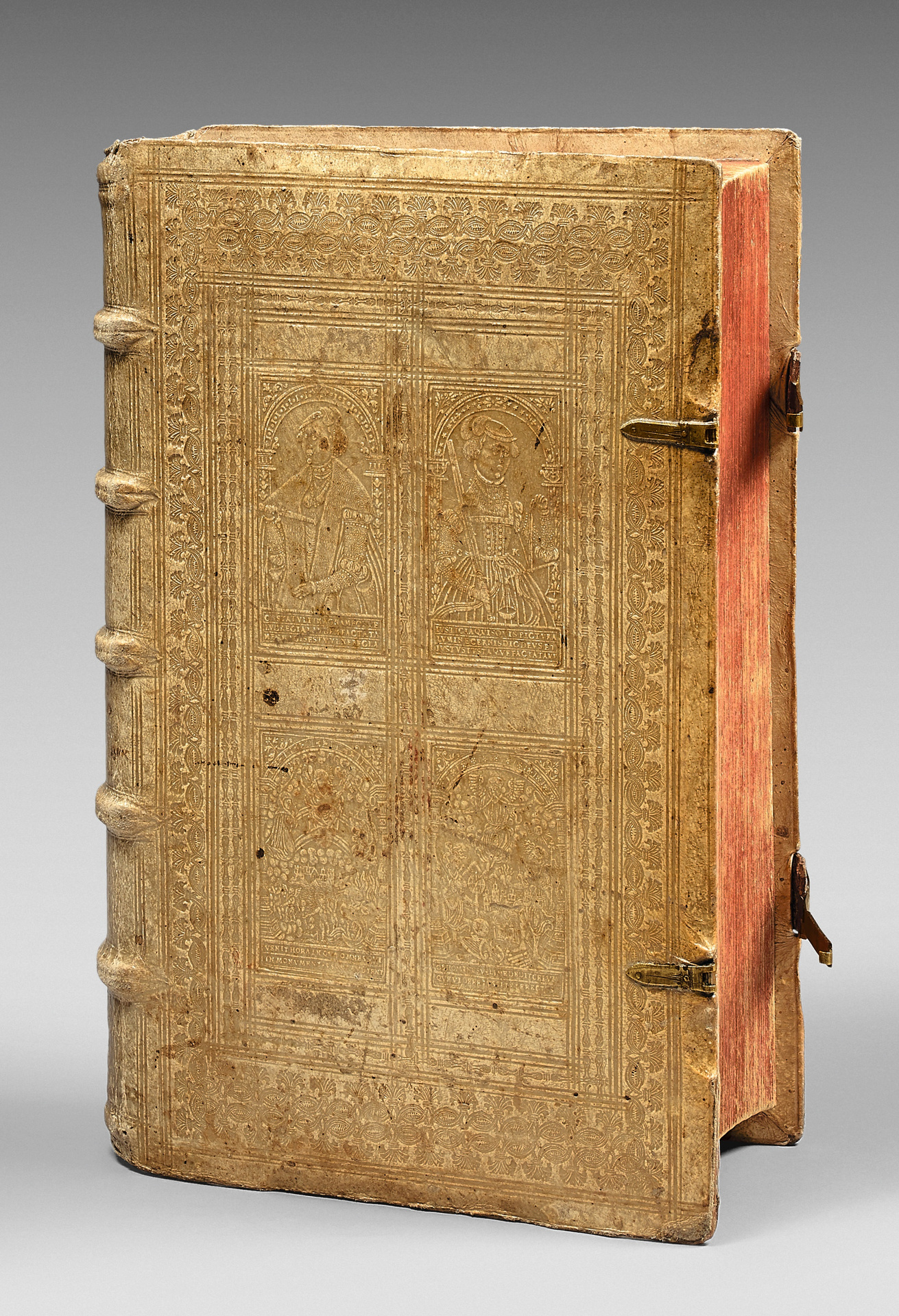
Pigskin over wooden boards, covers with beveled edges and decorated with a beautiful blind-stamped decor composed of two borders and four compartments with captioned figures, metallic clasps, spine ribbed and decorated with blind-stamped panels, red edges. Contemporary binding: Kaspar Kraft in Wittemberg.
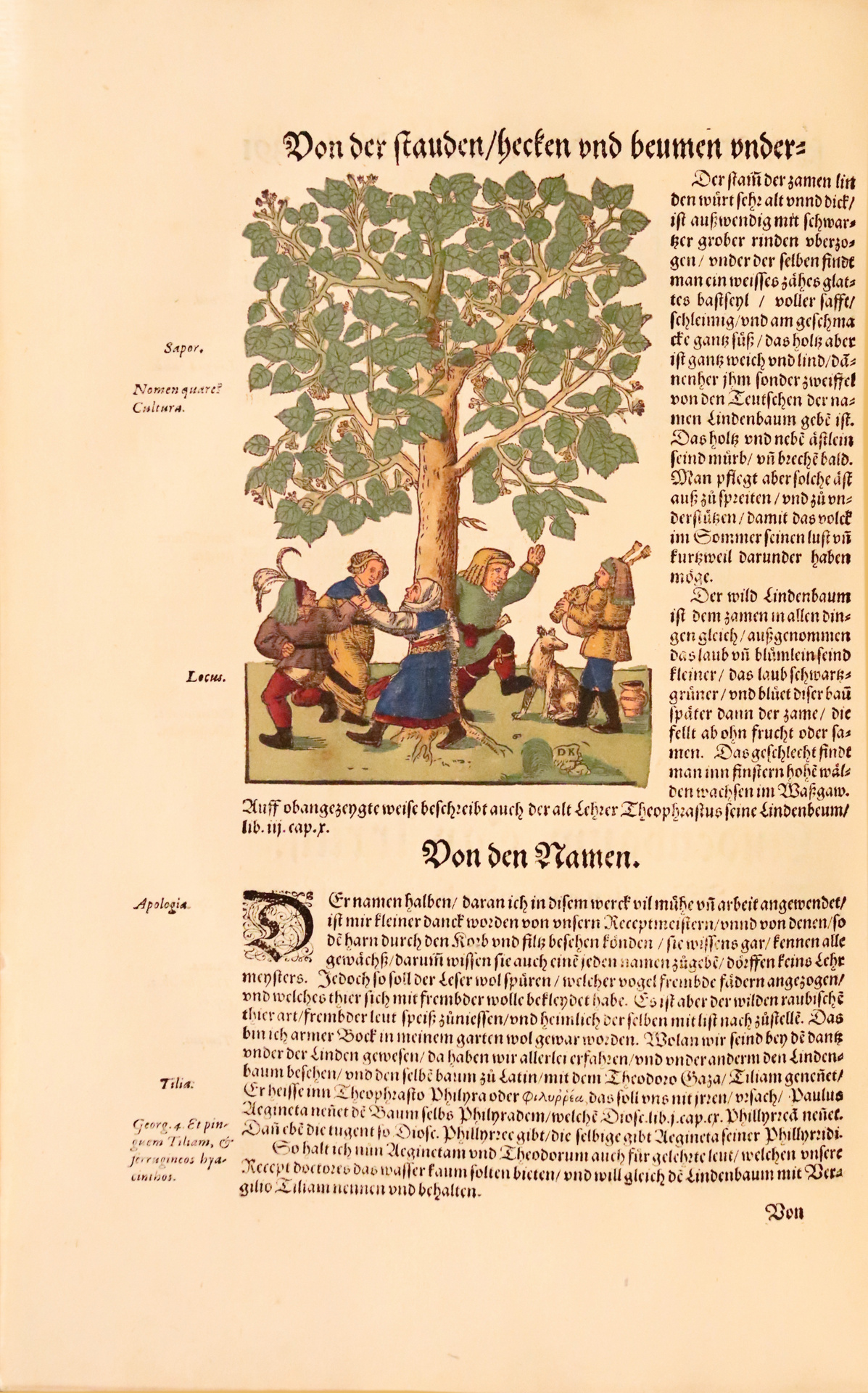
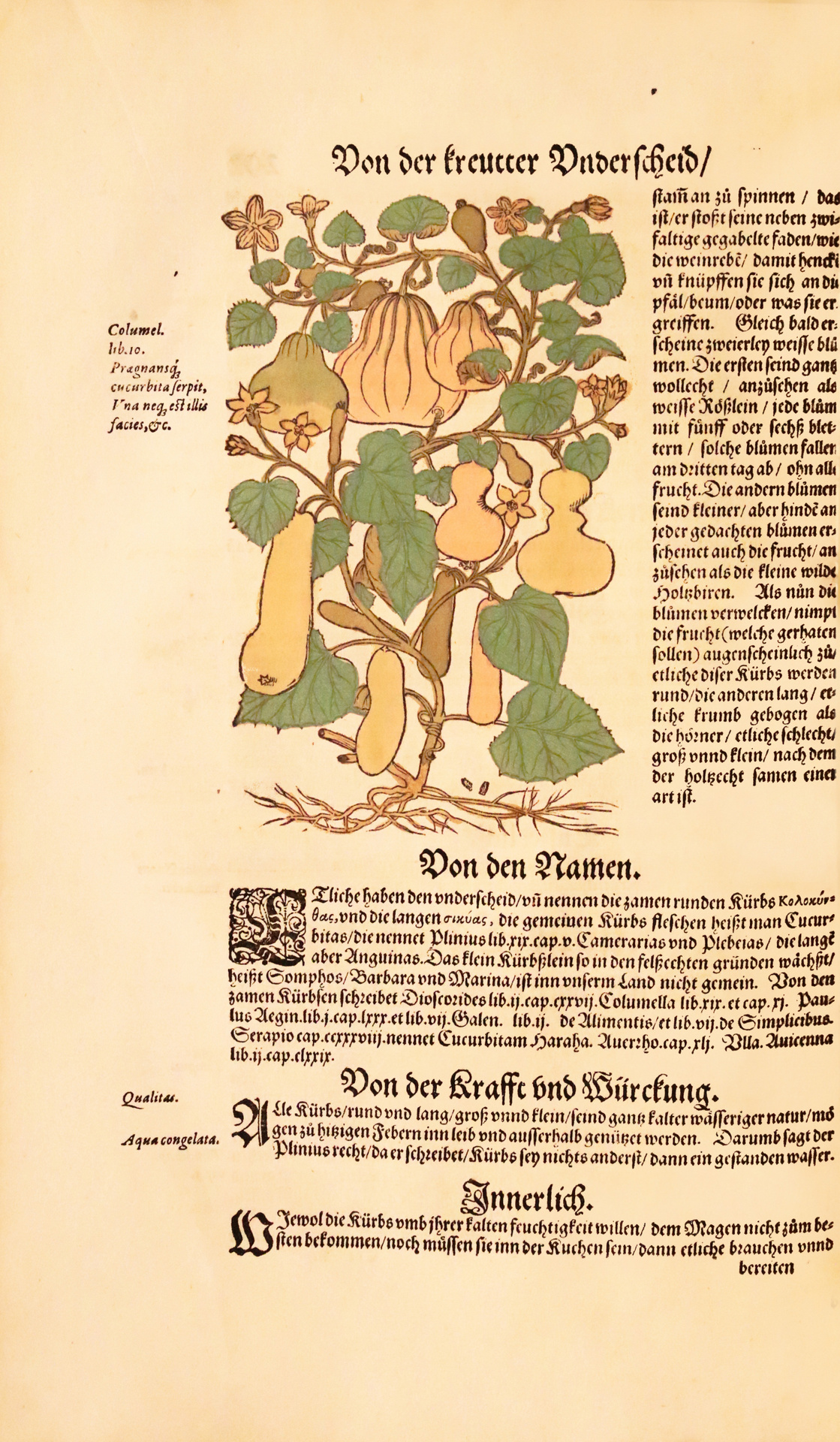
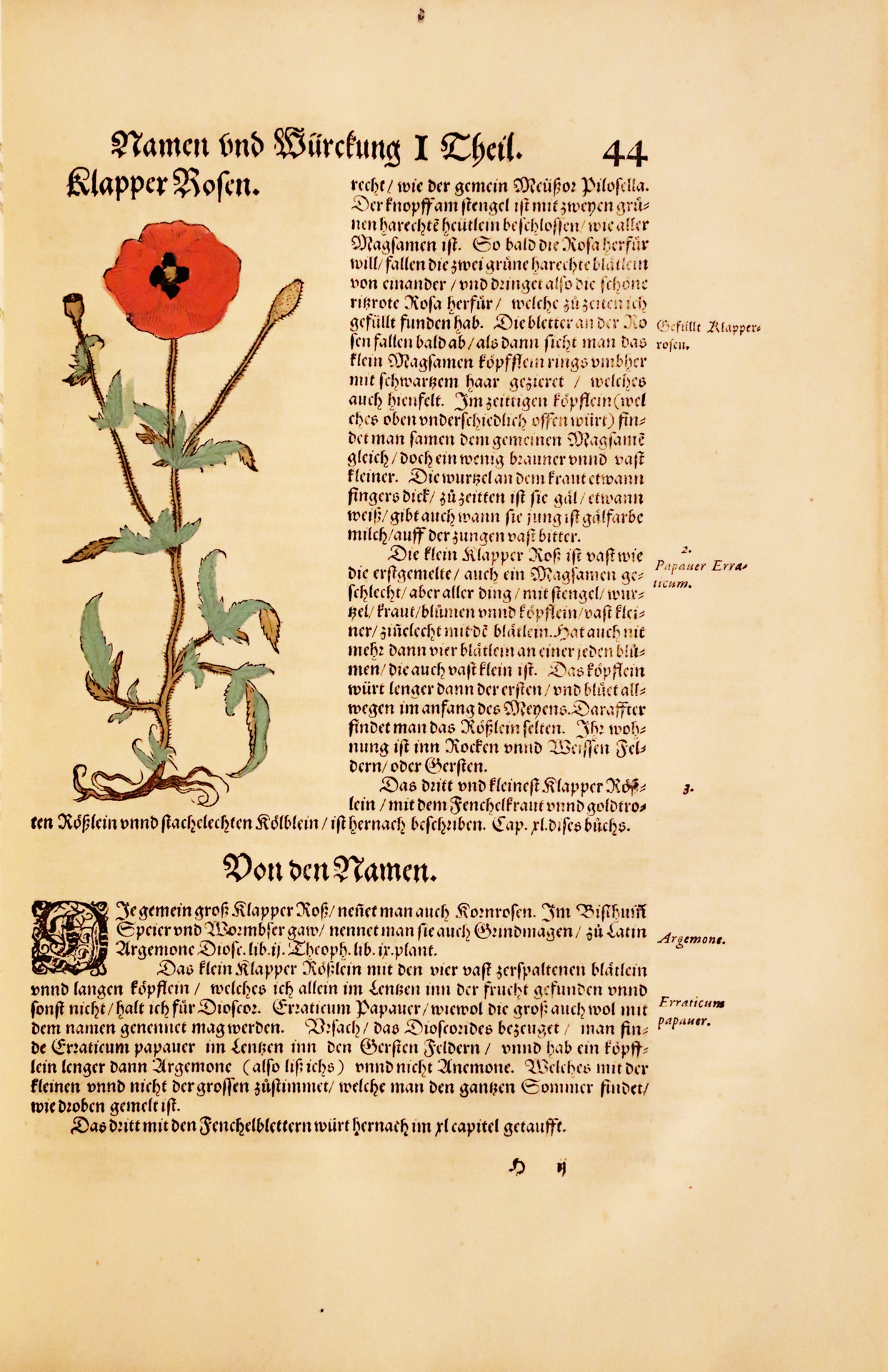
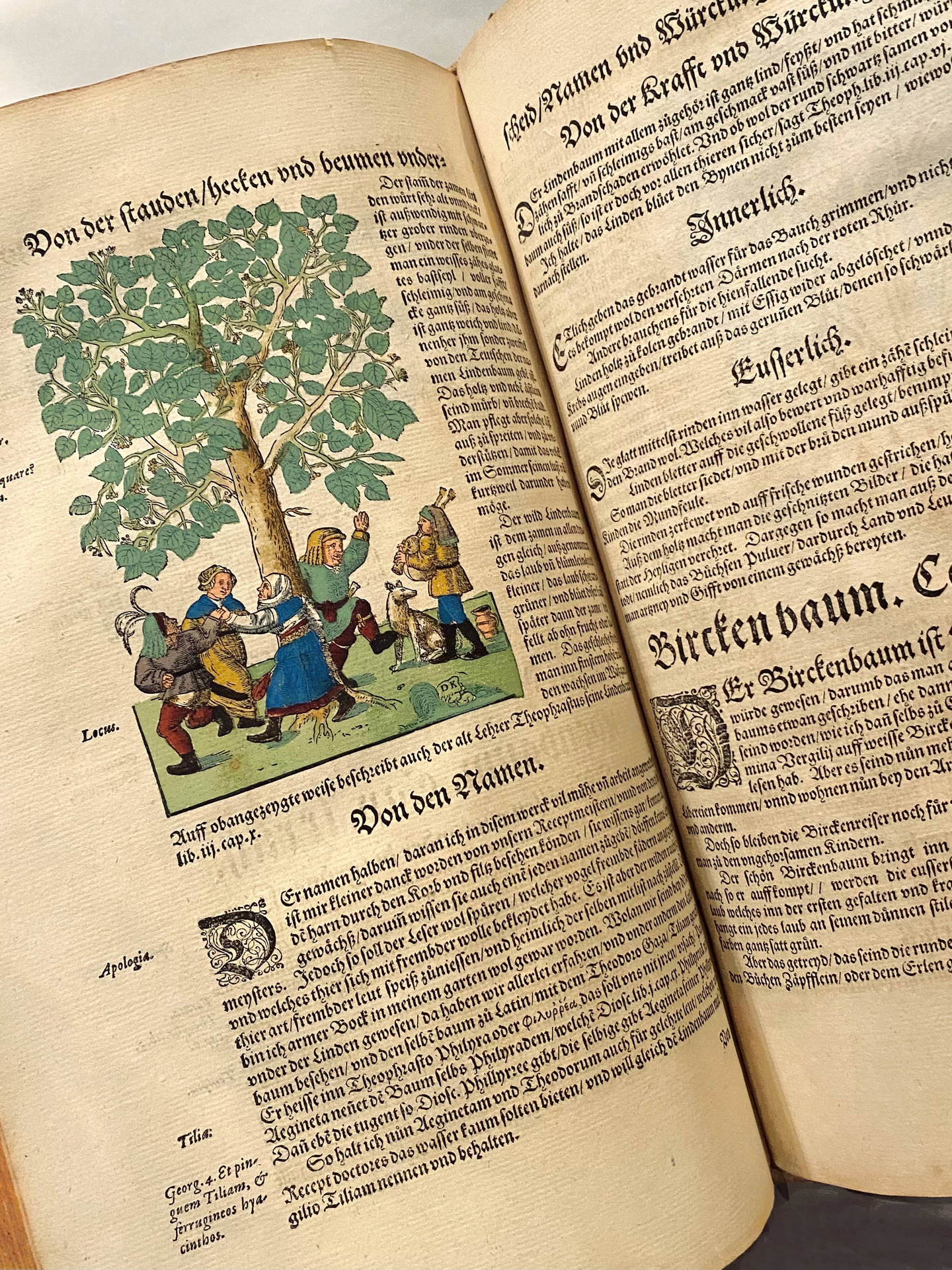
Edition of the greatest rarity and most esteemed of the sumptuous herbarium of Hieronymus Bock (1498-1554), the father of German botany, adorned with 590 woodcuts in contemporary coloring.
Green, Landmarks of Botanical History I, 1983, pp. 304-359. – Blunt & Raphael, The Illustrated Herbal, 1979, pp. 129-132. – Nissen, BBI, no. 182.- Muller, Bibliographie strasbourgeoise III, 1986, p. 523, no. 177.- Index Aureliensis IV, 1970, p. 378: BL, Munich SB, Rome BV, Wroclaw.
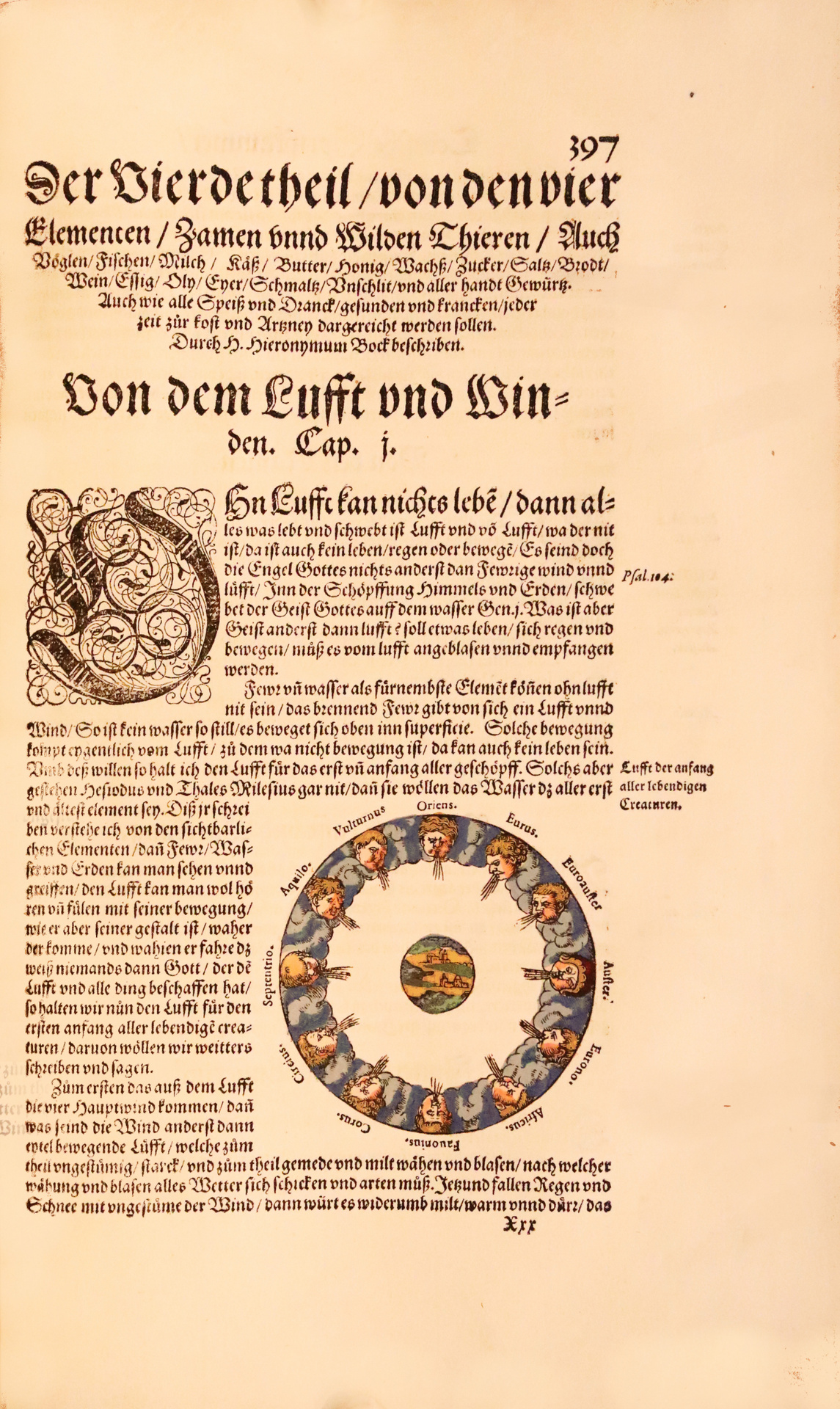
This is the first edition including Bock’s famous culinary treatise, “Teutsche Speisskammer”.
Physician and botanist, H. Bock (1498-1554) is, alongside Brunfels and Fuchs, one of the three “Fathers of German Botany”. The rise of botany during the Renaissance is characterized by a completely renewed iconography, as the image was meant not only to allow the understanding of the descriptive text but also the identification of the plant for therapeutic purposes.
Bock is at the forefront of the restorers of botany in the 16th century.
His studies of plants resulted from observations made in the field, during frequent excursions in the Ardennes, the Vosges, the Jura, the Swiss Alps, and the banks of the Rhine.
A commentator on ancient texts and a pioneer of direct observation, the superintendent of the Zweibrücken botanical garden collected a large number of specimens, specifying the origin of the plants, the conditions of their herb gathering, and their medicinal virtues.
“Bock is the second of the Germanic founders of Botany… His flower descriptions were remarkably clear… he considered elements that his predecessors had completely ignored. He recognized the corolla, stamens, and pistils as essential parts of many flowers and is probably the first botanist of the 16th century to understand the necessity of classification.” Hunt.
“He was the first to introduce a certain method into botany that is not yet found in either Brunfel or Fuchs.” (Jourdan, Biographie médicale.)
“One of the earliest to give original descriptions of plants instead of relying on what Dioscorides or Pliny had written” (Morton, History of Botanical Science, p. 125).
The text of the Kreütterbuch was published in 1539, without illustration, due to financial constraints. Arber notes that this was somewhat of a blessing as it stimulated him, forcing him to describe each plant meticulously, to the extent that Fuchs, criticized for the poverty of his descriptions, copied some word for word. (Arber, Herbals, 1986, pp. 151-153).
The first illustrated edition (468 woodcuts) dates back to 1546; the iconography was increased to 530 engravings in 1551. The present edition of 1577, given by the physician Melchior Sebitz the elder, rector of the University of Strasbourg, integrates for the first time Bock’s cookbook, which had been published separately in 1550, without illustration.
An esteemed edition, continuously reprinted until the 17th century. It was chosen for the facsimile reprint (Munich, 1964).
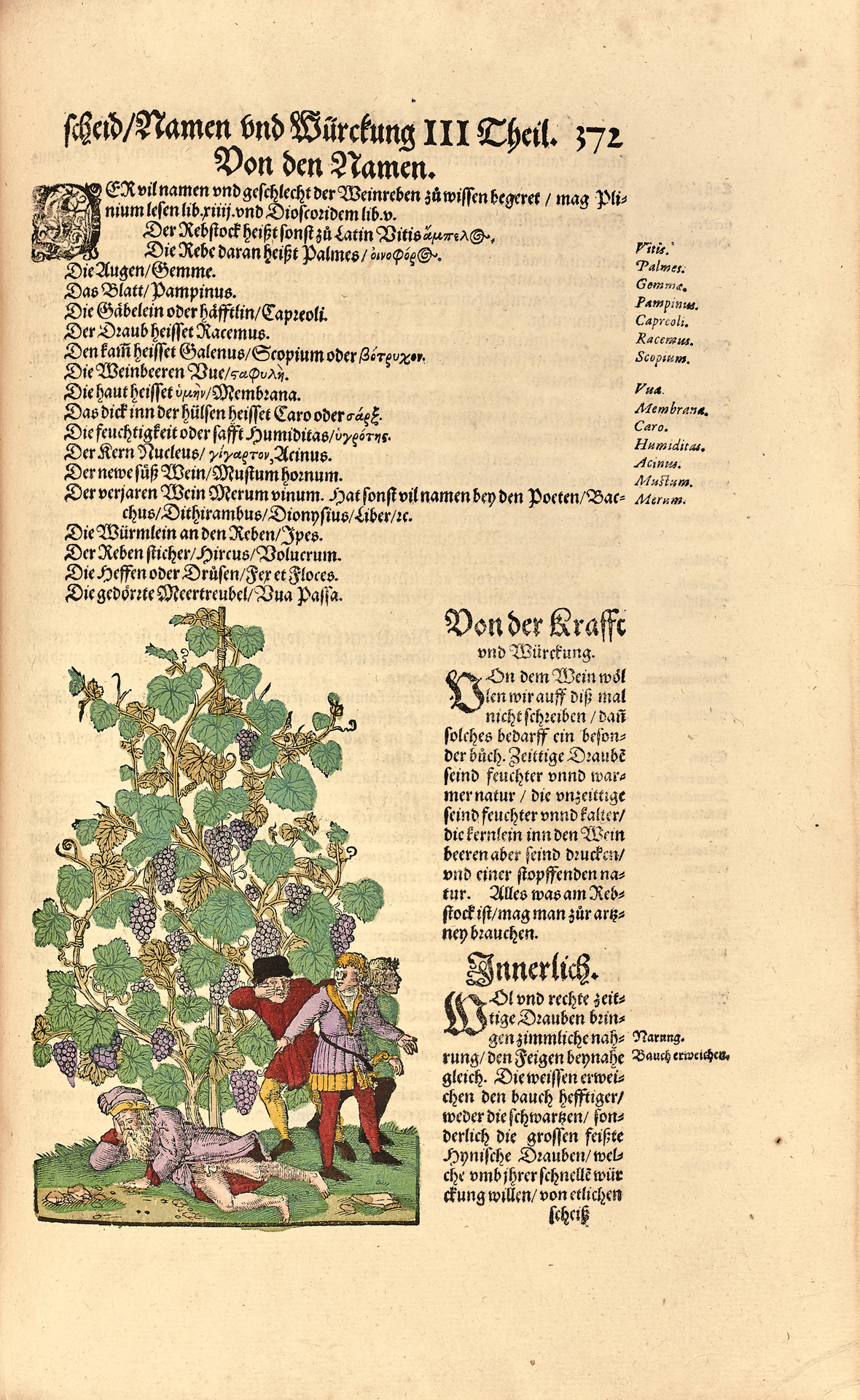
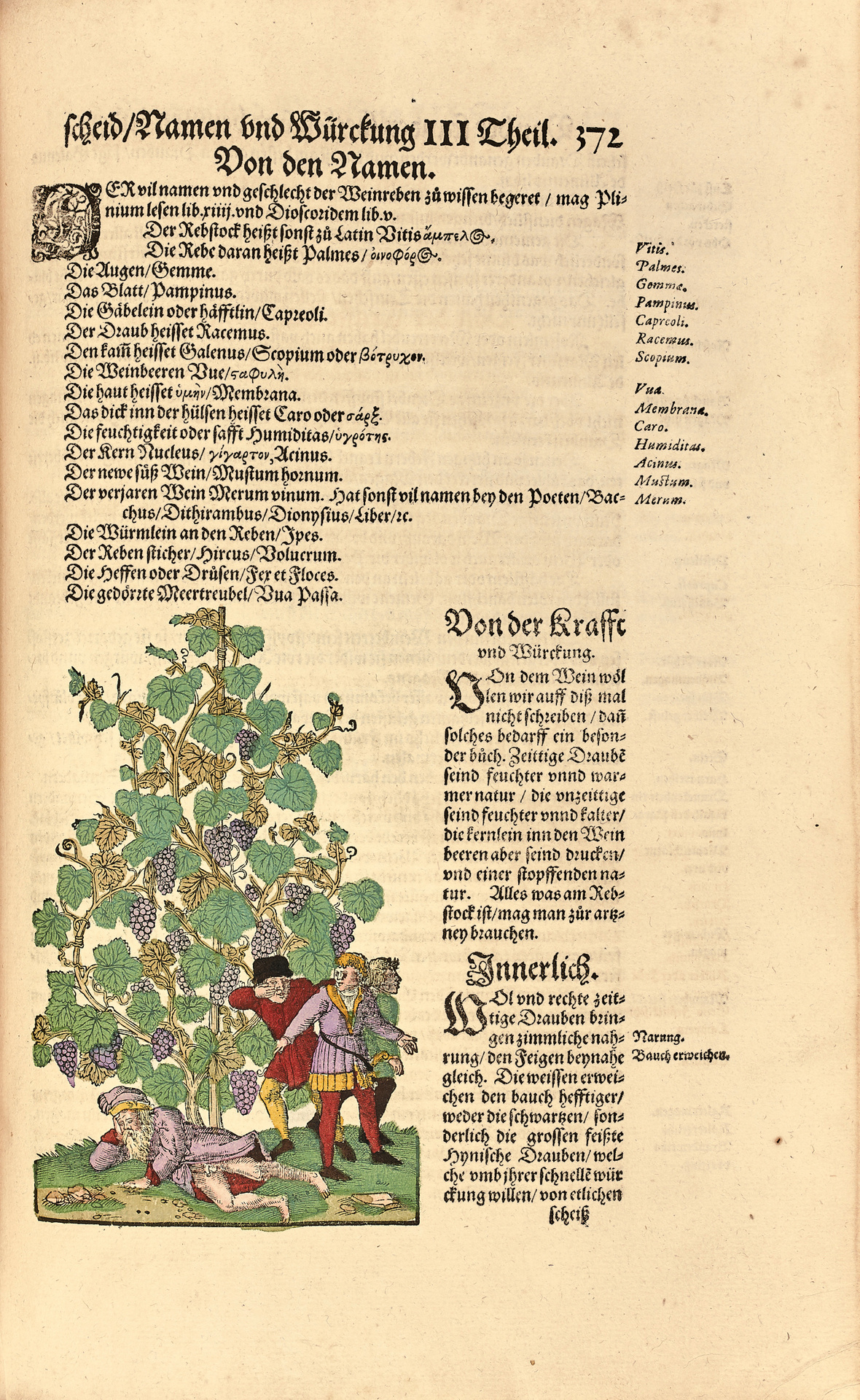
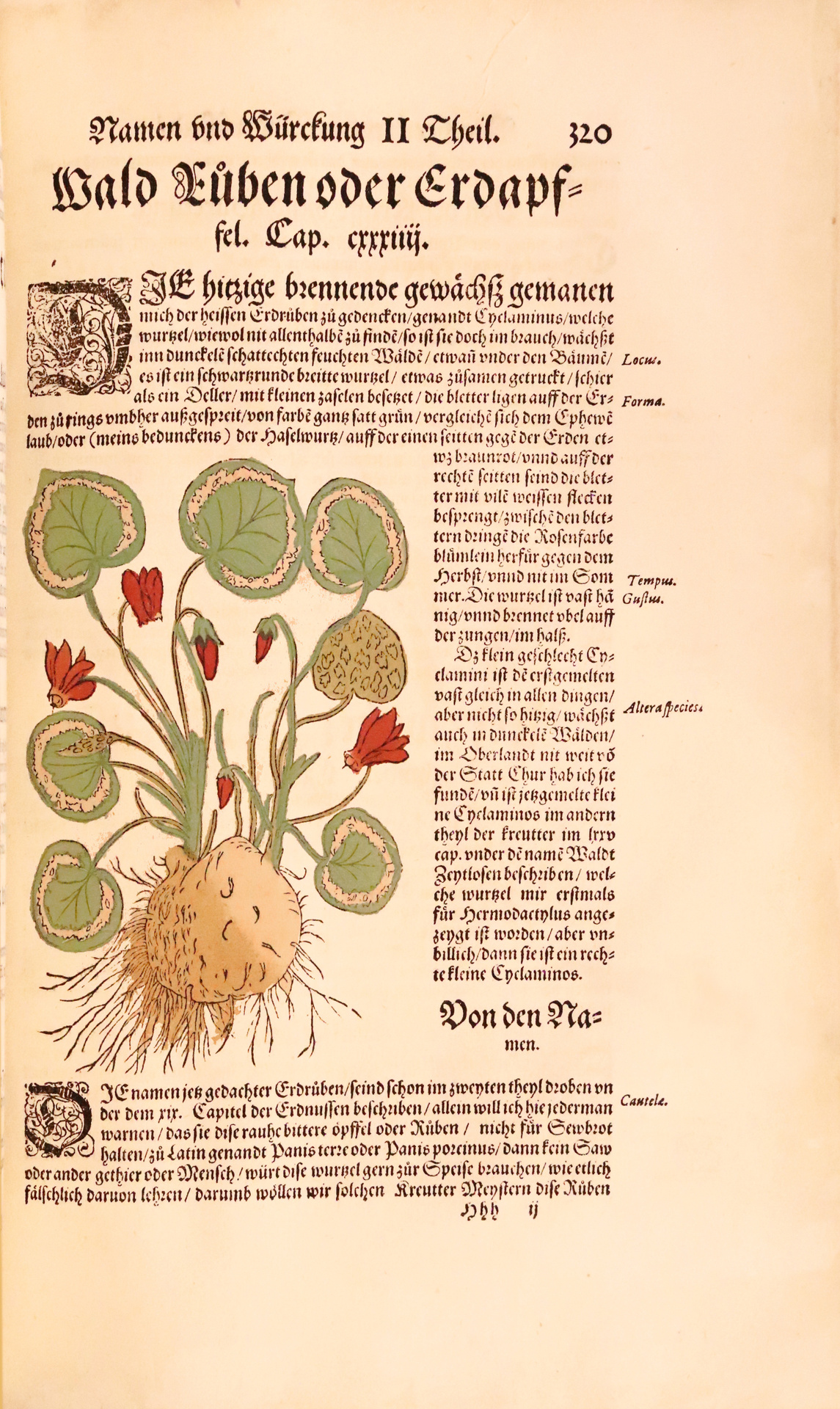
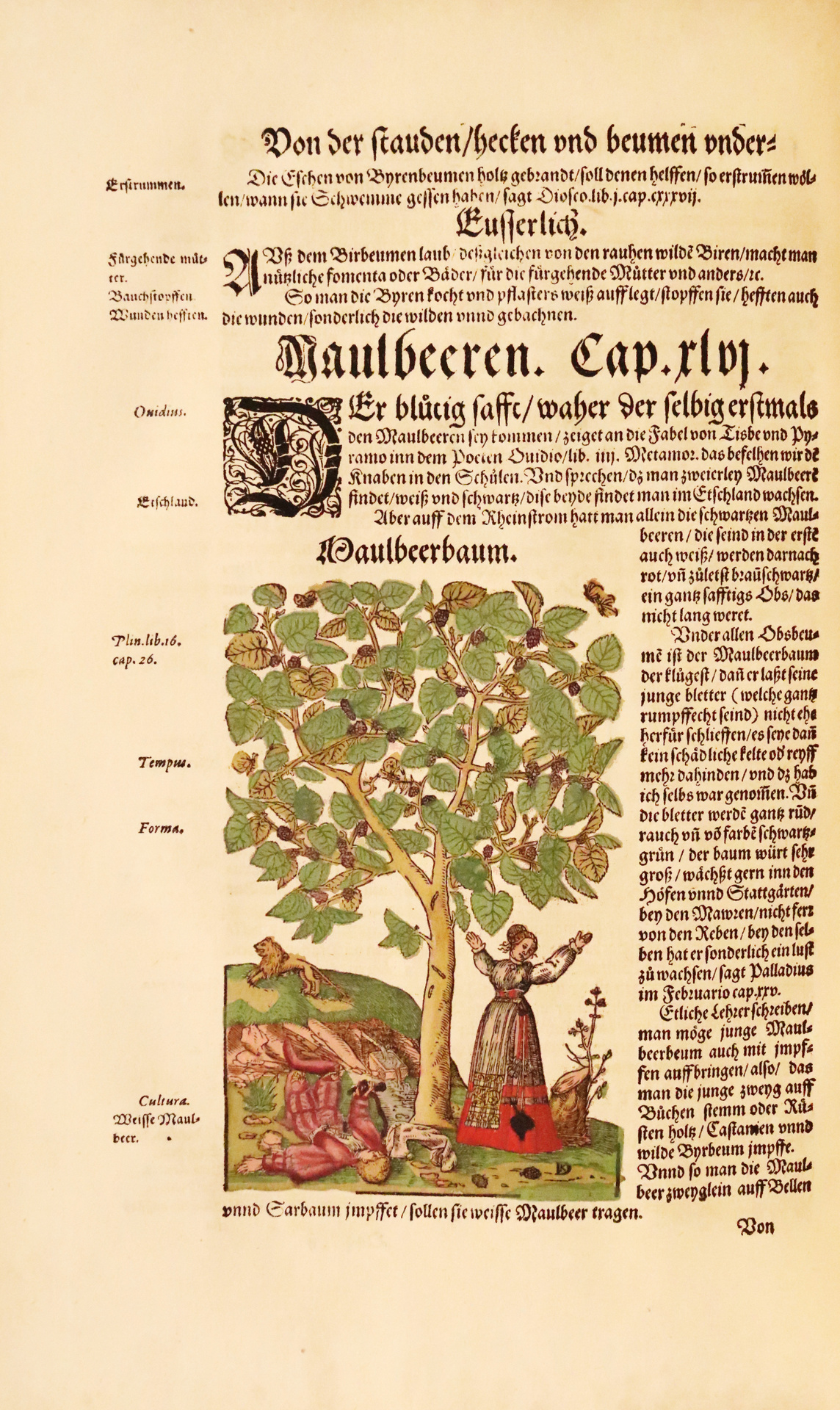
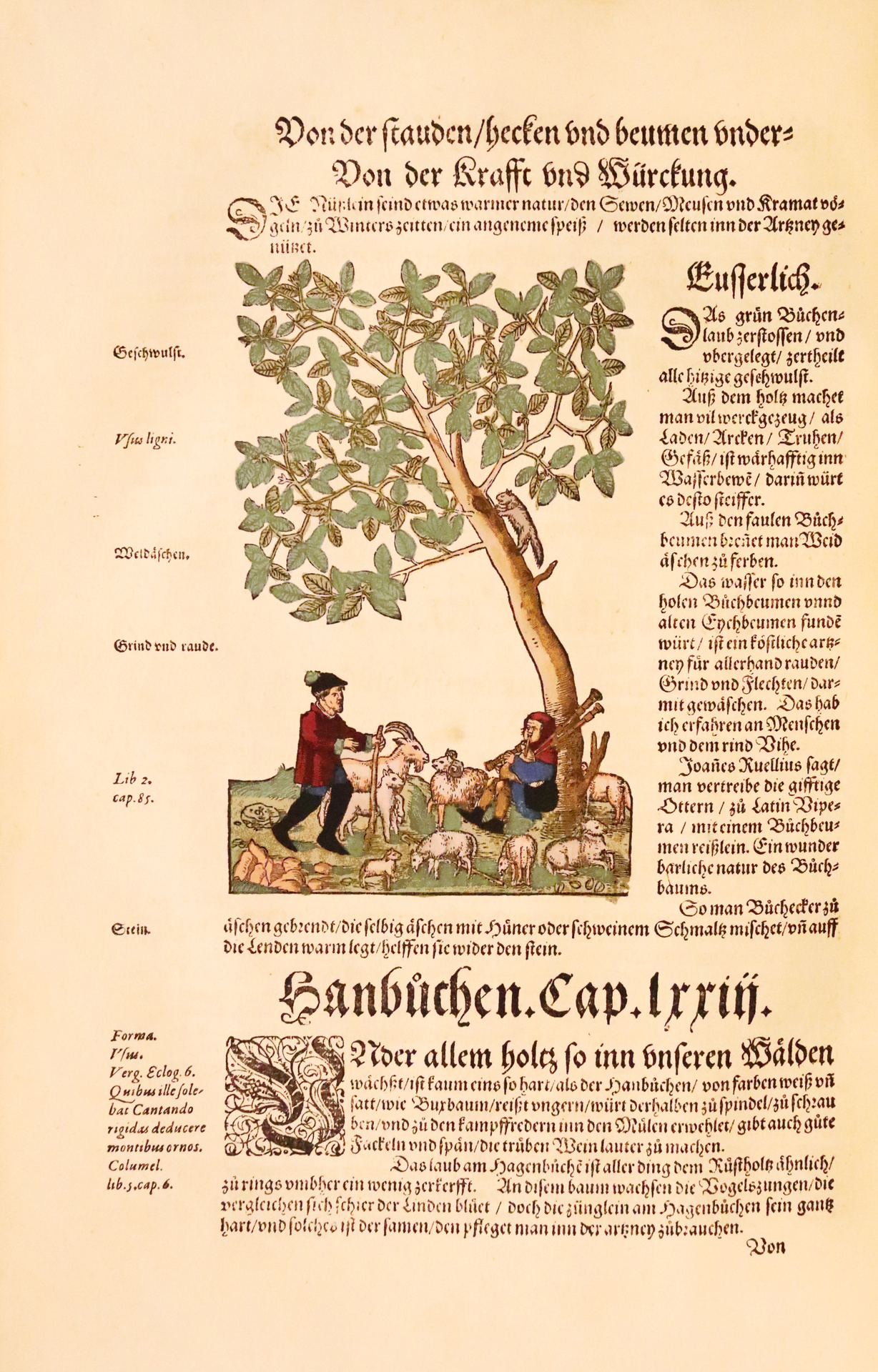
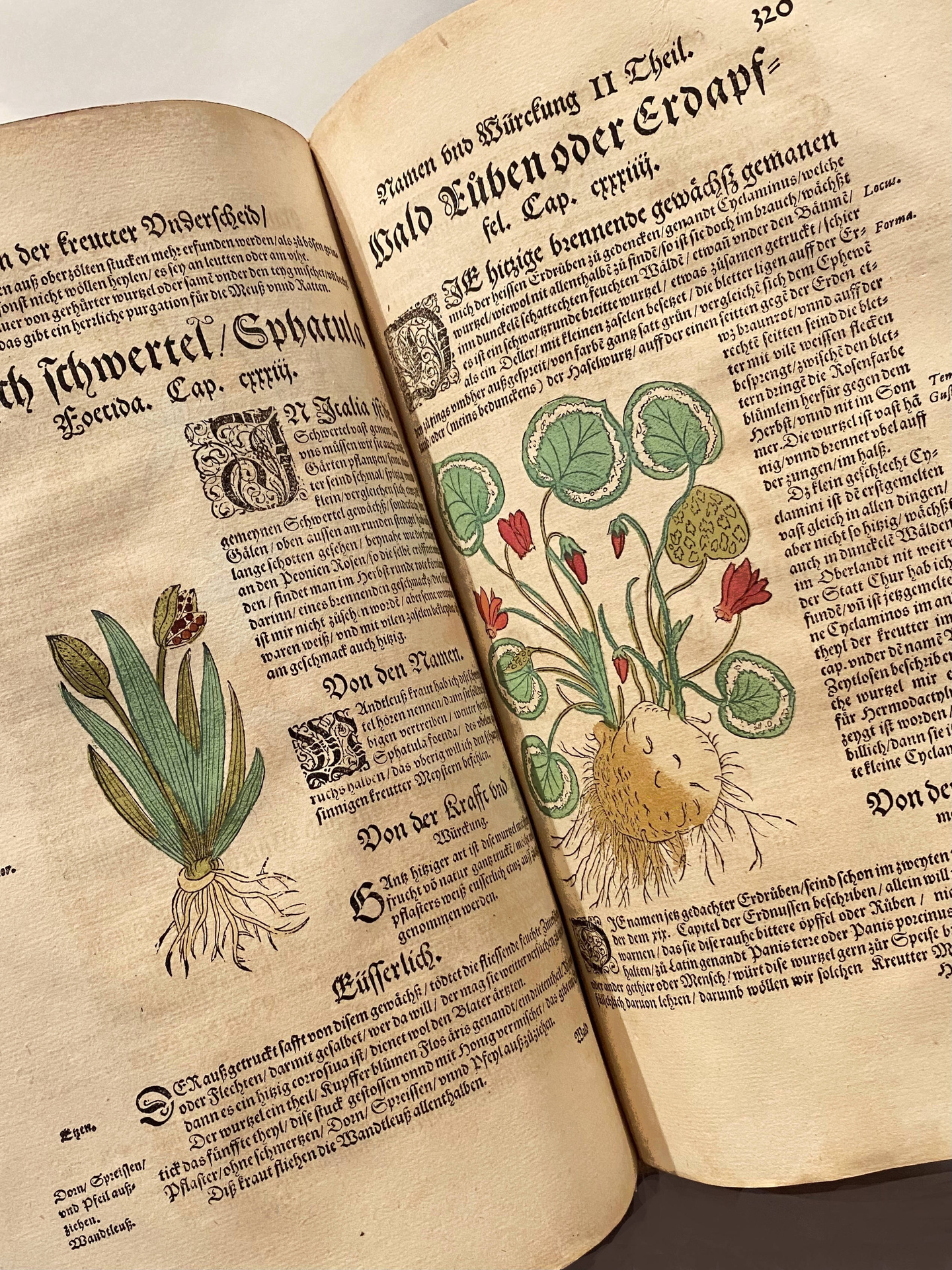
The illustration includes about 590 woodcuts, drawn and engraved by David Kandal, colored at the time.
Mariette praised the talent and precision of David Kandal (1520-1592), flower painter and engraver. The Strasbourg artist did not limit himself to interpreting the compositions of Fuchs or Brunfels; he created about a hundred of his own.
His drawings depict plants, from roots to flowers, sometimes embellished with genre scenes, along with a full-page portrait of the author in an architectural frame, and the coat of arms of Philip William of Orange-Nassau, also full-page.
A prestigious copy where the addition of color, strictly of the period, is not only careful but homogeneous. These line engravings, without cross-hatching and little shading, were thus suited to their coloring.
First illustrated edition of Bock’s culinary treatise.
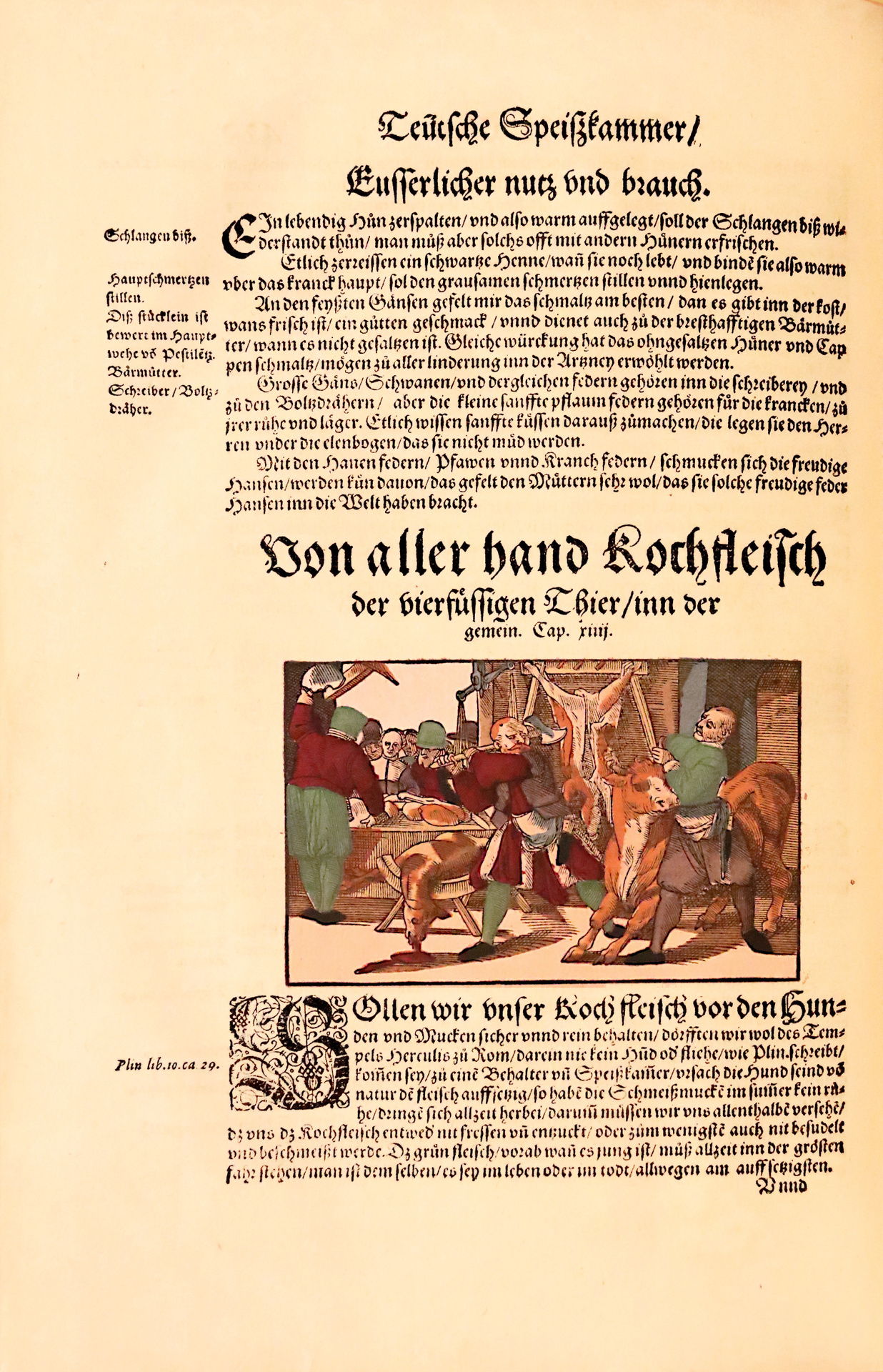
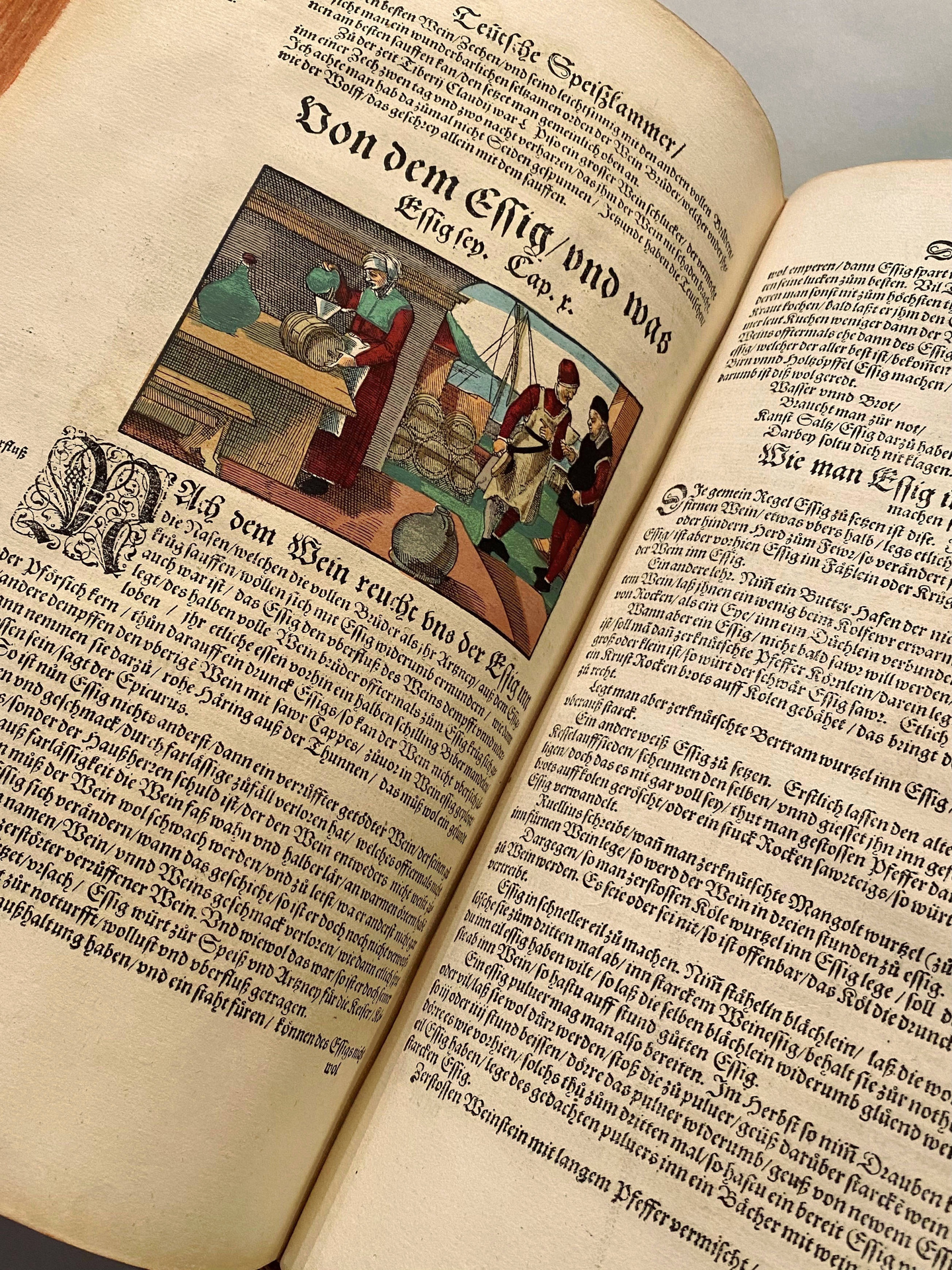
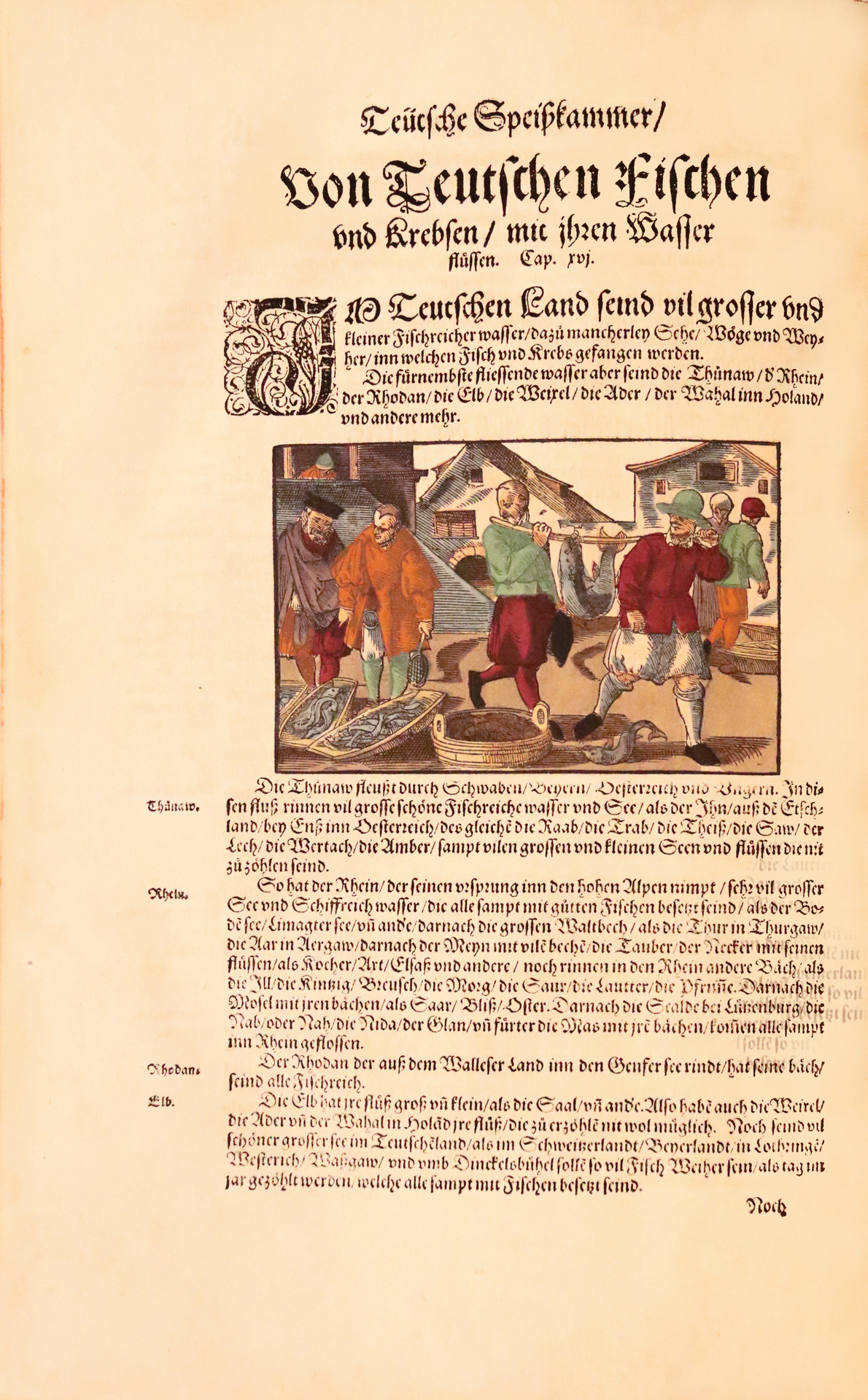
The Teutsche Speisskammer, illustrated with 19 woodcuts after designs by the Swiss painter Tobias Stimmer, contains about a hundred pages where the author reviews food usages: poultry, fish, vegetables and herbs, milk, butter, wines (first mention of riesling), cheeses (German, Swiss, and Dutch), spices (ginger, pepper, cardamom, cloves, saffron), German bread (made from rye or barley), honey, and sugar (then considered a medicine).
The first issue engravings depict the fish market, butcher shop, banquet, kitchen, cellar, etc. The final section, Von Panckentieren unnd Schlassdruncken is less about the botanist than the Lutheran pastor he also was. It deals with banquets, as well as the combined effects of drunkenness and dancing, advocating temperance.
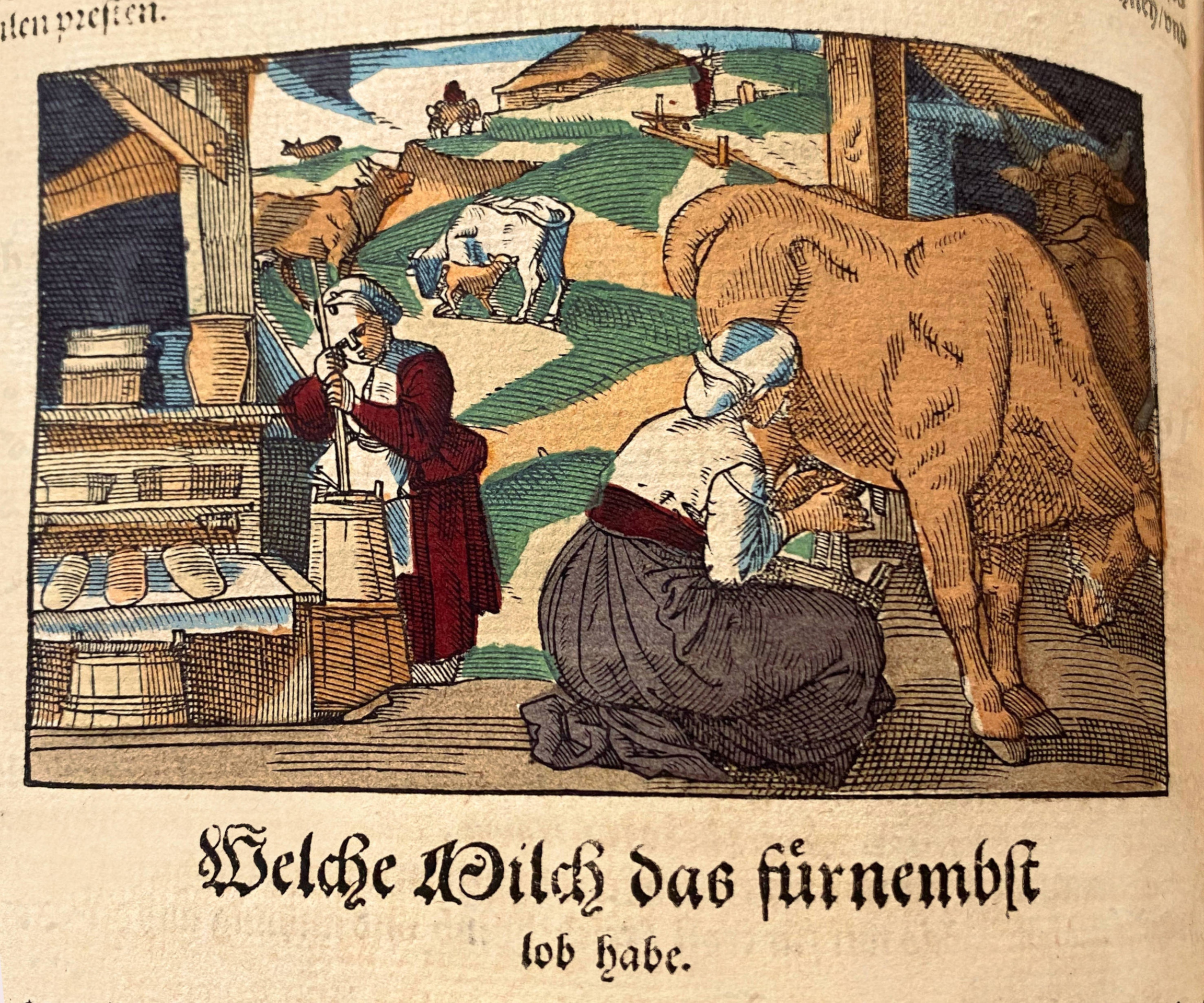
Several woodcuts, of great interest, are devoted to a panorama of different trades of the time: blacksmith, field work, milking cows and making butter, beehives, salt purification, baker, wine pressing, putting wine in barrels, egg selling and poultry yard, butcher, sausage making, fish stall, grocer, village market, bourgeois meal…
(Weiss, Gastronomia, 1996, no. 427; Bitting, Gastronomic Bibliography, 1939, p. 46, as well as Cagle, A Matter of Taste, 1999, no. 85, only list the 1550 edition).
Sumptuous copy, perfectly preserved in its contemporary Rhenish binding in pigskin over wooden boards, stamped in blind.