Venetia, Giovanni Battista and Marchio Sessa brothers, n.d. [1562].
In-12 of (4) ff., 119 ff. (1) f. Numerous woodcuts in the text. Title page with woodcut printer’s mark (Pegasus in an elaborate frame); 23 woodcuts in the text of various sizes, some full-page. A few small spots in some margins. In the text, various charming old handwritten notes and underlinings.
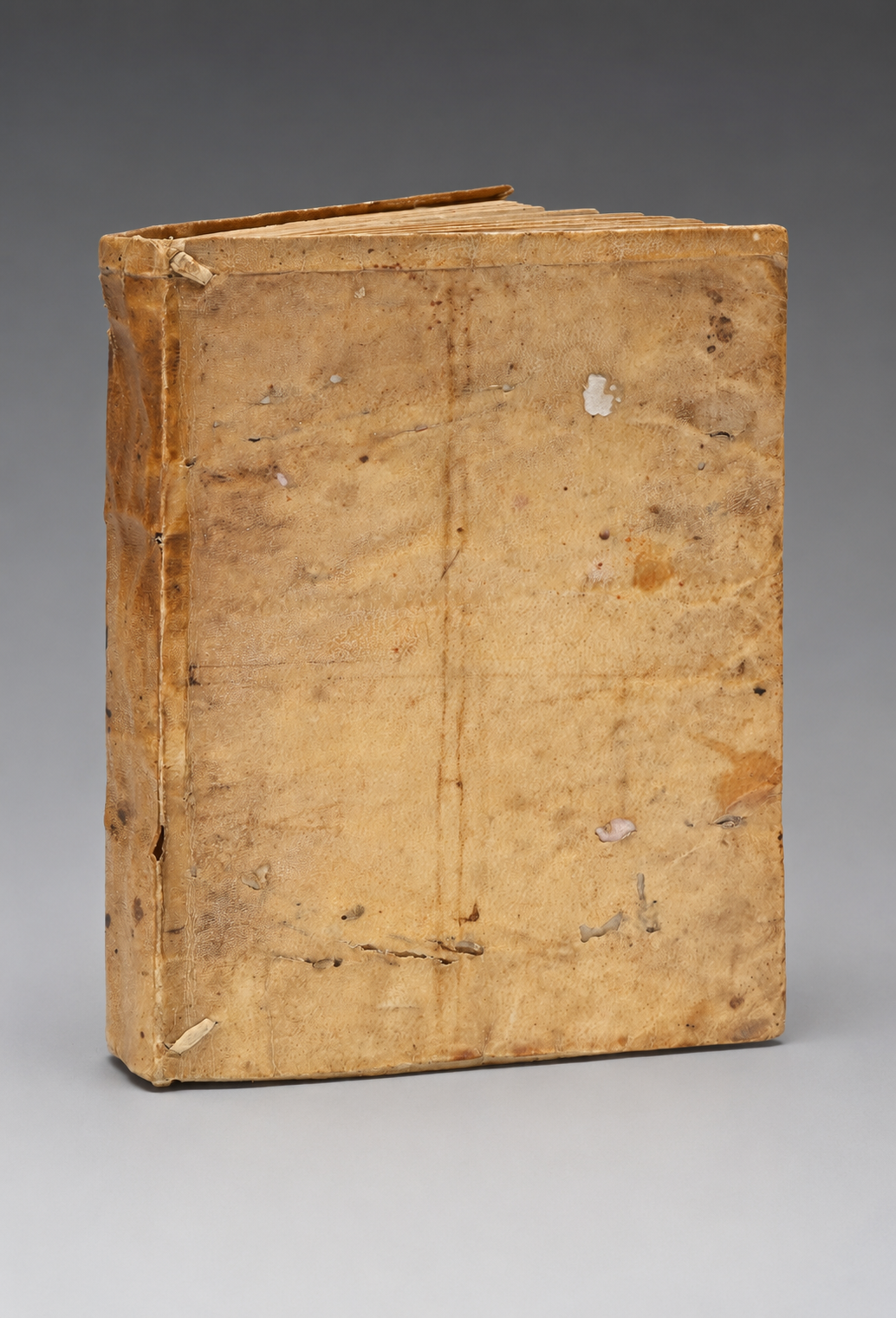
Full contemporary vellum, lightly wrinkled, somewhat soiled, and with small traces of bookworm, but still sound. Ownership inscription on the front and end papers “Giuseppe Lunati di Milano”.
147 x 102 mm.
Original edition of this rare illustrated treatise on mnemonics.
Brunet, II, 789; Mortimer, Italian Books I, 157; Adams D-732; Olschki 4460.; Cantamessa 2230 bis; Casanatense 391; Wellcome 1828; BM Italian p.220.
Rappaport, Ars medica per saecula, 1930, 1853: “First edition of this very curious and uncommon treatise on mnemonics containing many very interesting engravings, figured alphabets etc.“.
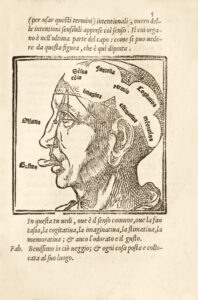
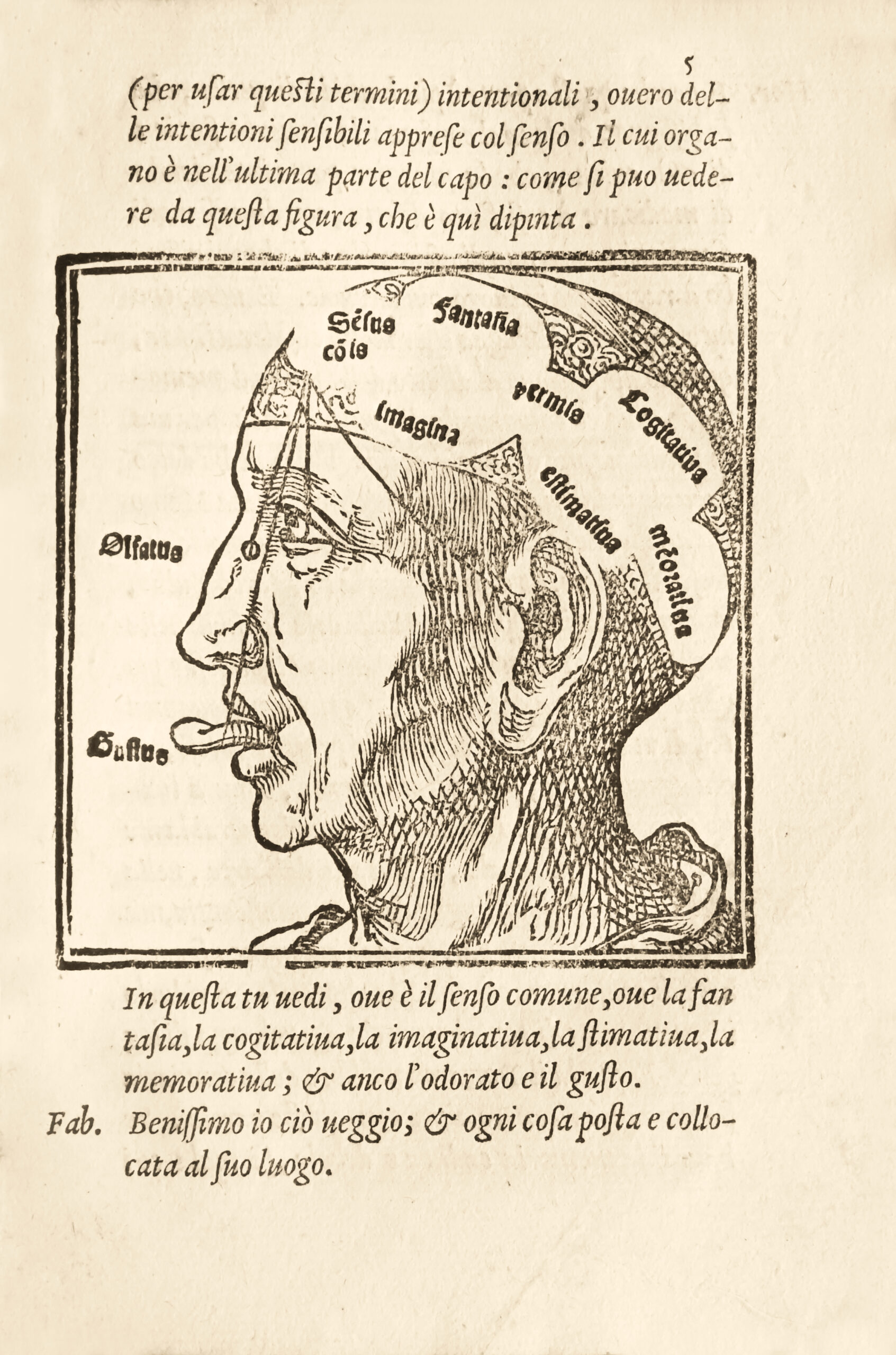
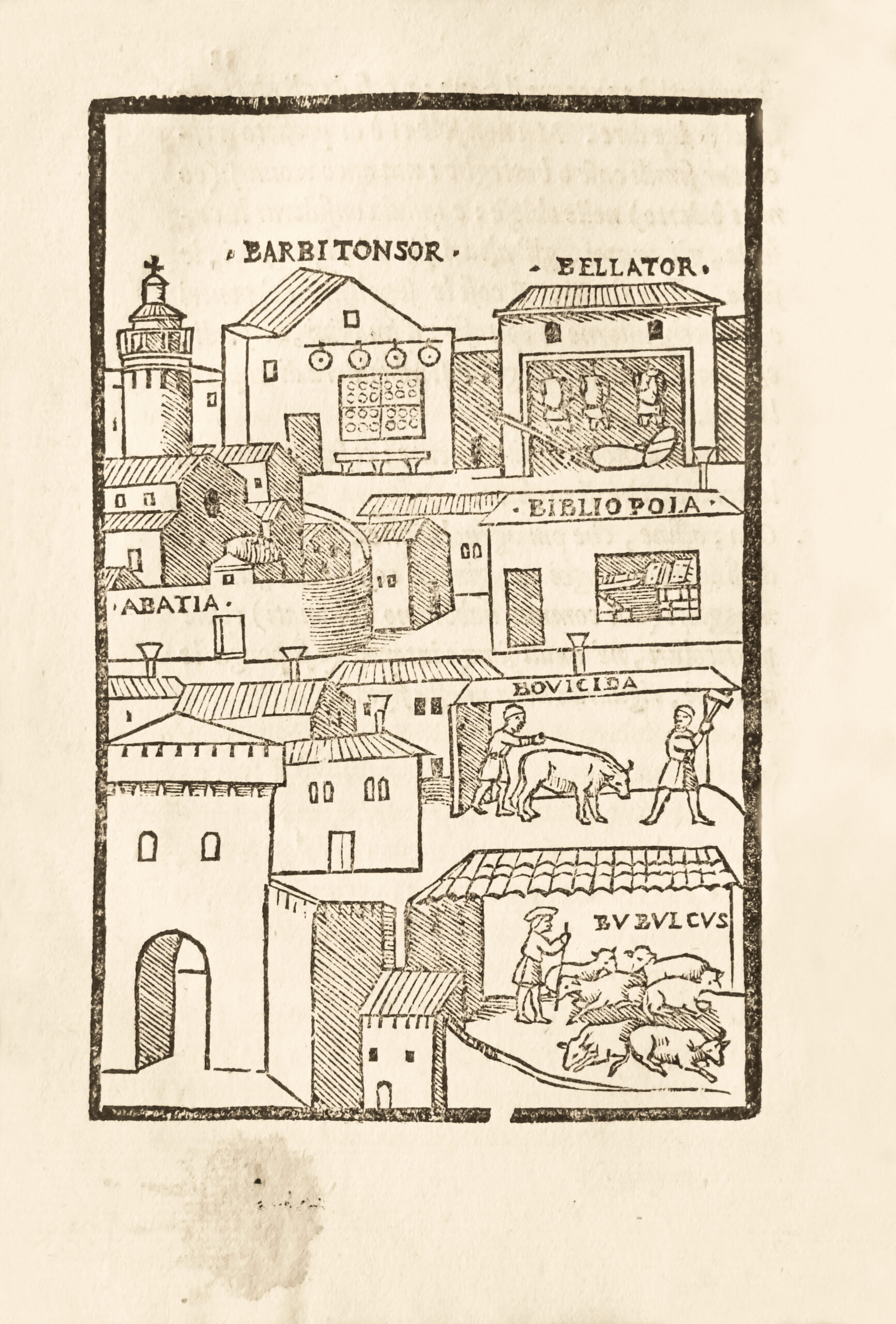
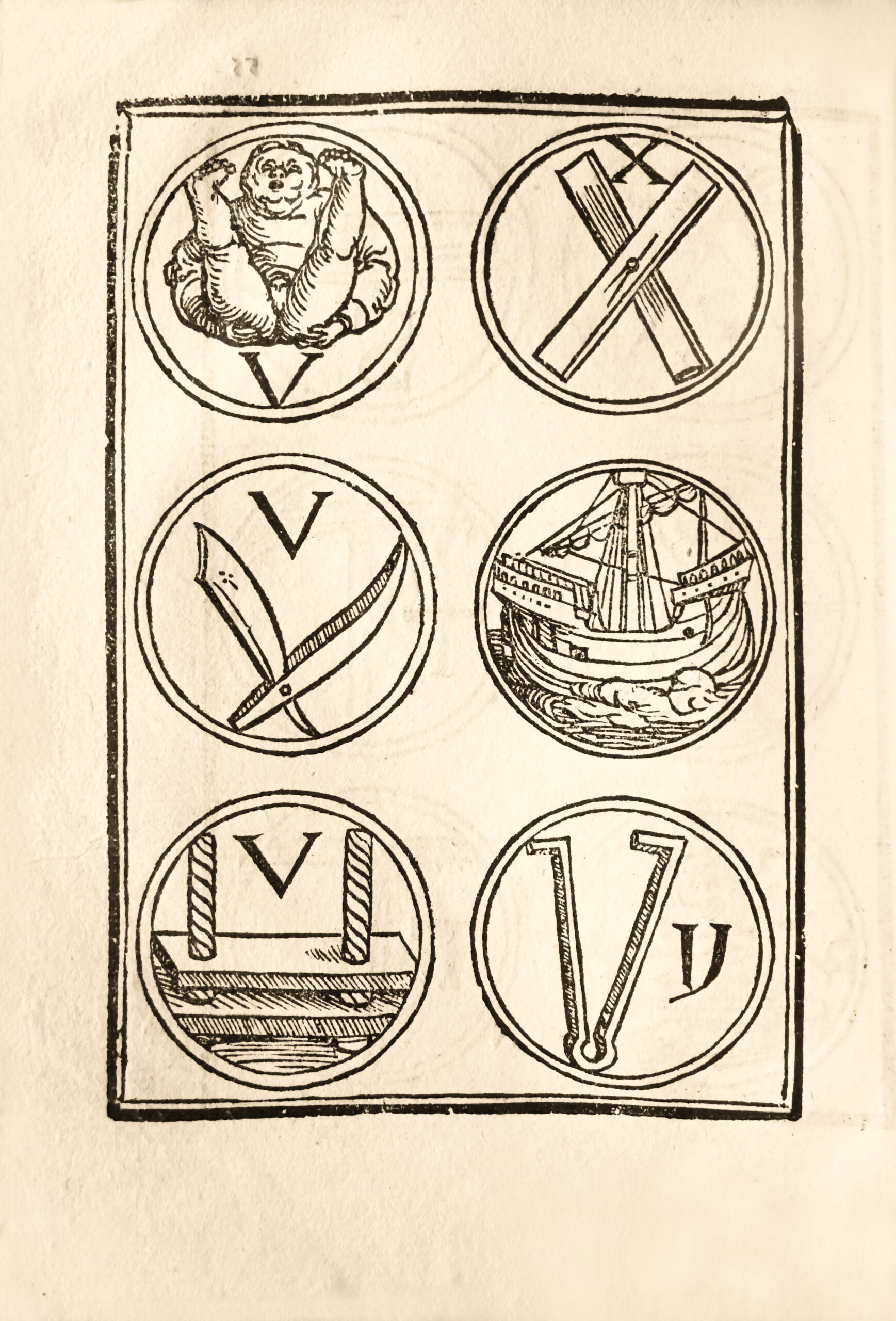
Woodcut initials, and 23 woodcuts throughout text of mnemonic diagrams and charts, musical notation, and illustrations, which include a head labelled to show the areas responsible for different mental and sensory faculties (one of the earliest examples of phrenological illustration); and the buildings of a town labelled to indicate the businesses located within, such as “barbitonsor” (barbershop), “bovicida” (slaughterhouse), “abatia” (abbey), and “bibliopola” (bookstore displaying books in shop window).
Printer’s Pegasus device on title, 23 woodcuts, 6 full-page, woodcut initials.
The blocks were designed for Giorgio de’ Rusconi’s 1520 Venice edition of Johann Host von Romberch’s Congestorium Artificiose Memorie, the basis of Dolce’s Dialogo. The blocks came to the Sessa press for a 1533 edition of the Congestiorum.
The mechanics of memory was an abiding concern of the polymath humanist Lodovico Dolce (d. 1568). He first approached it systematically in 1547 with a “Dialogue on women’s education” and then with greater focus in 1556 with the text offered here.
Dolce explores the concept of the “memory palace,” where one associates specific items or specific texts with an imaginary chamber in an imaginary building: an exercise still taught today. He provides other techniques for using vivid mental images and repetition in order to memorize complex texts.
With 16 wood-engraved plates and 7 pages of an alphabet populated with mnemonic figures. It is traditional to mention here that the text is based on research by Johann Host von Romberch published in 1520 as Congestorium artificiose memorie. Indeed the plates were designed for an earlier edition of Congestorium. Mortimer speculates that Dolce’s interest in elaborating this text may have come from his inspection of the blocks.
First edition of the Dialogo della memoria by Lodovico Dolce, a treatise devoted to techniques for fixing complex texts in memory through the use of mental images and repetition.
The text constitutes an important Italian adaptation of the Congestorium artificiosae memoriae by Johannes Romberch, first published in Venice by Giorgio de’ Rusconi in 1520.
Dolce, a Venetian polymath, translator, and theorist, reshaped the Dominican mnemonic treatise of Romberch into an elegant dialogue in the vernacular, perfectly adapted to the Italian rhetorical culture.
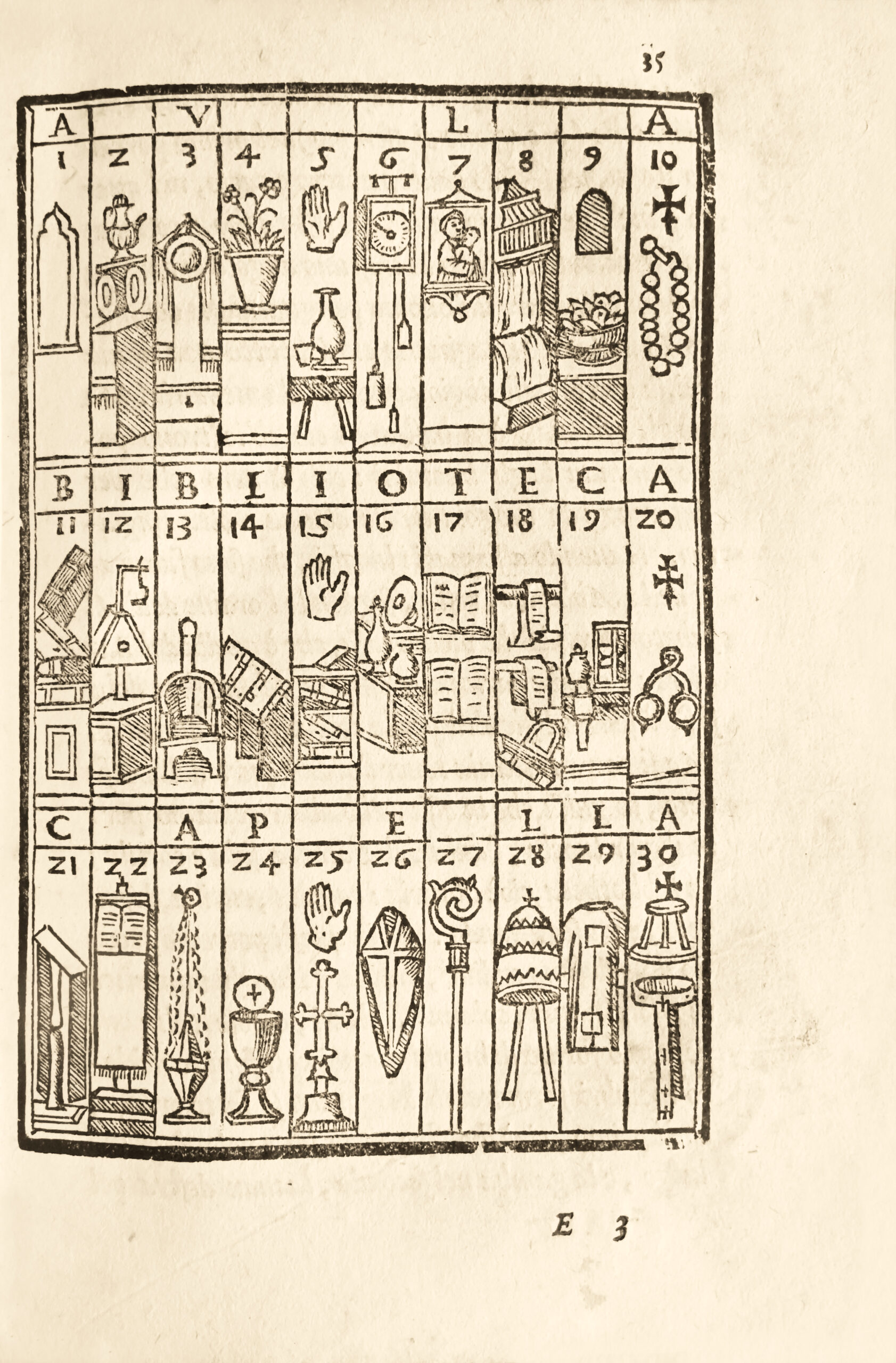
For the illustrations in this edition, the Sessa workshop reused the woodblocks initially created for the Congestorium of 1520, acquired by the family when they reissued it in 1533. The series also includes the renowned visual alphabet composed of tools, animals, and objects, first printed by Erhard Ratdolt in Publicius’ 1482 edition, one of the oldest mnemonic alphabets in Europe.
Among the images is the famous urban view showing a shop front bearing the inscription “Bibliopola” (street bookstore), which Sander (regarding the 1520 edition) suggests interpreting as the first printed representation of a bookstore window facing the street.
The text unfolds as a didactic dialogue between master and disciple, designed to accompany the reader from sensory perception to the celestial hierarchy of ideas. The plates and the text together form one of the most complete and fascinating vernacular expositions of the “art of memory” available in 16th-century Europe.
The 23 woodcuts of the volume present an exceptional iconographic and pedagogical interest.
Notably featured are striking visual aids for mental architecture and symbolic association, such as: a diagram of the human head mapping the faculties of senses and memory, a Renaissance visualization of Aristotelian psychology and one of the earliest examples of phrenological illustration (B5); a figure placed in a room with perspective, illustrating spatial loci, a sort of “memory space” intended for the mental storage of concepts in different chambers of an imaginary building (D1r; I1); a cosmological diagram of celestial spheres, integrating memory into the divine order (D5r); the famous urban scene depicting a “Bibliopola” in a city landscape, considered the oldest printed image of a bookstore facing the street (E1r); and finally the visual alphabet of objects, tools, and animals, one of the oldest mnemonic alphabets (G4–G7), accompanied by other similar visual devices (E3, H2, H3, and others).
Together, these woodcuts offer a vivid synthesis of mnemotechnic, rhetorical, and visual theory.
Lodovico Dolce (1508–1568), a Venetian humanist and translator, played a central role in the city’s printing industry. He became known for the breadth of his production, his adept adaptations of classical and philosophical works into refined Italian prose, and his ability to connect Renaissance scholarship with a broader reading audience.
A precious copy preserved in its contemporary vellum.