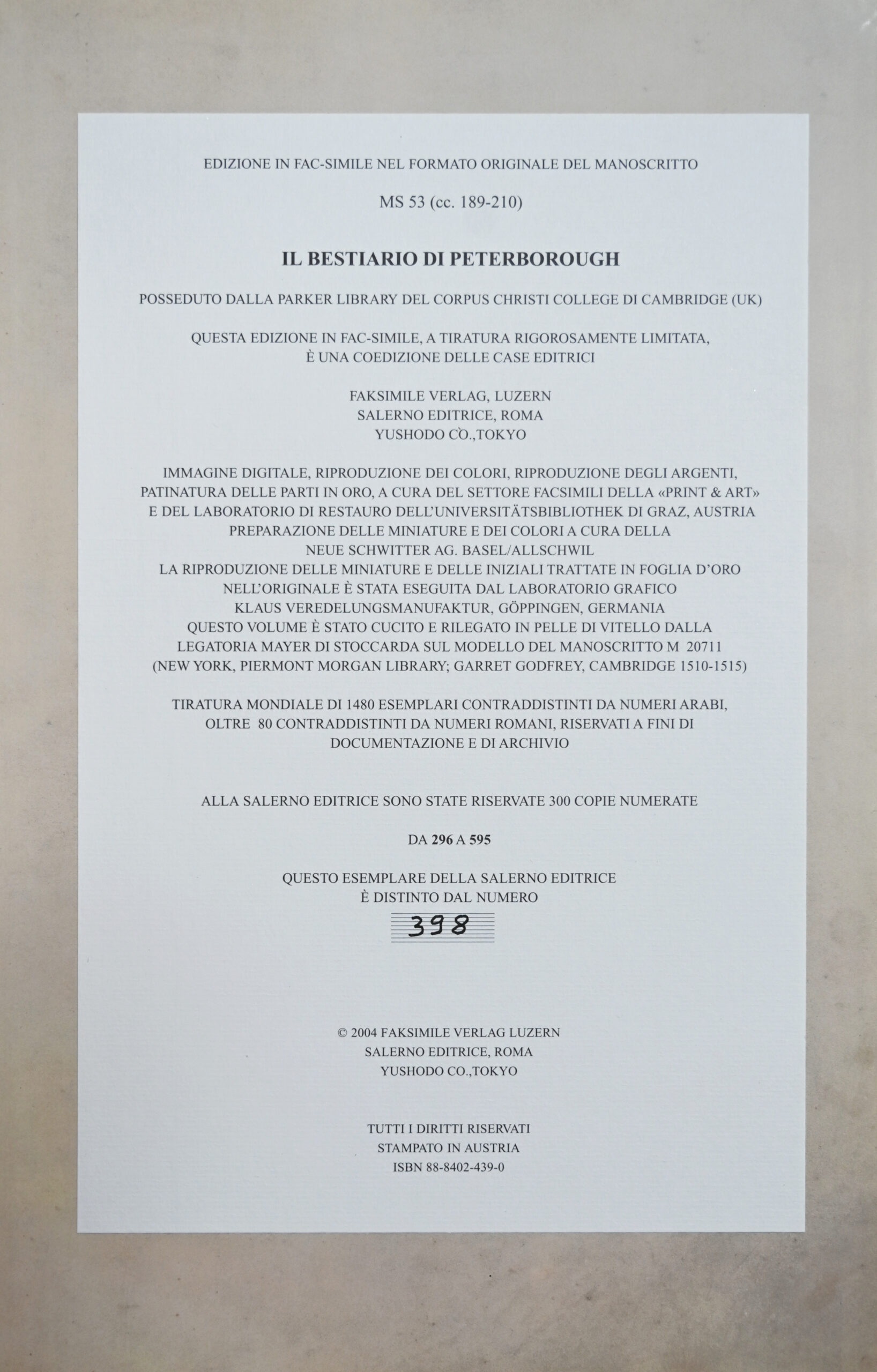
Rome, Salerno Editrice, 2004.
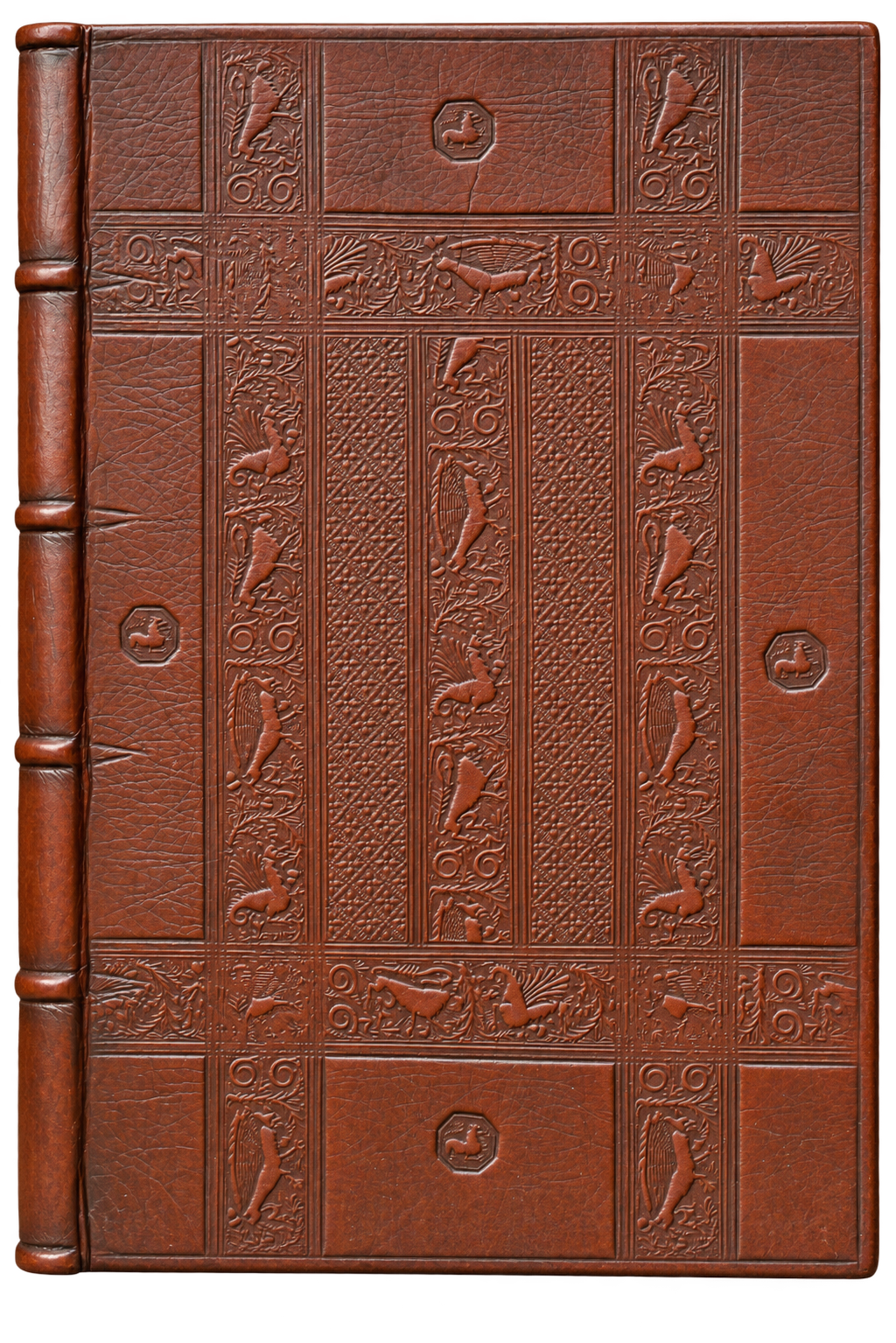
Folio, 44 pages. Brown calf binding blind-stamped, the covers decorated with numerous floral and animal motifs and blind-tooled rules forming various compartments; raised bands on the spine.
Accompanied by a quarto volume of commentary.
349 x 234 mm.
A superb reproduction of the ms codex. 53 of the Parker Library in Cambridge bearing the 12th century Peterborough Bestiary.
The Middle Ages regarded nature, as we know, as a kind of book through which God spoke to humanity. This view gave rise to the production of bestiaries, herbals and lapidaries, devoted respectively to descriptions, often illustrated, of animals, herbs and plants, and stones, each studied as a word in the divine message.
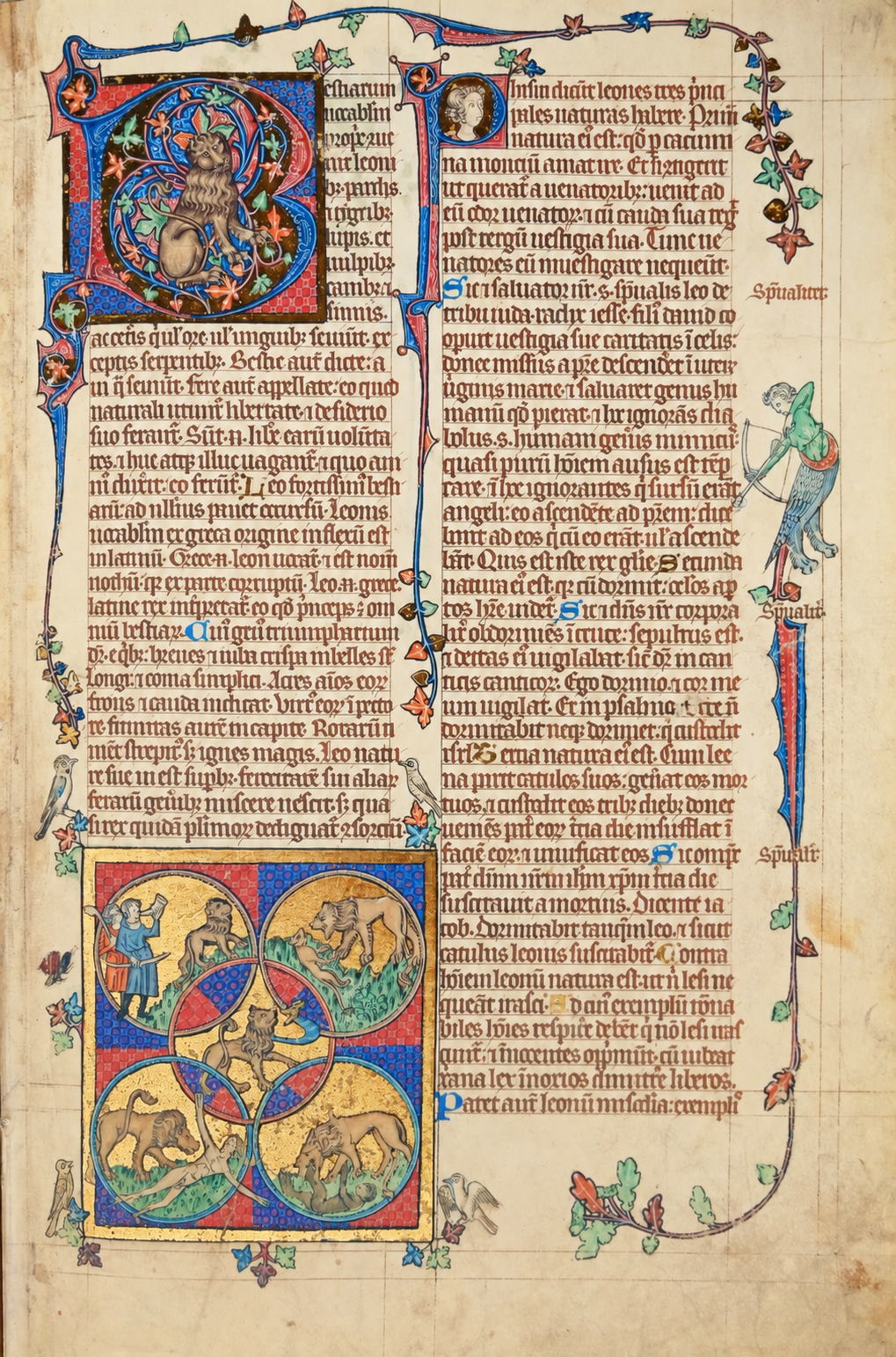
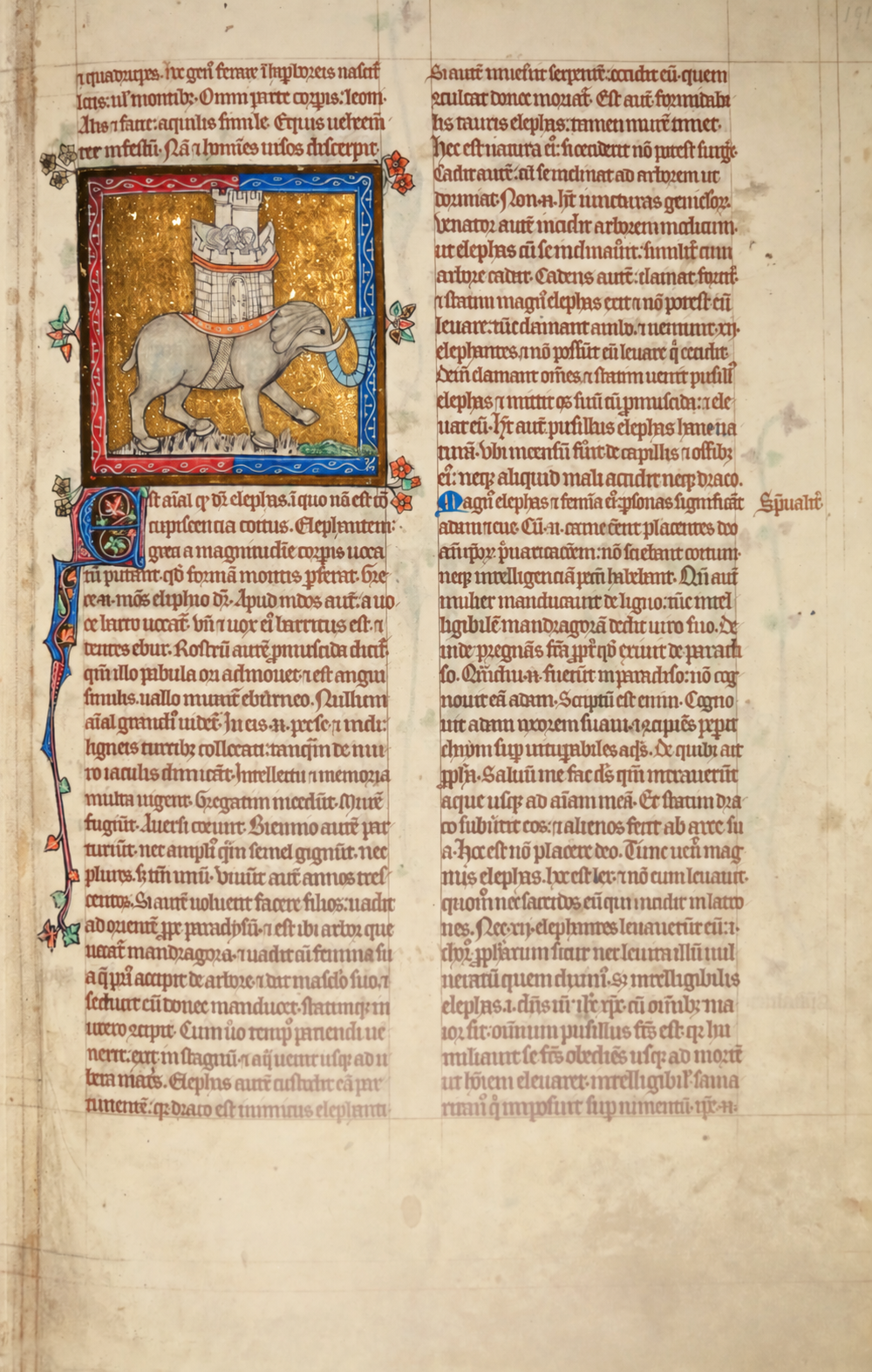
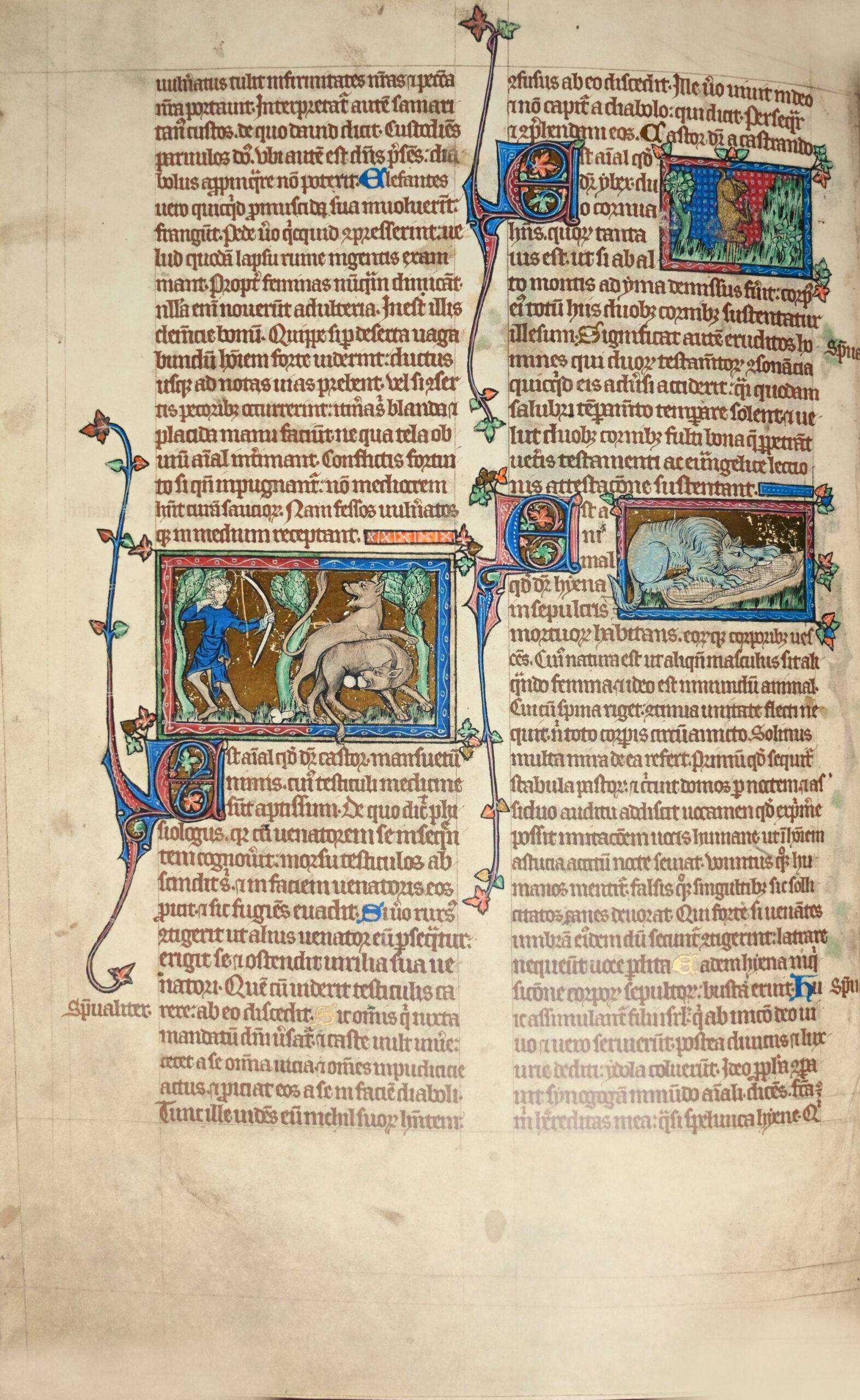
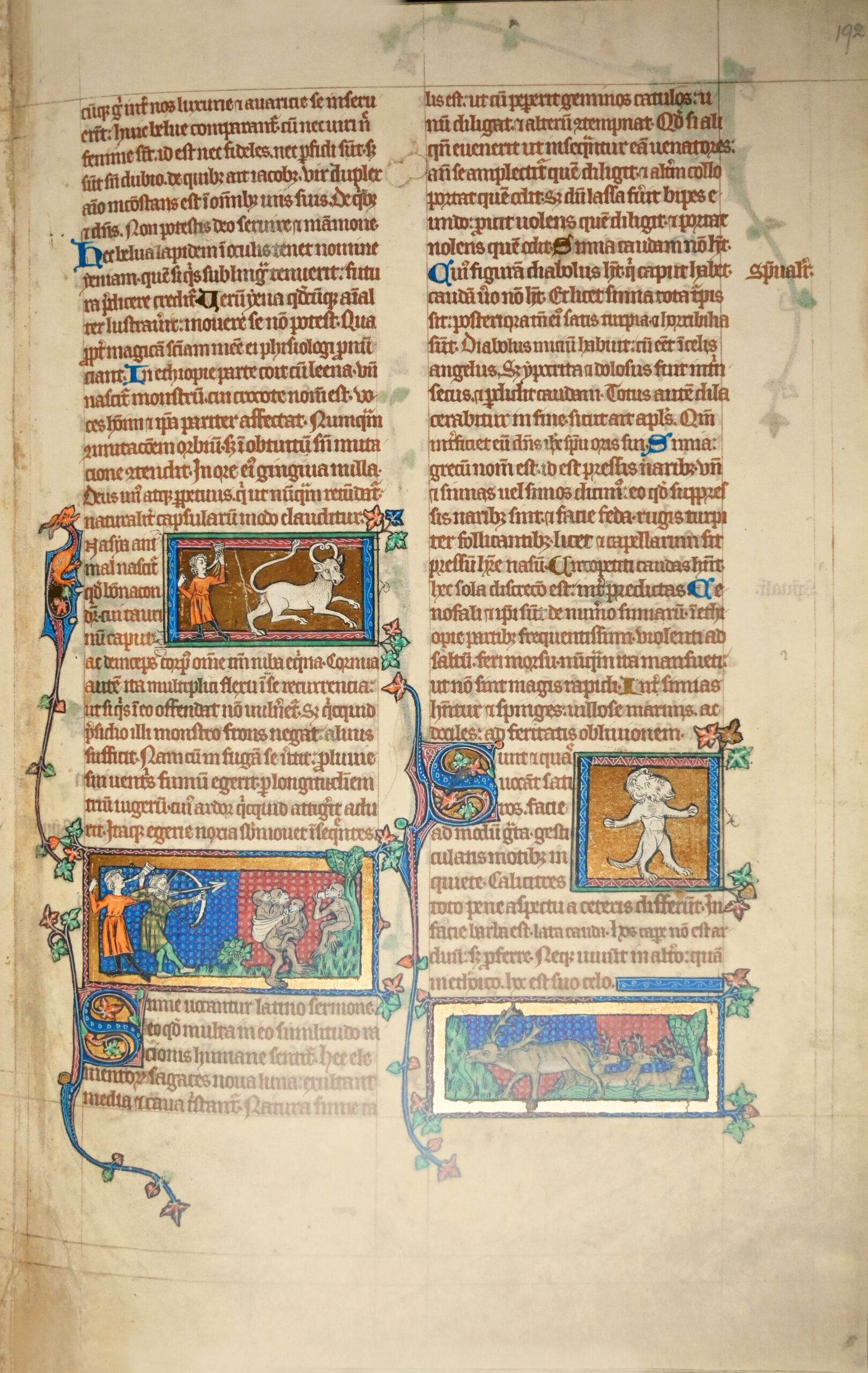
Among the many surviving examples, one of the most precious is the Peterborough Bestiary, produced in an abbey in eastern England around 1300 by artists of exceptional skill in both figurative art and the observation of nature (now held as ms. 53 in the Parker Library at Corpus Christi College, Cambridge).
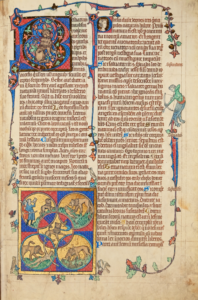
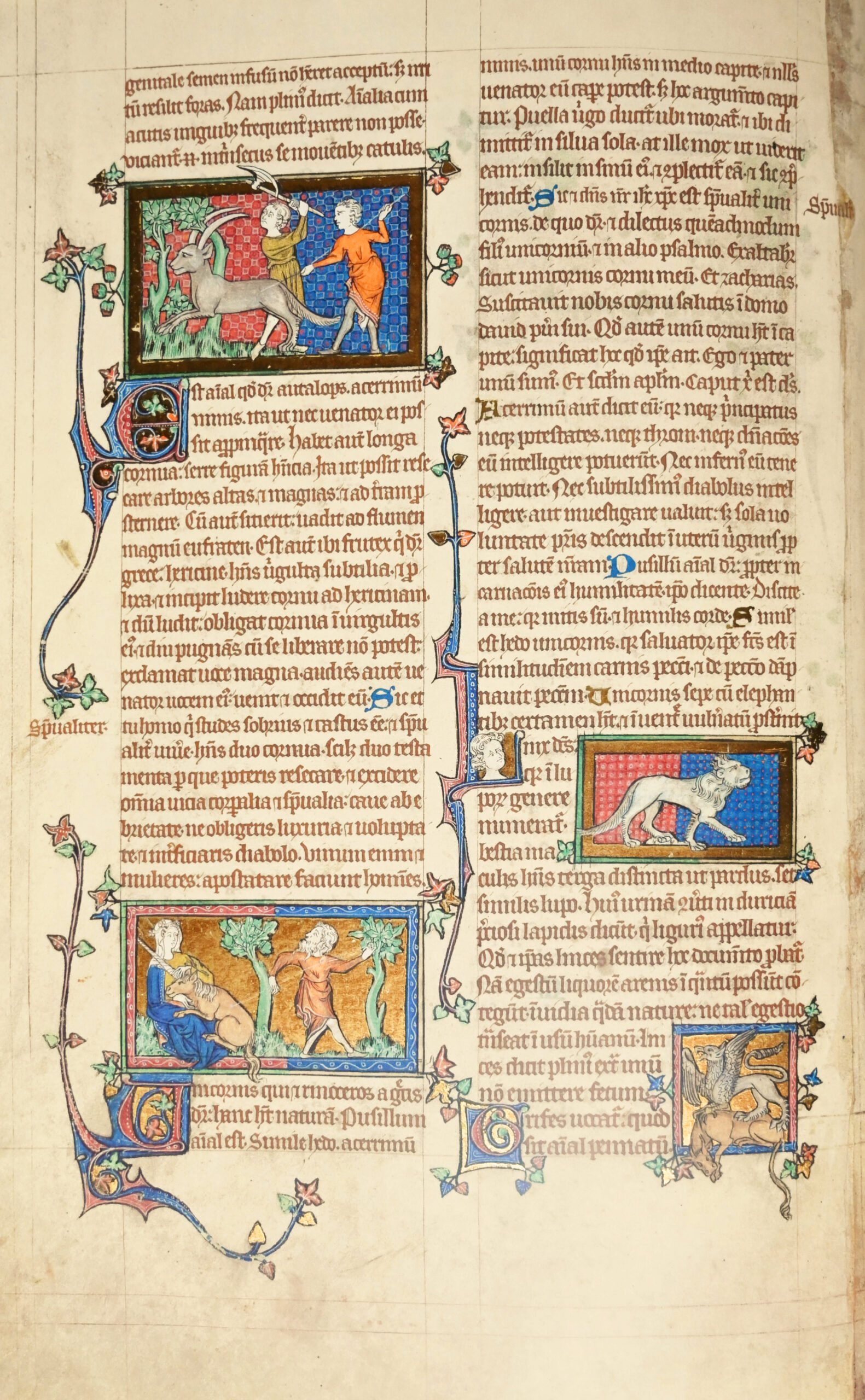
Dogs, horses, monkeys, lions, elephants, deer, mermaids, the legendary phoenix and many other animals, real or imaginary, are depicted with remarkable expressiveness in the hundreds of illustrations, often painted against a gold background, that lavishly adorn the manuscript’s pages.
More than 100 miniatures are distributed throughout the text, framed in gold or set against a gold background. They depict familiar, exotic and mythical animals, such as the unicorn, the phoenix and the satyr. They are frequently portrayed in motion in the Gothic style and are often given allegorical and moral meanings in the text.
This type of bestiary was beloved and popular in the early Middle Ages, following a tradition that can be traced back to the third-century AD Physiologus, through Isidore of Seville and the many medieval variations.
Copy numbered 397 of 595.
The facsimile reproduction of this bestiary makes an exceptional example of this precious medieval bookmaking tradition available to the general public for the first time.