Paris, Guillaume Cavellat, 1550.
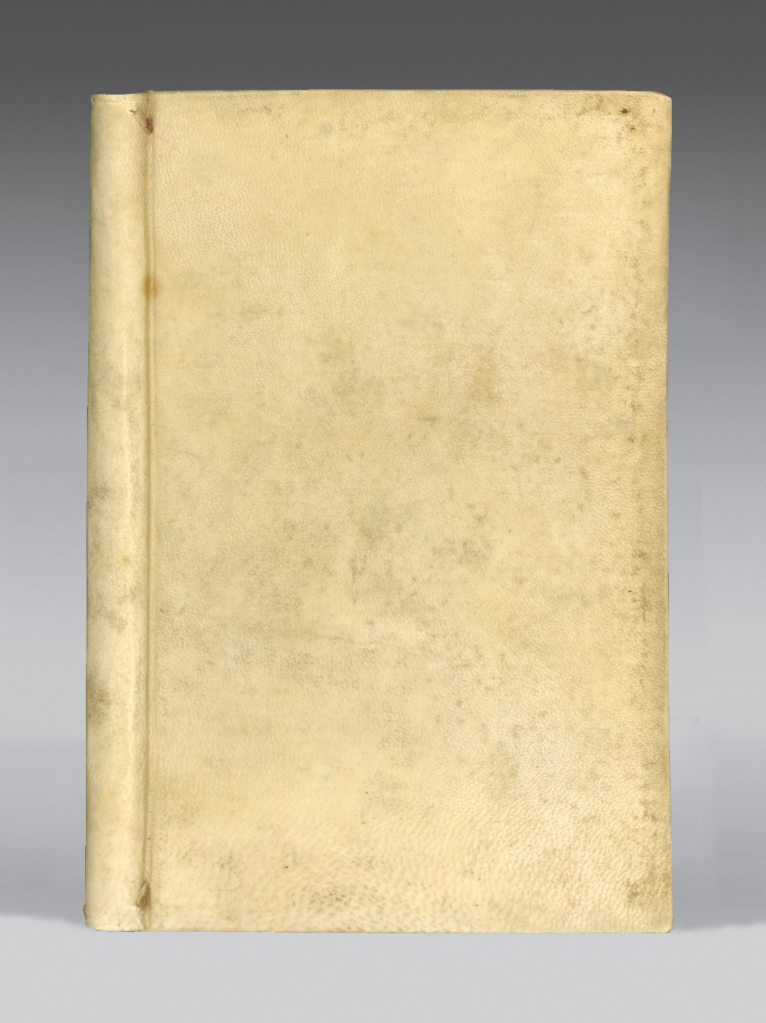
12mo, 46 leaves, (2, the last blank), ivory vellum, smooth spine. Later binding.
157 × 98 mm.
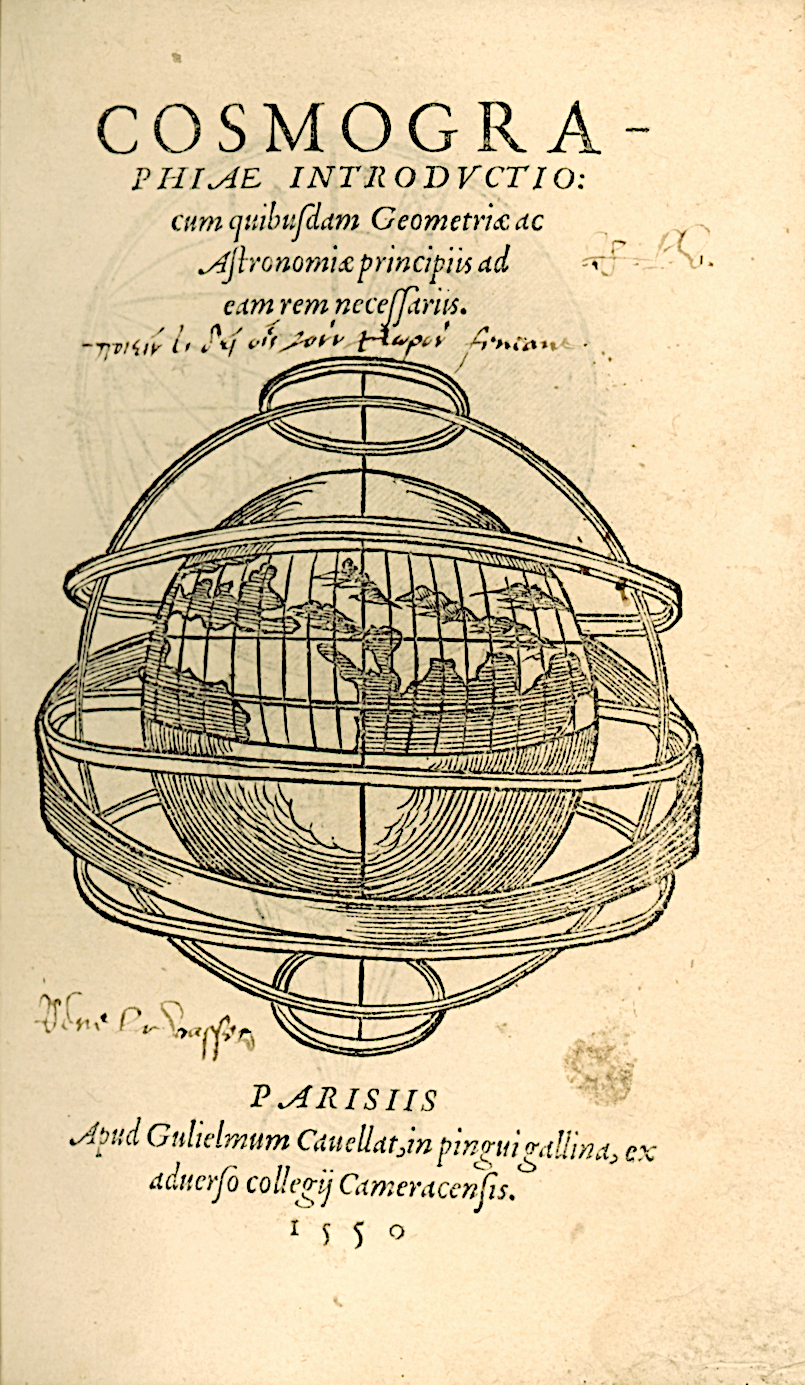
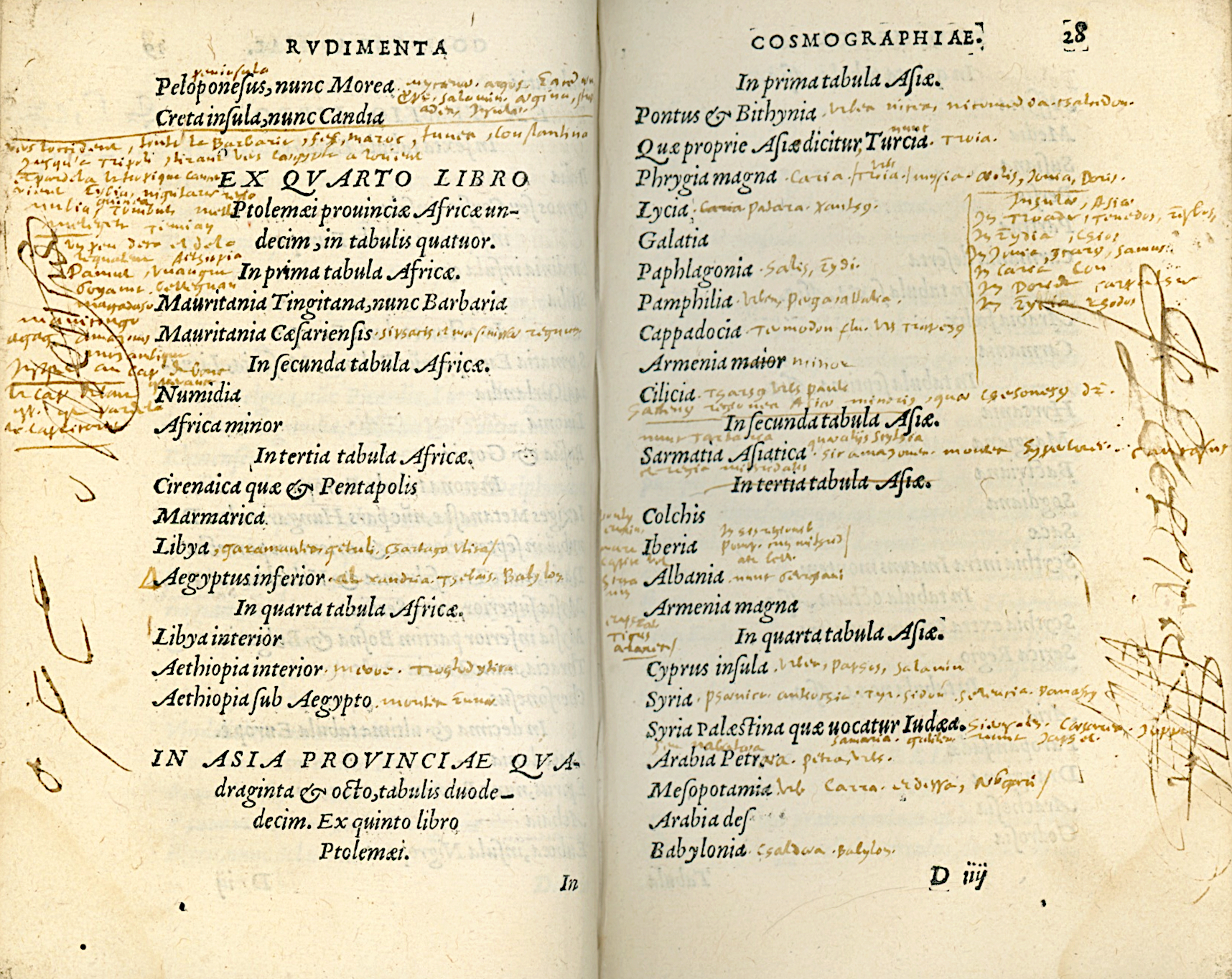
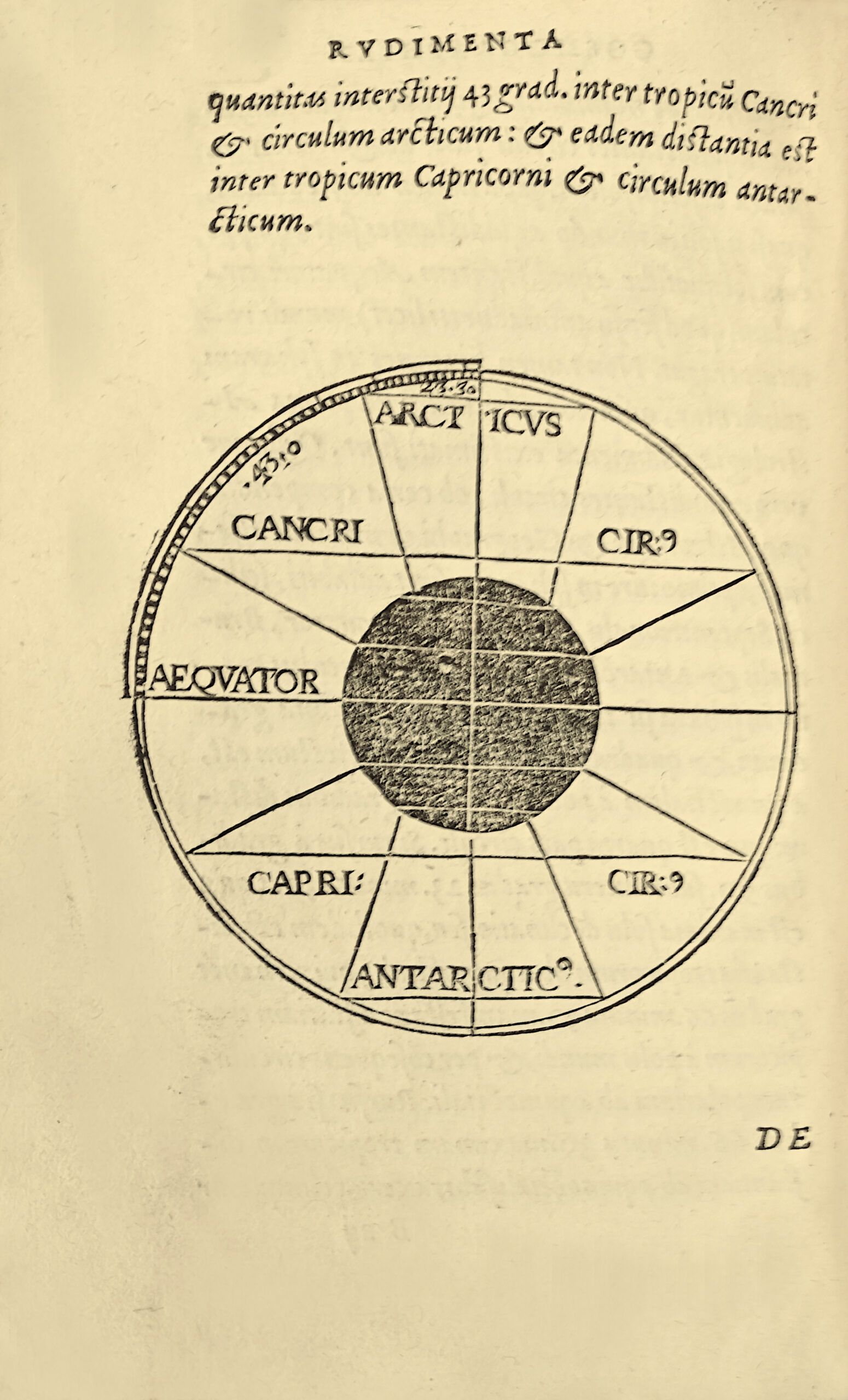
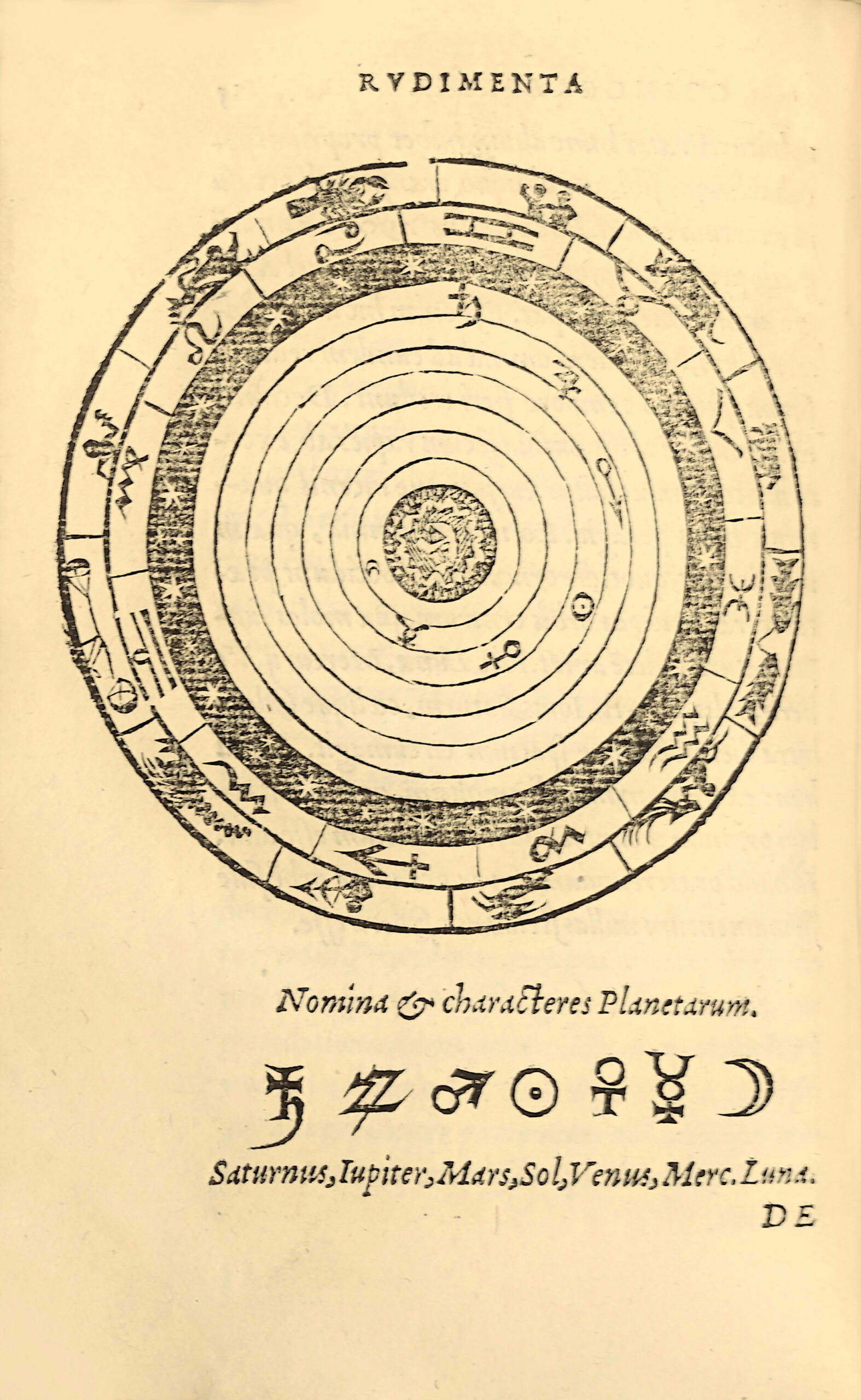
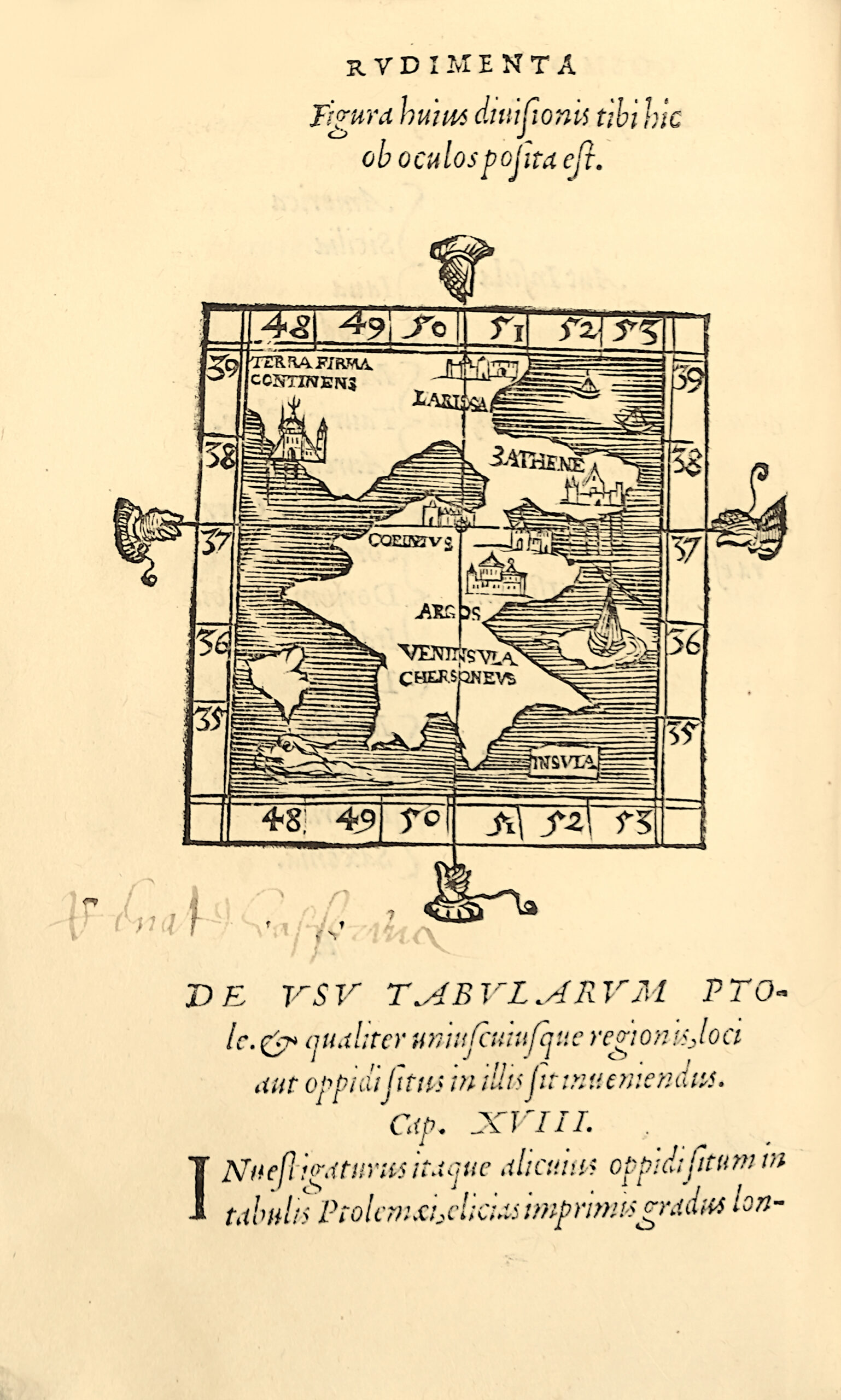
First paris edition, extremely rare, adorned with an armillary sphere on the title page and 27 woodcut illustrations in the text, including 4 full-page images. Chapter 28 is devoted to America.
P. Renouard, Imprimeurs et libraires parisiens du XVIe siècle. Cavellat, Marnef & Cavellat, Paris, 1986, no. 11.
Cosmographiae Introductio (“Introduction to Cosmography”) is a work published in Saint-Dié in 1507 as an introduction to Waldseemüller’s planisphere, the famous world map that, at the initiative of the scholars of the Vosgian Gymnasium, proposed for the first time the name “America” for the new continent.
In this work, Apian discusses navigation through the use of astronomy and fills the book with woodcut illustrations depicting aspects of astronomy and navigation. Other illustrations include zodiac figures, planets, maps, and navigational instruments. Perhaps the most important aspect of the book, however, is that it is among the earliest works relating to America. In 1507, Martin Waldseemüller printed a map that included the word “America” for the first time. Cosmographiae Introductio was published as a companion to that map.
This work was probably written by Mathias Ringmann, although some historians attribute it to Waldseemüller. In reality, it was a collective work produced by the Vosgian Gymnasium, a circle of humanist scholars serving René II, Duke of Lorraine, gathered in the Vosges town of Saint-Dié.
At the conclusion of an account of Amerigo Vespucci’s four voyages addressed to the Duke of Lorraine, the humanists proposed—after lengthy argumentation—that the New World be given the name “America” in honor of Amerigo Vespucci. Vespucci was indeed convinced that he had discovered a new continent, unlike Christopher Columbus, who believed he had merely opened a new route to the Indies.
The canon of the Church of Saint-Dié, Vautrin Lud, passionate about geography, became acquainted in 1505 with the booklet De ora antarctica, recently published in Strasbourg by the young scholar Mathias Ringmann. This pamphlet was one of fourteen Latin editions, most often published under the title Mundus novus, recounting Amerigo Vespucci’s third voyage of 1501–1502, undertaken at the request of King Manuel I of Portugal. During this expedition, the fleet sailed along the Atlantic coasts of Brazil and Argentina, from 5° to 52° south latitude. In this document, written for Lorenzo di Pier Francesco de’ Medici, head of the business house in whose service Vespucci had entered, Vespucci expressed his conviction that the lands he had reached belonged to a new continent unknown to Europeans of his time.
Struck by this revelation, Vautrin Lud decided to establish a printing press in Saint-Dié and gather around him a group of scholars. He enlisted the services of Mathias Ringmann, an Alsatian Hellenist then working as a proofreader in Strasbourg, and Martin Waldseemüller, a German cartographer known in Alsatian humanist circles. Together with his nephew Nicolas Lud, secretary to the Duke of Lorraine, and his colleague from the chapter of Saint-Dié, Jean Basin de Sandaucourt, a respected Latinist, Vautrin Lud, Ringmann, and Waldseemüller formed a small scholarly group known as the Vosgian Gymnasium.
In addition to its “Latin school,” rooted in the tradition of the devotio moderna, the Vosgian Gymnasium included an important printing workshop dedicated to disseminating scientific works in every field, ranging from geography to music and geometry.
Through his sovereign, René II, Duke of Lorraine, Vautrin Lud obtained from Lisbon two additional documents:
- An account written in 1504 by Amerigo Vespucci in the form of a letter addressed to Pier Soderini, Gonfaloniere for Life of Florence, describing the four voyages he had undertaken between 1497 and 1504 under the banners of the King of Castile and later the King of Portugal. This document confirmed the discovery of the new continent.
- A nautical chart produced in a Lisbon cartographic workshop, recording the information provided by Vespucci’s accounts. This chart appears to have been very close to the work executed by Nicolas Caverio in 1502.
Upon receiving these documents, Martin Waldseemüller created a small terrestrial globe depicting four continents, including a new one west of the Atlantic Ocean, twice labeled “America,” and separated from Asia by another ocean. This “Green Globe,” now in the collections of the Bibliothèque nationale de France, was probably presented to René II, Duke of Lorraine, thanks to whom the Saint-Dié group was able to continue its work.”
Precious unsophisticated copy, covered with contemporary calligraphic annotations.