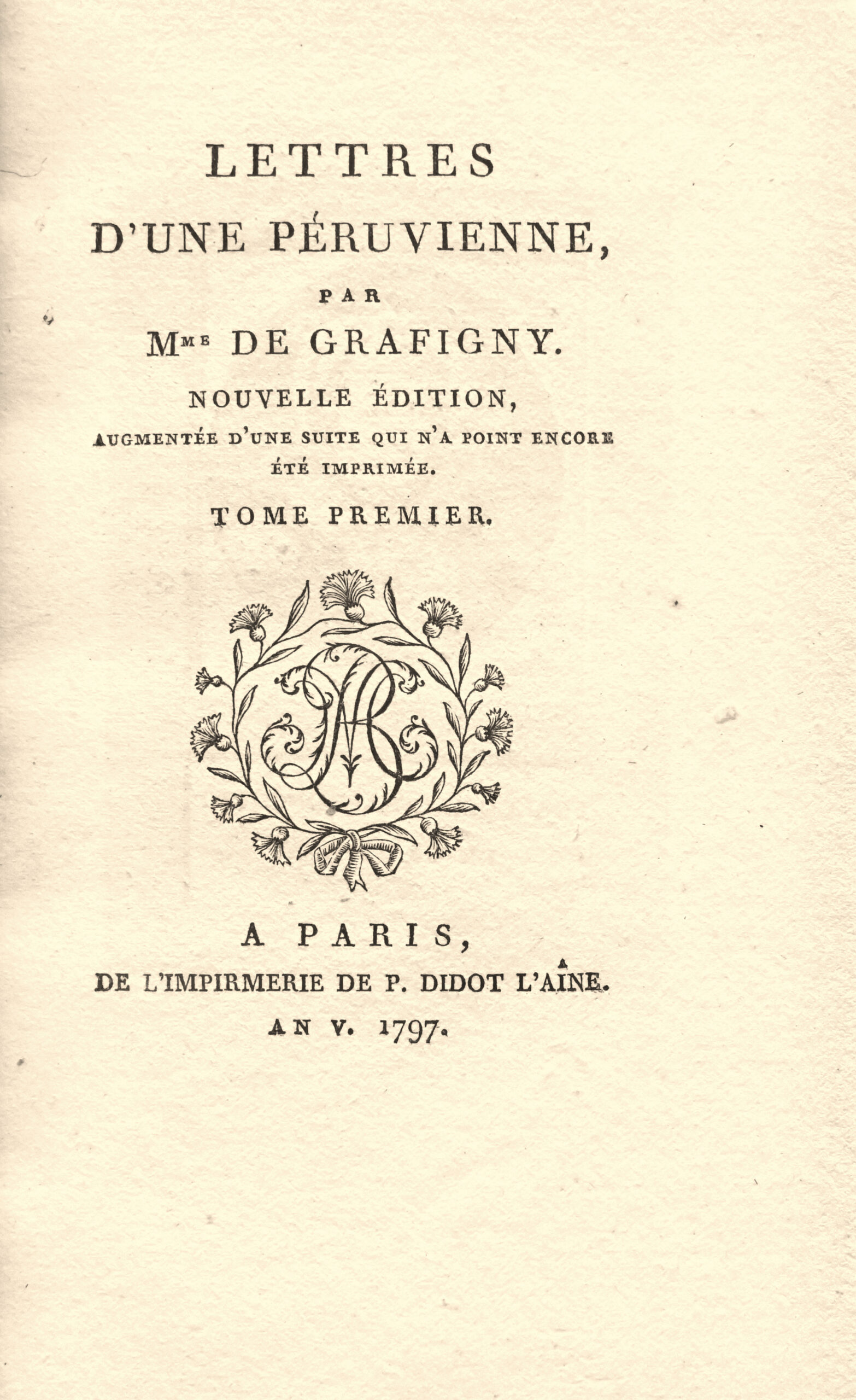
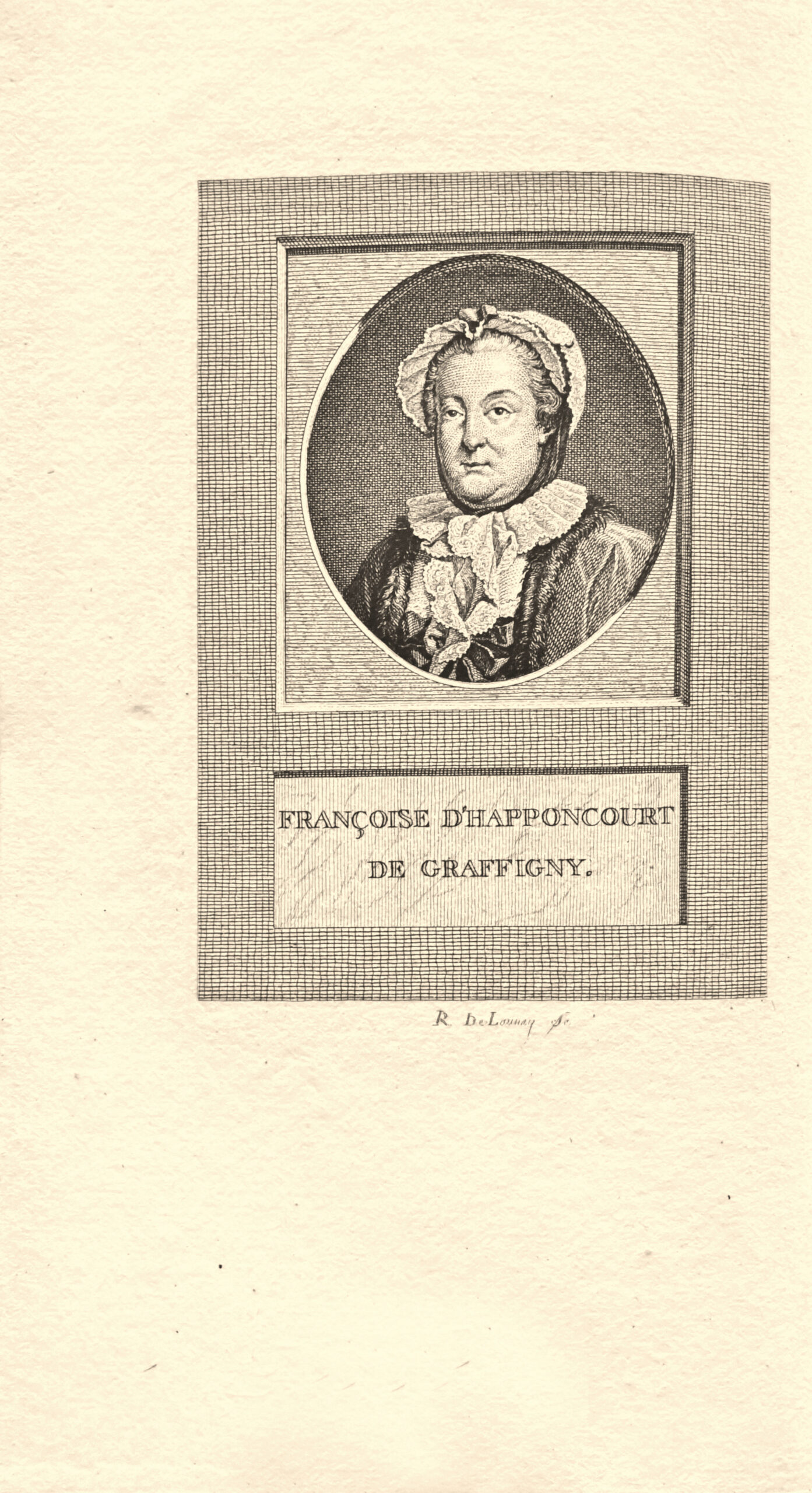
A Paris, de l’Imprimerie de P. Didot l’aîné, an V, 1797.
2 volumes, 12mo. Volume I: 255 pp., plus 1 portrait in double state and 4 plates in 4 states.
Volume II: 239 pp., plus 4 plates in 4 states and 2 portraits. Altogether 3 engraved portraits and 8 charming plates by Lefèvre, engraved by Coiny.
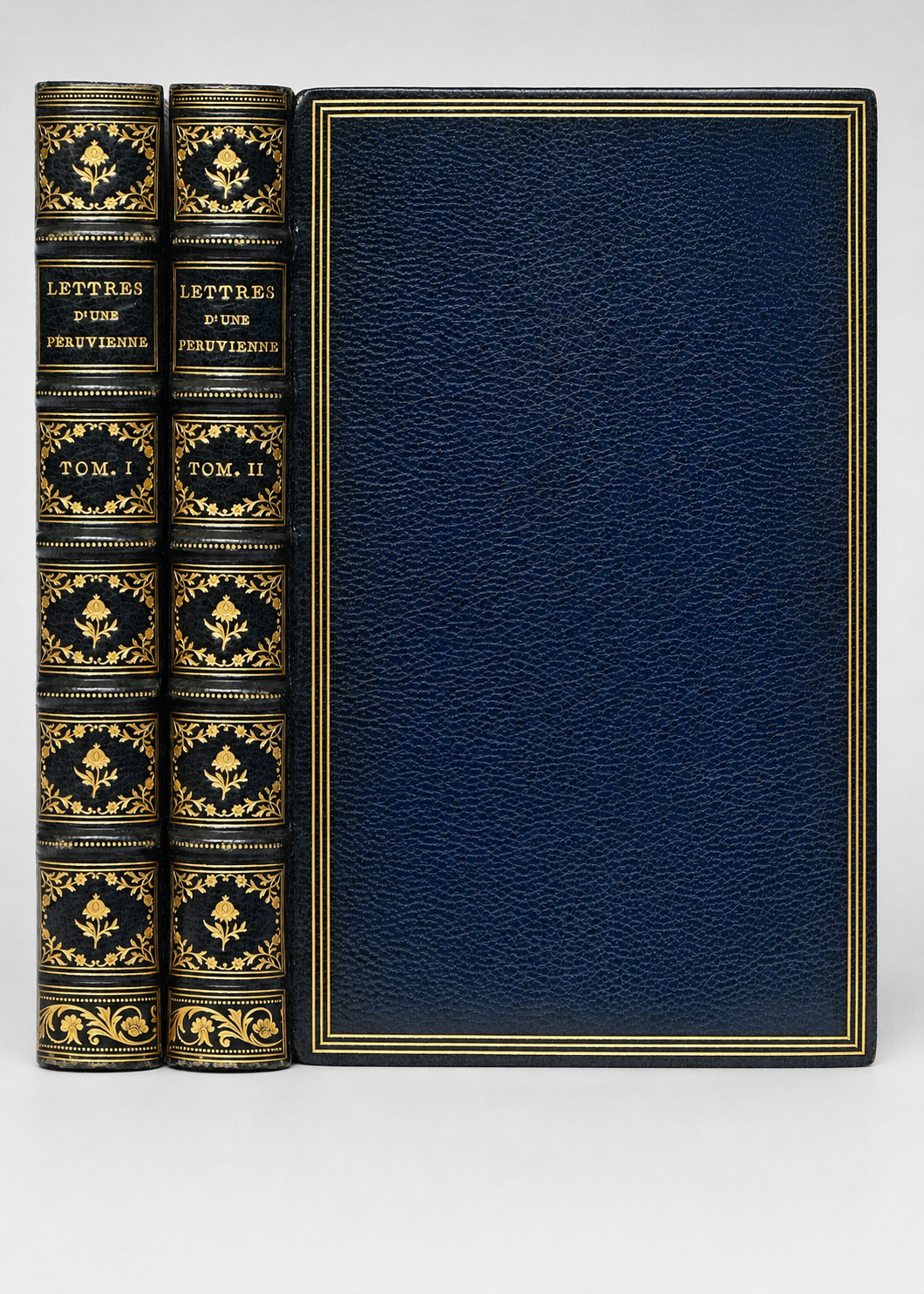
Full blue morocco, triple gilt fillet, richly decorated raised-band spines, double gilt fillet on the edges, inner roll-tool decoration, gilt top edges. Binding signed Cuzin.
160 x 98 mm.
The first and most valuable copy cited and described by Cohen, col. 48: “A beautiful large-paper vellum copy, in blue morocco by Cuzin, with the 4 states of the plates, 700 francs, Delbergue-Cormont sale (no. 192).”
One of the 100 copies of the deluxe issue printed in 12mo format on large vellum paper with the plates in double state: etching and before letters, here exceptionally in 4 states: counterproofs and with letters.
“This charming edition, which forms part of the so-called Bleuet collection, is found on vellum paper in 18mo with or before letters.” (Cohen).
One of the celebrated society novels of the 18th century.
In 1738, the author, Françoise d’Issembourg d’Happoncourt, dame de Graffigny (1695-1758), stayed at Cirey with Mme du Châtelet, where Voltaire was living, and her rather indiscreet correspondence (published only in 1820) restores to us the image of a Voltaire caught in the moment, hypersensitive to the attacks of his adversaries, obsessed with them, continually embroiled in the quarrels of his companion — in short, “the unhappiest of men.” Arriving in Paris in 1739 almost penniless, Mme de Graffigny found unexpected assistance there; she became known through her “Peruvian Letters,” published in 1747, in which, through the intermediary of her heroine, whom she imagined suddenly transplanted to Paris, she offered a vivid critique of social inequalities. This novel enjoyed immense and lasting success; it inspired the reflections of Turgot.
The ongoing publication of her complete correspondence (since 1985) reveals a first-rate letter writer at the center of a network of informants and loyal correspondents.
Montesquieu’s “Persian Letters” served as the model for the “Letters of a Peruvian Woman.”
Torn from her native Peru, a young Inca woman is forcibly brought to France. An officer in love with her takes her under his protection and attempts to turn her into a young Frenchwoman. To her fiancé who remained in Peru, Zilia recounts her discovery of France while longing for their reunion. Little by little, she succeeds in turning all her disadvantages to her own benefit: displacement, differences of language and culture, lack of independence. Self-taught, through reading and observation, she educates herself. She chooses neither assimilation nor the forgetting of her origins, but a third path, a synthesis of here and elsewhere.
In this epistolary love novel, Françoise de Graffigny recounts the progressive emancipation of a woman who refuses to be subordinated to a protector or lover. Published in 1747, the work met with extraordinary success throughout Europe, giving rise to a genuine “Peruvian-style” fashion. It is one of the first bestsellers of French literature, and one of the earliest manifestos for women’s independence.
A precursor of the right to difference, feminist before her time, already critical of cultural appropriation: such was Françoise de Graffigny, whose magnificent novel deserves rediscovery.
Precious and magnificent copy, one of the largest known (height: 160 mm, compared with 155 mm for the Carlo De Poortere copy) among the 100 deluxe large-paper copies adorned with the suite of engravings here exceptionally in 4 states: with letters; before letters; etching; and counterproof.
From the libraries of Delbergue-Cormont and Henri Bonnasse.