Paris, Imperial Press, 1805.
Large 4to of (8) leaves, 150 numbered leaves, 1 leaf. Several bis leaves. Pink boards, smooth spine, untrimmed. Binding from the period.
314 x 233 mm.
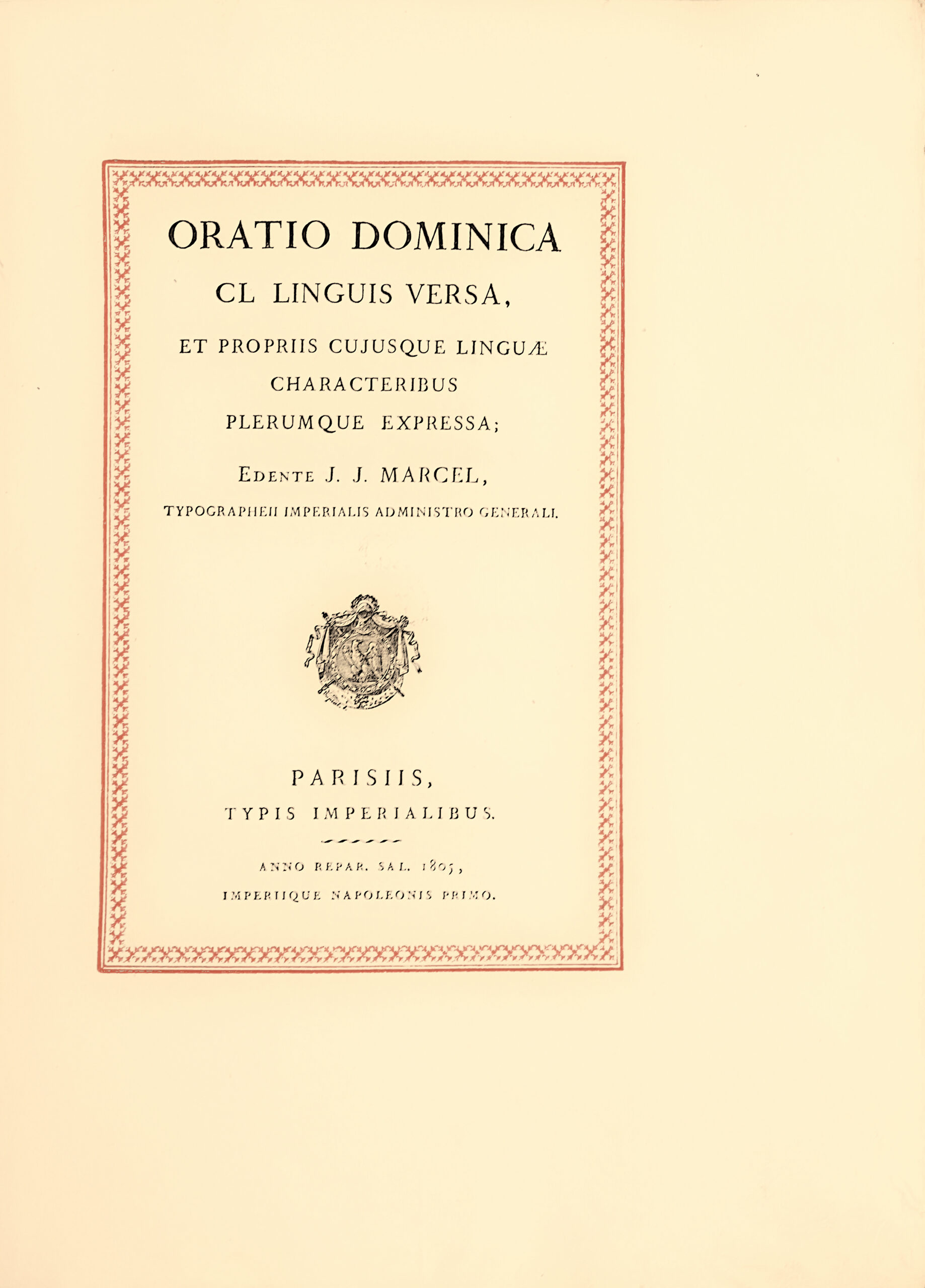
First edition of the polyglot Lord’s Prayer printed in 150 languages for Pope Pius VII during his visit to the imperial printing house in 1805.
Graesse, Treasure of rare books, 381.
French Orientalist, Jean-Joseph Marcel was appointed as director of the printing house that was to accompany Napoleon’s expedition to Egypt.
He collected a considerable number of Hebrew, Arabic, Turkish, Persian, Coptic, Armenian, and Ethiopian manuscripts, took impressions of numerous inscriptions, including the famous “Rosetta Stone.”
He also printed as early as in year VI (1798) an Arabic, Turkish, and Persian alphabet.
Upon returning to France, he was appointed as one of the editors of the ” Description of Egypt ” and as director of the imperial printing house from 1804 to 1815.
The Lord’s Prayer translated into one hundred fifty languages was offered by Marcel to Pope Pius VII in 1805 during his visit to the imperial printing house.
This curious polyglot Lord’s Prayer was printed almost in one day. Each press of the imperial printing house printed in succession, in front of the Pope, a separate sheet composed with the specific characters of each language. Pius VII, passing in front of each printer, received “the good sheet” from his hands. When the Pope reached the last press, the book printing was finished, and upon entering the binding workshop, the volume was bound almost instantly by a particular process, allowing the pontiff to take away this typographic marvel executed before his eyes.
” By far the most splendid edition of the Lord’s Prayer in different languages, and forms a most elegant volume, as well as an unrivaled specimen of typography”. (Sabin 57436).
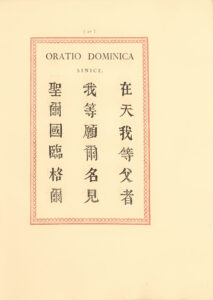
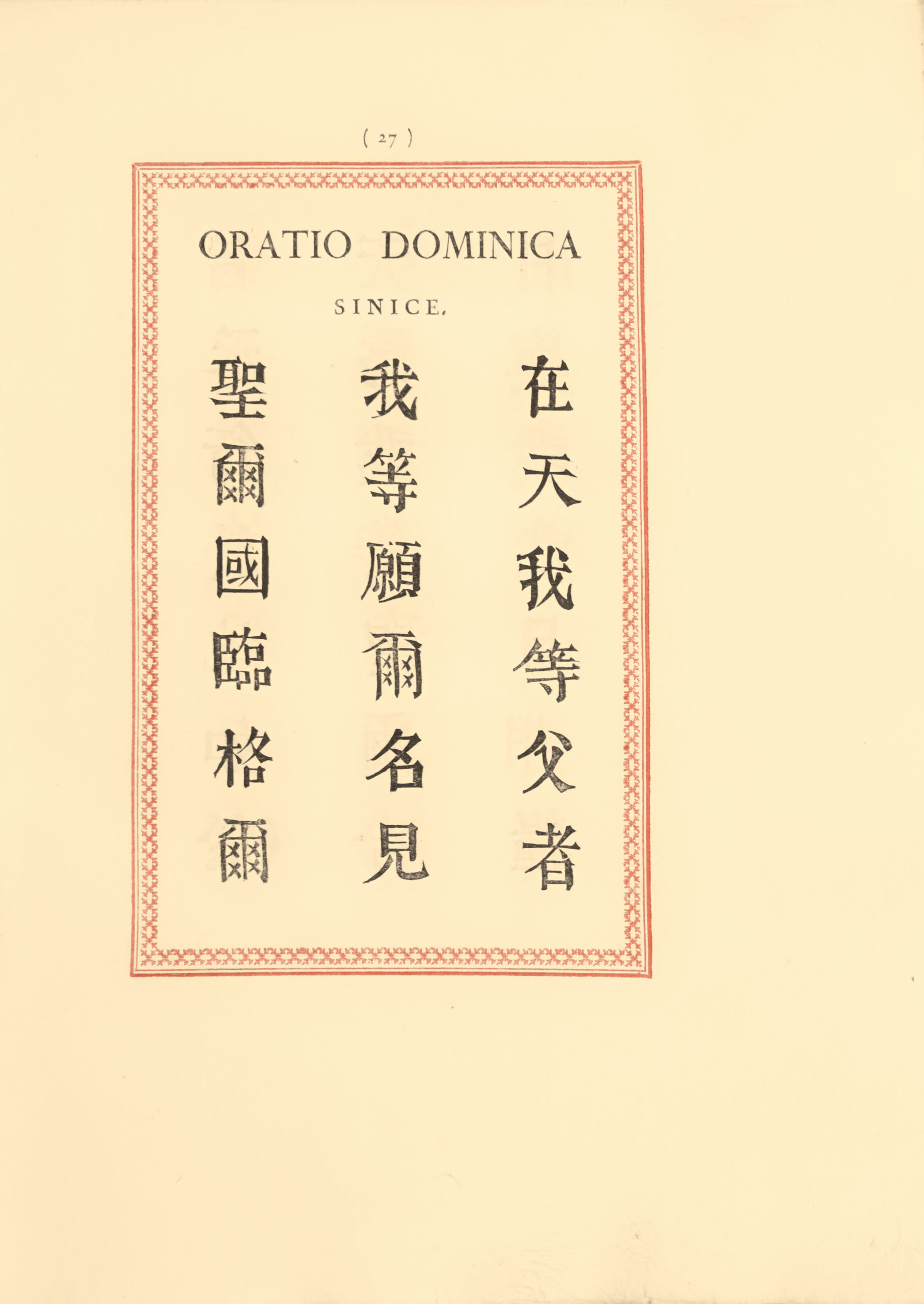
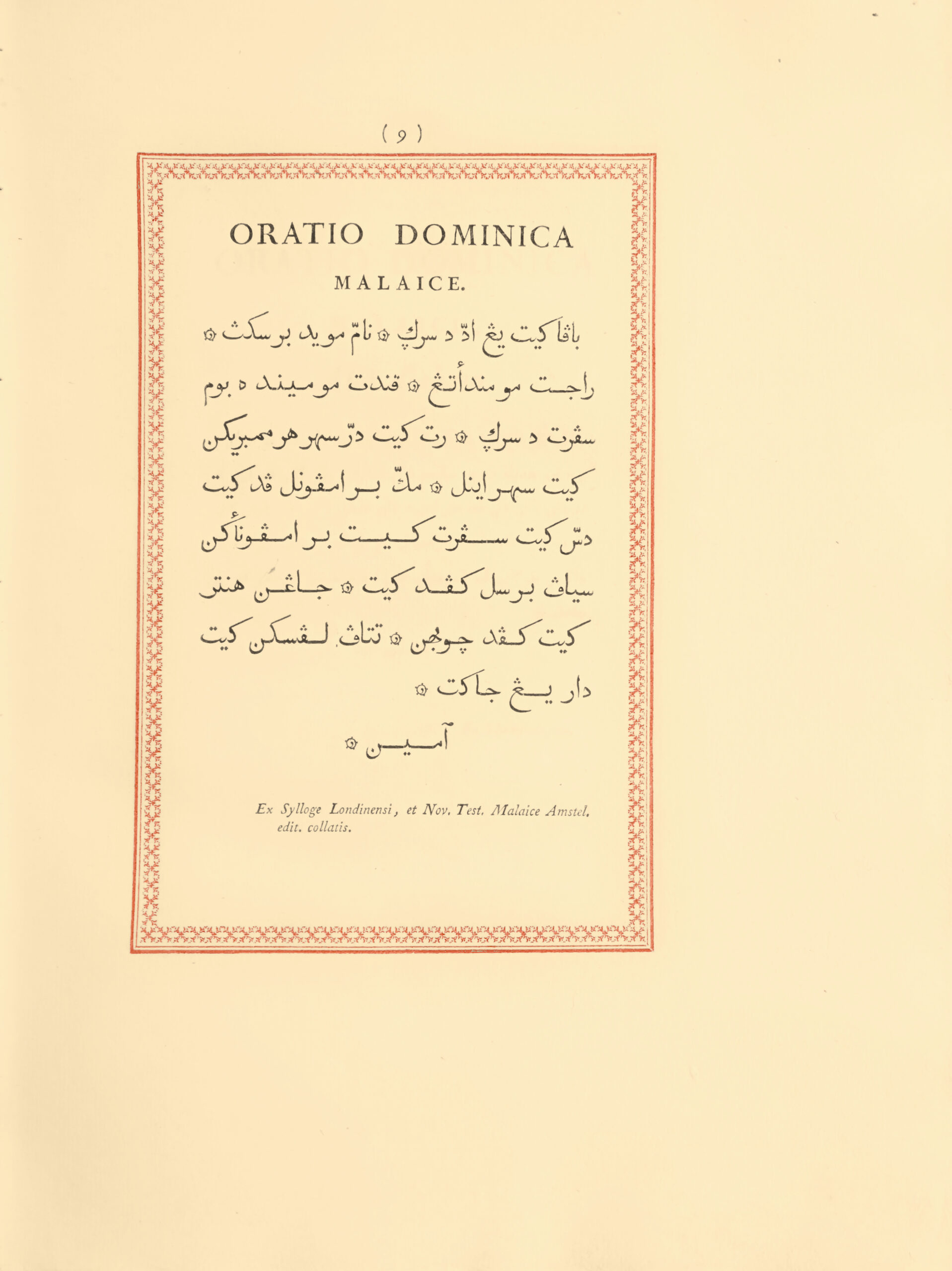
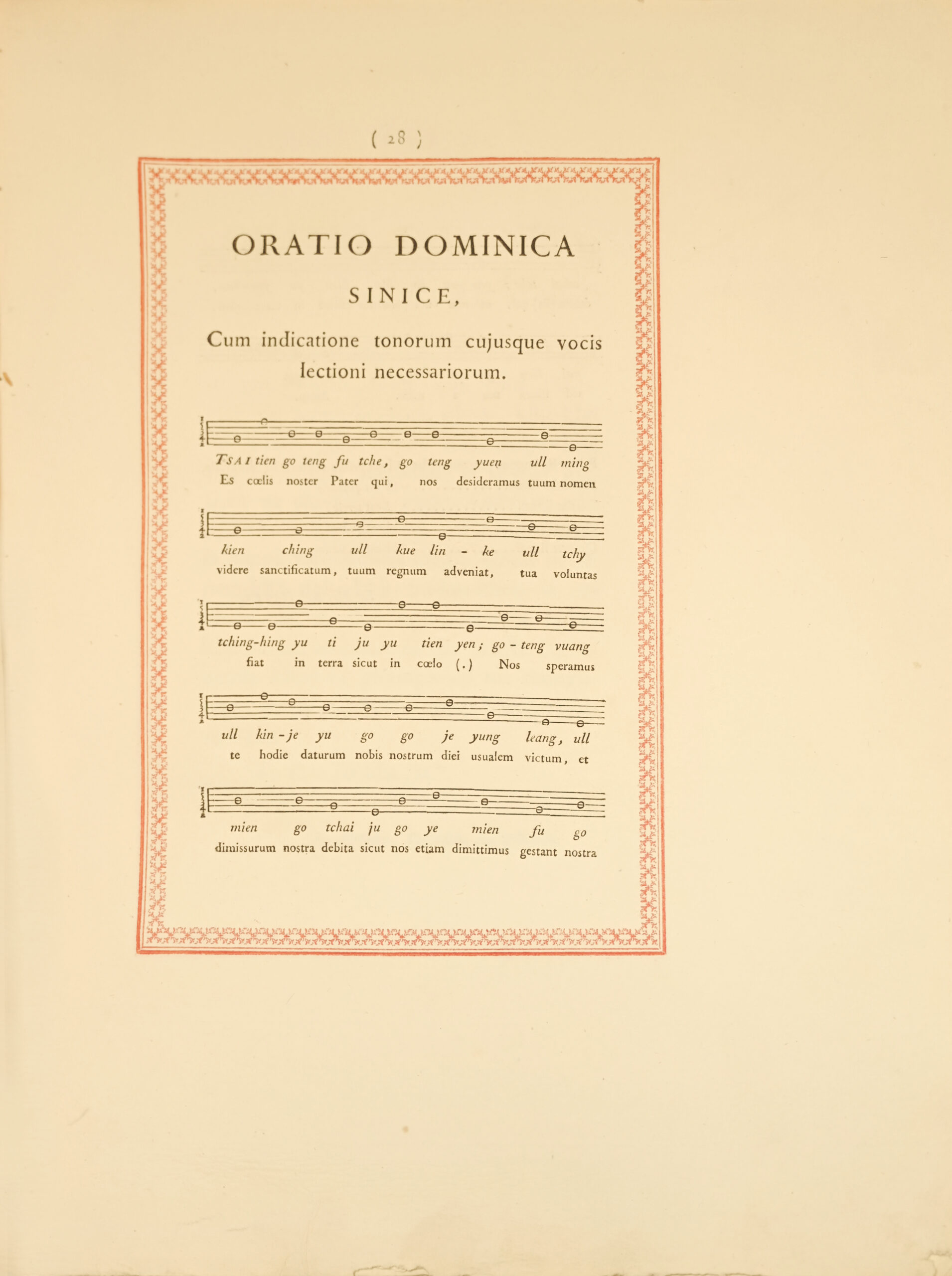
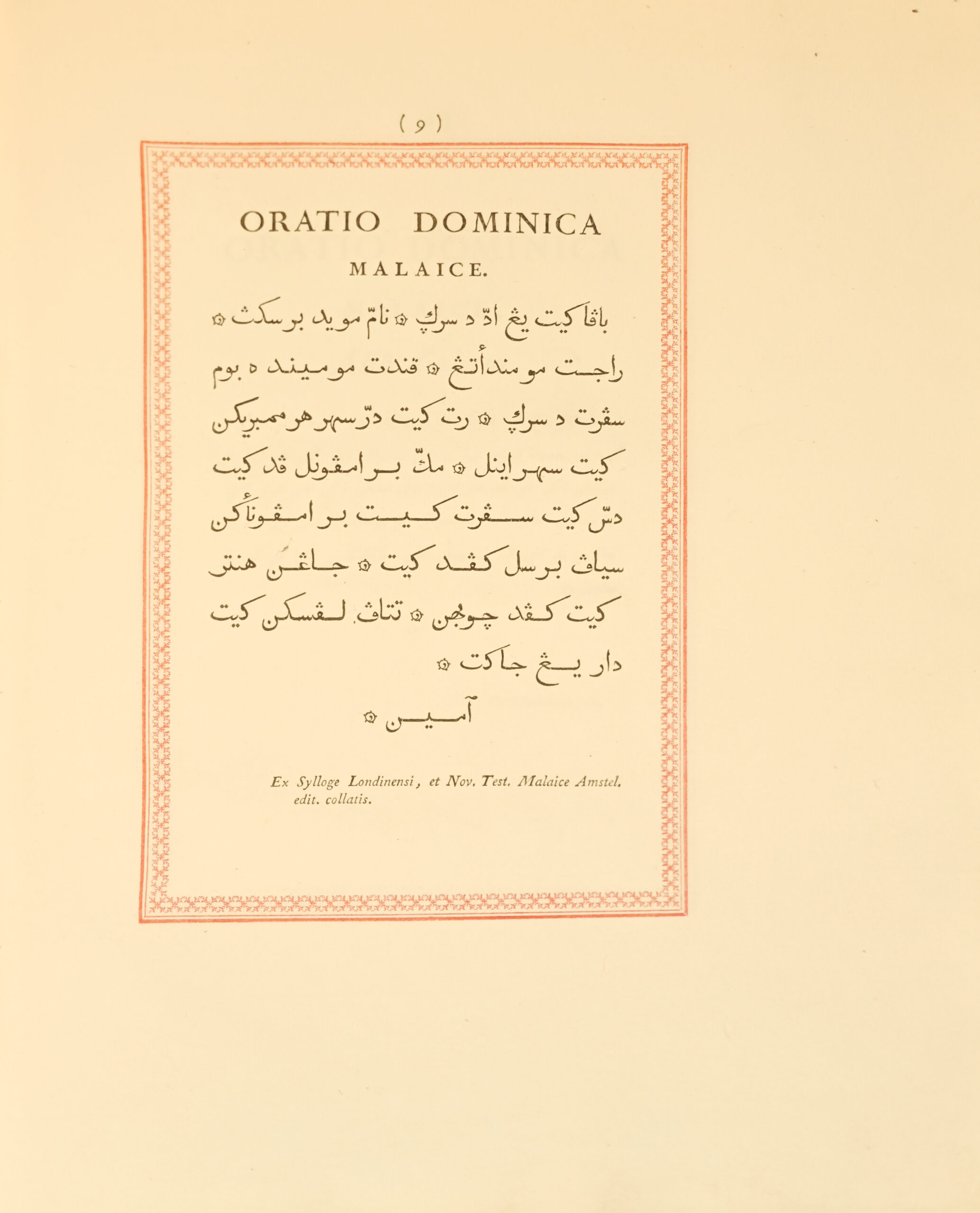
This edition is valuable as it presents on each page, within red-printed frames, one hundred fifty languages in different characters, along with most of the foreign characters that the imperial printing house possessed at the time.
Superb copy with all margins and untrimmed, of the first print run on vellum paper, preserved in its original pink cardboard of the time.