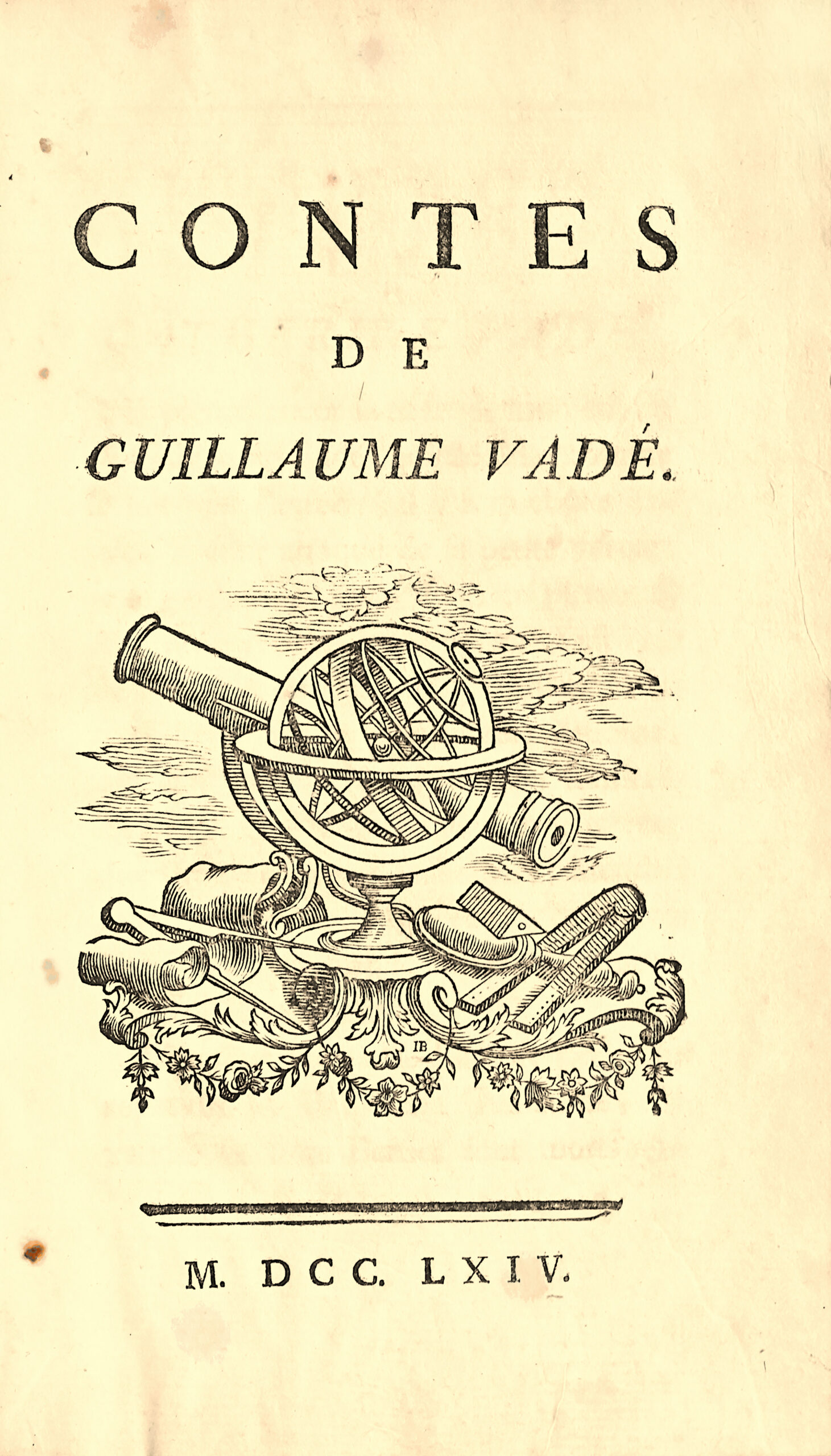
S.l. (Geneva), Cramer, 1764.
Octavo of (1) blank leaf, xvi pp., 386 pp., (1) leaf of table, (1) blank leaf.
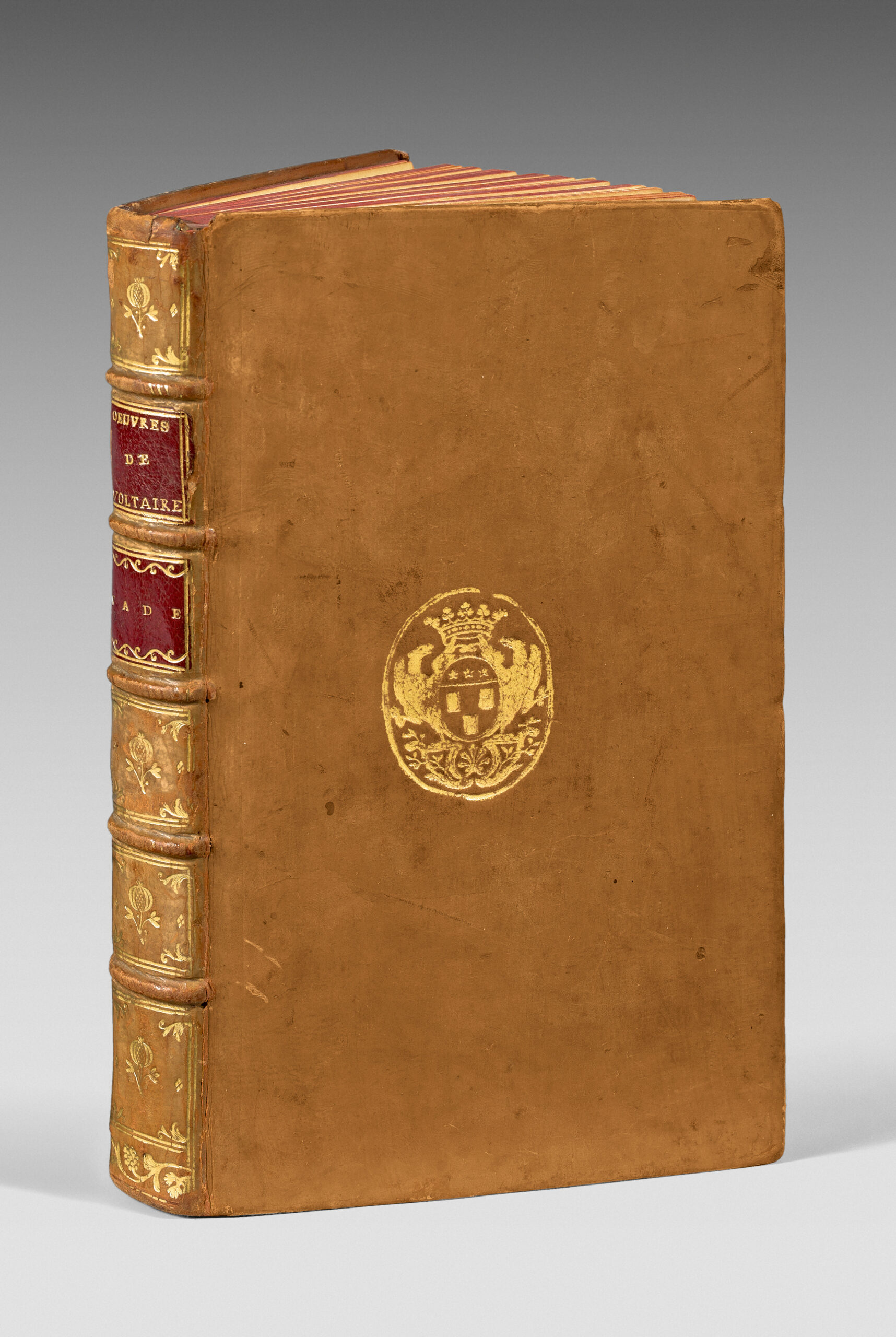
Blond calf, gilt arms stamped at the center of the boards, spine with raised bands adorned with gilt fleurons, title pieces in red morocco, gilt fillet on the edges, red edges. Armorial binding of the period.
195 x 116 mm.
Original edition of the only collection of verse tales written by Voltaire.
Quérard, X, 266; Bengesco, 660; The printed works of Voltaire, 2058.
The Tales of Guillaume Vadé were so successful that 4 new editions appeared in the same year 1764.
“The success of the Tales of Guillaume Vadé, notes Beuchot, suggested to the bookseller Duchesne the idea of publishing the Tales of Jean-Joseph Vadé to serve as the second volume to those of G. Vadé. They appeared in 1765. “
The author’s name will not appear on the title page of the book.
In a letter addressed to the Count of Argental on April 18, 1764, Voltaire denies being the author of the book: ” The Cramer brothers sent to Paris the Tales of Guillaume Vadé along with some other pieces that could very well be burned like a bishop’s mandate. You can well imagine that these pieces are not mine. “. Voltaire decides to attribute the work to the Jesuits. In the same letter, he proposes : ” it will absolutely need a name if no one is named they will name me, one must at least say that it is a young Jesuit. “
The Tales of Guillaume Vadé are an opportunity for the author to attack the Jesuits.
” There was no Guillaume Vadé. This was simply one of the many pseudonyms adopted by Voltaire. But there had been a Jean Joseph Vadé (1720-1757) a highly successful author of scabrous verse and popular comic opera. In adopting the name of Vadé, Voltaire was associating himself with antiestablishment irreverence, vulgarity, and his purpose was to upset the Jansenists.
The Jesuits were in the process of being ousted from their central position in French political life. The polemical thrust of the Tales of Guillaume Vadé is made most explicit by the inclusion of Discours aux Welches, the Welches being the enemies of reason, the Jansenists.”(Voltaire, Candide and other stories, R. Pearson, p. XXVI).
In his correspondence, Grimm analyzes at length the Tales of G. Vadé: “Those who claim that we no longer appreciate verse need only see with what avidity we awaited and received the Tales of Guillaume Vadé that Mr. Voltaire sent us during the last winter. “
Very fine copy preserved in its contemporary binding bearing the arms of Vincent-Etienne-Nicolas Roujault, the nephew of Chrétien-Guillaume de Lamoignon de Malesherbes.
Vincent-Etienne-Nicolas Roujault (1696-1770), counselor, president à mortier at the parliament from 1720 to 1743, was the son of Nicolas-Etienne Roujault (1662-1723), lord of Villemain and the marquisate of Chef-Boutonne, baron of Chambon, lord of Clérembault, Bailly, Verrines, Fresnes, etc., intendant of Poitou from 1709 to 1713 and of Barbe-Madeleine Maynon, the lady of Chambon painted by Rigaud in 1728. In August 1742, Roujault obtained letters patent confirming in his favor the erection of the lordship of Chef-Boutonne into a marquisate. Without children, it is his uncle, Chrétien-Guillaume de Lamoignon de Malesherbes who will inherit his property and the marquisate in 1771.